Ozone water treatment in the dairy industry offers a powerful, eco-friendly alternative to traditional chemical sanitizers, providing 3,000 times faster disinfection than chlorine without leaving toxic residues. By integrating an ozone generator into facility workflows, dairy producers can achieve superior microbial control, reduce energy consumption by eliminating the need for hot water rinses, and simplify wastewater management. This guide explores the technical implementation, cost-benefit analysis, and regulatory advantages of switching to aqueous ozone.
The transition to ozone technology is no longer just a “green” preference; it is a strategic financial move. As global regulations on chemical discharge tighten and consumers demand “clean label” products, ozone provides a scalable solution that protects both the product and the bottom line. By the end of this article, you will understand exactly how to implement this technology to optimize your dairy processing facility.
Understanding the Science of Ozone in Dairy Processing
Ozone ($O_3$) is a triatomic form of oxygen and one of the most potent oxidants available for industrial use. Unlike chlorine, which relies on chemical reactions that can leave harmful byproducts like trihalomethanes (THMs), ozone works through electrochemical oxidation. It physically ruptures the cell walls of bacteria, viruses, and molds, rendering them inactive almost instantly.
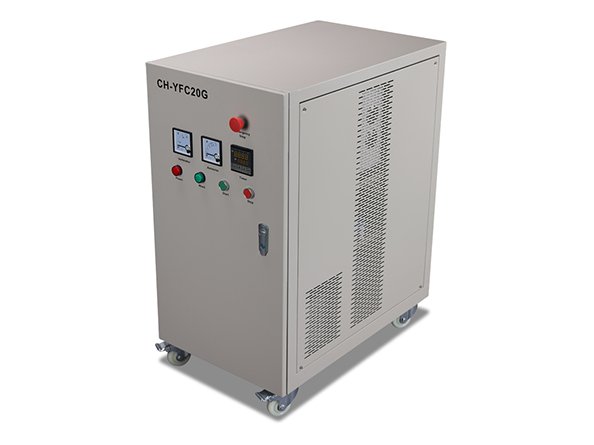
In a typical dairy setting, an ozone for water treatment system takes ambient air or concentrated oxygen and passes it through a high-voltage corona discharge. This creates ozone gas, which is then dissolved into water using a venturi injector or a diffusion stone. The resulting aqueous ozone is a highly effective sanitizer that eventually reverts back into pure oxygen, leaving no chemical trace on equipment or food surfaces.
This rapid reversion is the “secret weapon” of the dairy industry. It allows for “no-rinse” applications, which significantly slashes the time required for cleaning cycles and reduces the total volume of water used across the facility.
Key Applications of Ozone Water Treatment in the Dairy Industry
The versatility of ozone allows it to be utilized across multiple stages of dairy production, from the milking parlor to the final packaging line.
1. Clean-in-Place (CIP) Optimization
Traditional CIP cycles involve multiple steps: a pre-rinse, a caustic wash, an intermediate rinse, an acid wash, and a final sanitizing rinse. This process often requires water heated to $180^{\circ}F$. By introducing ozone water treatment in the dairy industry, plants can often eliminate the heat requirement for the final sanitization step. Cold-water ozone CIP is highly effective at removing protein films and fatty deposits when used in conjunction with mild detergents, leading to massive savings in natural gas or electricity.
2. Surface and Equipment Sanitization
Floors, walls, conveyors, and external surfaces of stainless steel tanks are breeding grounds for environmental pathogens. Traditional foaming chemicals require significant contact time and extensive rinsing. Ozone for water treatment allows for a continuous spray of ozonated water that disinfects on contact. Because it is non-corrosive to 316-grade stainless steel at recommended concentrations, it extends the lifespan of expensive dairy hardware.
3. Wastewater Treatment and Water Recycling
Dairy effluent is notoriously high in Biological Oxygen Demand (BOD) and Chemical Oxygen Demand (COD) due to milk solids and fats. An industrial ozone generator can be used to treat wastewater before discharge. Ozone breaks down complex organic molecules, reduces odors, and clarifies the water. In many jurisdictions, this pre-treatment significantly lowers the “surcharges” levied by municipal treatment plants.
Breaking Down Biofilms: The Hidden Threat
One of the most persistent challenges in dairy production is the formation of biofilms. These are colonies of microorganisms that stick to surfaces and secrete a protective slime. Common sanitizers like chlorine often fail to penetrate this barrier, leading to “mystery” spikes in microbial counts.
Ozone is uniquely qualified to tackle this. Its high oxidation potential allows it to penetrate the extracellular polymeric substance (EPS) of the biofilm. Once the barrier is breached, the ozone destroys the underlying bacteria. Regular use of ozone water treatment in the dairy industry prevents the re-establishment of these colonies, ensuring consistent product quality and longer shelf life for milk, cheese, and yogurt.
Comparative Analysis: Ozone vs. Traditional Chemicals
When evaluating the ROI of an ozone generator, it is essential to compare it against the incumbents: Chlorine and Peracetic Acid (PAA).
• Efficacy: Ozone is roughly 50% stronger than chlorine and acts significantly faster against Listeria and Salmonella.
• Residue: Chlorine leaves chlorides; PAA leaves acetic acid. Ozone leaves only oxygen.
• Storage: Chemicals require hazardous material storage, specialized ventilation, and secondary containment. Ozone is generated on-site and on-demand, eliminating the need for chemical inventory.
• Temperature: Chemicals often require warm water ($100^{\circ}F – 140^{\circ}F$) to be effective. Ozone is most stable and effective in cold water ($40^{\circ}F – 60^{\circ}F$), saving on heating costs.
Implementation Case Study: The 500-Head Dairy Farm
Consider a hypothetical mid-sized dairy operation that transitioned to ozone for water treatment. Prior to the switch, the farm spent approximately \$1,500 per month on sanitizing chemicals and an additional \$800 on water heating for CIP.
After installing a modular ozone generator system, the following results were recorded:
• Chemical Spend: Reduced by 75% as ozone replaced the final sanitizer and reduced the need for heavy acids.
• Energy Use: Reduced by 40% due to the implementation of cold-water sanitization cycles.
• Water Usage: Total water consumption dropped by 20% because the “final rinse” after sanitization was no longer necessary.
• Payback Period: The initial capital investment for the ozone system was recouped in just 14 months through operational savings alone.
Regulatory Compliance and Food Safety (FDA/USDA)
The use of ozone in food processing is well-supported by regulatory bodies. In 2001, the FDA officially granted “Generally Recognized as Safe” (GRAS) status to ozone for use as an antimicrobial agent on food and food-processing equipment. The USDA also approved its use for organic production, making ozone water treatment in the dairy industry a preferred choice for organic milk and cheese producers who are restricted from using synthetic chemicals.
To remain compliant, dairy processors must ensure that their ozone generator is equipped with an “off-gas” destructor. This prevents excess ozone gas from entering the workspace, ensuring that ambient ozone levels remain within OSHA safety limits (0.1 ppm for an 8-hour shift).
Technical Maintenance for Longevity
To ensure the peak performance of ozone for water treatment, a simple maintenance schedule is required. Unlike chemical pumps that can clog or corrode, an ozone system has few moving parts.
• Air Preparation: The air feed or oxygen concentrator must be kept dry. Moisture is the enemy of ozone production.
• Check Valves: These prevent water from backing up into the ozone generator. They should be inspected quarterly.
• ORP Monitoring: An Oxygen Reduction Potential (ORP) probe should be used to monitor the “strength” of the ozonated water in real-time, providing an automated audit trail for food safety records.
FAQ: Frequently Asked Questions
Is ozone water treatment safe for dairy equipment?
Yes. When applied at the correct concentrations (typically 0.5 to 2.0 ppm), aqueous ozone is non-corrosive to the stainless steel and food-grade plastics commonly used in the dairy industry. In fact, it is often less corrosive than chlorine, which can cause pitting in steel over time.
How does ozone affect the taste of milk?
It doesn’t. Because ozone reverts to pure oxygen within minutes, there is no chemical residue to migrate into the milk. Many producers find that by reducing the “chemical load” in the plant, the natural flavor profile of the dairy products is better preserved.
What is the typical ROI for an ozone generator in a dairy plant?
Most dairy facilities see a full return on investment (ROI) within 12 to 24 months. These savings come from reduced chemical purchases, lower energy bills for water heating, reduced water consumption, and lower wastewater treatment surcharges.
Can ozone be used in organic dairy production?
Yes, ozone is approved for use in organic food production under the USDA National Organic Program (NOP). It is considered a non-synthetic substance that leaves no prohibited residues.
Conclusion: The Future of Dairy Sanitation
Adopting ozone water treatment in the dairy industry is a definitive step toward a more sustainable and profitable future. By replacing outdated chemical methods with a high-performance ozone generator, dairy processors can ensure the highest levels of food safety while significantly lowering operational overhead.
Whether you are looking to solve a persistent biofilm issue, reduce your carbon footprint, or simply cut the rising costs of industrial chemicals, ozone for water treatment provides a proven, scientifically backed solution. Now is the time to audit your current sanitation costs and explore how an integrated ozone system can transform your production facility.
Ready to modernize your dairy facility? Contact a water treatment specialist today to design a custom ozone solution tailored to your production volume.