Implementing ozone water treatment in laboratories is the most effective, chemical-free method for sanitizing ultrapure water (UPW) loops and eradicating microbial biofilm. If you are struggling with persistent bacterial contamination or chemical residues that compromise sensitive experiments, utilizing ozone for water treatment is your definitive solution. By integrating an ozone generator into your existing water purification loop, you instantly achieve superior microbial control without the downtime associated with thermal or chemical sanitization.
In this comprehensive guide, we will break down exactly how ozone sanitization works, why it outperforms traditional methods, and how you can seamlessly implement it into your laboratory facility. You will learn the science behind ozone oxidation, the step-by-step process of system integration, and the long-term cost benefits for modern scientific facilities.
What is Ozone Water Treatment?
Ozone (O3) is a naturally occurring gas composed of three oxygen atoms, making it one of the most powerful oxidants available for commercial and scientific use. Unlike standard diatomic oxygen (O2), the third oxygen atom is highly unstable and readily attaches itself to organic molecules. This process, known as oxidation, allows dissolved ozone to instantly destroy the cell walls of bacteria, viruses, and fungi on contact.
In a laboratory setting, maintaining strict water purity is a non-negotiable requirement. Even microscopic bacterial growth can alter pH levels, introduce trace minerals, and ultimately invalidate weeks of expensive research. Because ozone reverts back to pure oxygen after it oxidizes contaminants, it leaves zero chemical residue in your water supply. This unique characteristic makes it the gold standard for maintaining the strict water quality parameters required for Type I, II, and III laboratory water.
Why Laboratories Need Ultrapure Water (UPW)
Modern laboratories rely heavily on Ultrapure Water (UPW) for high-sensitivity applications like High-Performance Liquid Chromatography (HPLC), mass spectrometry, and mammalian cell culture. The American Society for Testing and Materials (ASTM) mandates exceptionally strict guidelines for what qualifies as Type I UPW. Bacterial levels must be kept to an absolute minimum, typically less than 1 Colony Forming Unit (CFU) per milliliter.
If a laboratory’s water distribution loop develops a microscopic layer of biofilm, achieving these strict metrics becomes impossible. Biofilms are notoriously resilient colonies of bacteria that cling to the inside of PVC or stainless steel pipes. Once established, they constantly shed bacteria and endotoxins into the water stream, rendering standard point-of-use filters virtually useless. Consistent, powerful sanitization of the entire water loop is the only way to prevent this catastrophic contamination.
The Problem with Traditional Sanitization Methods
Before the widespread adoption of ozone, facility managers relied on a combination of heat, chemicals, and ultraviolet (UV) light to keep water loops clean. While these methods have their place, they each come with significant drawbacks in a high-demand laboratory environment.
Chemical Sanitization
Using chemicals like chlorine or hydrogen peroxide requires the entire water loop to be taken offline. Technicians must flush the system with the chemical, let it sit, and then extensively rinse the loop to ensure no residue remains. Even trace amounts of chlorine can destroy delicate biological assays, making the rinsing process both tedious and incredibly risky. Furthermore, regular chemical flushes lead to extensive system downtime, halting laboratory operations for days.
Thermal (Heat) Sanitization
Heating water to and circulating it through the distribution loop is a traditional and effective way to kill bacteria. However, thermal sanitization is astronomically expensive due to the massive energy required to heat thousands of gallons of water. Additionally, the constant expansion and contraction of pipes caused by heating and cooling can lead to premature wear and tear on facility infrastructure.
Ultraviolet (UV) Light
UV sanitization is excellent for point-of-use water treatment, but it lacks a residual effect. When water passes through a UV chamber, bacteria are sterilized, but the moment the water travels down the pipe, it is vulnerable to recontamination. UV light cannot penetrate existing biofilm, meaning it is entirely ineffective at cleaning the actual walls of your distribution piping.
How Ozone for Water Treatment Works in a Lab Setting
To overcome the limitations of traditional methods, modern facilities utilize ozone for water treatment as a continuous, residue-free sanitization strategy. The process relies on precisely engineered equipment to generate, inject, and eventually remove the ozone before the water reaches the researcher’s tap.
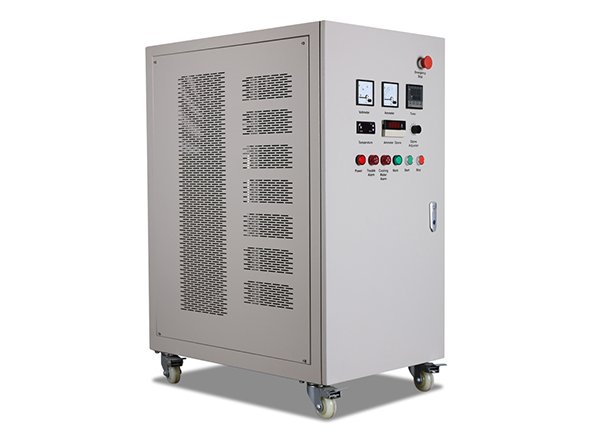
• Generation: The process begins with an ozone generator, which typically uses a corona discharge or electrolytic method. In corona discharge, pure oxygen gas is passed through a high-voltage electrical field, splitting the O2 molecules so they can reform as O3. Electrolytic generators create ozone directly from the water itself using an electrical current, which is often preferred in smaller UPW systems.
• Injection: The newly created ozone gas is injected into the laboratory’s water storage tank or directly into the recirculating distribution loop. A venturi injector is often used to ensure the gas dissolves efficiently into the water, creating highly concentrated ozonated water.
• Circulation and Oxidation: As the ozonated water travels through the facility’s pipes, it acts as a continuous scrubbing agent. It actively tears down existing biofilm and oxidizes any suspended organic matter. Because it travels throughout the entire loop, no corner or dead leg is safe from its sanitizing power.
• Destruction: Before the water is dispensed for laboratory use, it must be completely free of ozone. The water passes through a specific 254-nanometer UV destruct unit. This UV wavelength instantly breaks the chemical bonds of the ozone, instantly converting it back into harmless, breathable oxygen.
Key Benefits of Ozone Water Treatment in Laboratories
Switching to an ozonated UPW loop transforms how a facility operates, offering a rapid return on investment and unparalleled peace of mind. Here are the core advantages that make it a superior choice for scientific facilities.
• Total Biofilm Eradication: Ozone is unparalleled in its ability to destroy the extracellular polymeric substances (EPS) that hold biofilm together. By oxidizing the very glue that attaches bacteria to pipe walls, ozone completely removes biofilm and prevents it from returning.
• Zero Chemical Residue: Because the UV destruct unit converts ozone back into standard oxygen, researchers can confidently draw water from the tap without fear of chemical interference. Your assays, reagents, and cell cultures remain perfectly safe and uncompromised.
• Continuous Sanitization: Unlike chemical flushes that require system downtime, a low dose of ozone can be continuously circulated through the loop during off-hours or nights. This guarantees that the water loop is perpetually sanitized and ready for use when researchers arrive in the morning.
• Lower Operating Costs: An ozone generator requires a fraction of the electricity needed to run a thermal sanitization system. By eliminating the need to purchase heavy chemicals and vastly reducing energy consumption, laboratories can save thousands of dollars annually on facility maintenance.
• Reduced Total Organic Carbon (TOC): Ozone excels at breaking down complex organic molecules into simpler compounds. When used in tandem with UPW filtration systems, it dramatically lowers TOC levels, ensuring the water meets the strictest ASTM Type I specifications.
Real-World Application: A Hypothetical Case Study
To truly understand the impact of ozone water treatment in laboratories, let us look at a hypothetical scenario involving “Apex Biotech,” a mid-sized genomics research facility. Apex Biotech was relying on a legacy thermal sanitization system for their 1,000-gallon DI (Deionized) water loop.
Despite weekly heat sanitization cycles that cost the facility $1,500 a month in energy, their weekly water quality tests showed rising CFU counts. A specialized audit revealed that a massive biofilm colony had established itself in a “dead leg” of piping where the heated water could not reach proper temperatures. The resulting contamination forced the lab to discard over $40,000 worth of ruined reagents in a single quarter.
Apex Biotech decided to retrofit their facility with a modern electrolytic ozone generator and a 254nm UV destruct unit. By continuously circulating a low dose of ozone (0.2 ppm) through the loop every night, the dissolved ozone reached every inch of the piping infrastructure. Within just two weeks, the biofilm was entirely eradicated, and CFU counts dropped back down to zero. Furthermore, by retiring their high-energy heating system, the lab slashed their monthly sanitization operating costs by 85%.
Implementation Guide: Upgrading Your Lab System
If you are ready to integrate ozone into your facility’s water architecture, proper planning is essential. While the technology is incredibly safe and efficient, it requires exact sizing and safety protocols to operate correctly.
First, you must evaluate your current water loop materials. Ozone is a highly aggressive oxidant, meaning your distribution pipes must be made of ozone-resistant materials. Stainless steel (316L), PVDF (Teflon), and CPVC are excellent choices, whereas standard PVC will degrade rapidly under constant ozone exposure.
Second, work with a water treatment engineer to properly size your ozone generator. The generator must produce enough ozone to maintain a residual concentration of 0.1 to 0.3 ppm throughout the entire loop. If the generator is undersized, the ozone will deplete before it completes a full circuit of the facility, leaving the far ends of the pipes vulnerable to bacterial growth.
Finally, ensure you have fail-safes in place. A high-quality ambient ozone monitor should be installed in the mechanical room where the generator is housed. OSHA dictates that the permissible exposure limit (PEL) for ozone gas in the air is 0.1 ppm over an eight-hour shift. An automated monitor will instantly shut down the system if an atmospheric leak is detected, ensuring complete safety for your facility staff.
Frequently Asked Questions (FAQ)
Is ozone safe for laboratory personnel?
Yes, when properly contained within the water loop, it poses zero risk to personnel. Ambient ozone monitors in the mechanical room and highly effective UV destruct units at the point of use ensure that personnel are never exposed to dangerous levels of ozone gas or dissolved ozone.
How does ozone compare to reverse osmosis (RO)?
Ozone and RO serve entirely different, yet complementary, purposes. Reverse osmosis is a physical filtration process that removes dissolved solids, minerals, and heavy metals from the water. Ozone is a sanitization agent used after RO filtration to kill bacteria and destroy biofilm in the water distribution loop.
Will ozone alter the pH of my lab water?
No, ozone does not leave any byproducts that alter the pH of the water. Once the ozone passes through the UV destruct chamber, it rapidly reverts to pure oxygen. The pH of your ultrapure water will remain strictly dictated by your primary deionization and RO filtration steps.
How long does an ozone generator last?
High-quality industrial ozone generators can easily last 10 to 15 years with proper preventative maintenance. Regular servicing, such as cleaning the corona discharge cells and monitoring the oxygen feed air for moisture, will ensure maximum longevity and efficiency.
Conclusion & Call-to-Action
Maintaining ultrapure water is the foundational pillar of any successful scientific facility. By embracing ozone water treatment in laboratories, you are investing in a proactive, chemical-free defense against biofilm and microbial contamination. The integration of a high-quality ozone generator not only secures the integrity of your sensitive research but also slashes long-term energy and maintenance costs.
Stop letting archaic sanitization methods drain your facility’s budget and jeopardize your critical assays. Contact our elite team of lab water purification specialists today for a free consultation. We will audit your current water loop, recommend the ideal ozone integration strategy, and help you achieve flawless Type I ultrapure water on demand.