Integrating an ozone generator for RO plant operations is the most effective way to eliminate biofouling and ensure high-purity water output. By utilizing ozone ($\text{O}_3$)—a powerful triatomic oxygen molecule—plant operators can neutralize organic contaminants and microorganisms more efficiently than with traditional chemical biocides. This guide explores how ozone technology protects your RO investment, Reduces operational expenditures (OPEX), and maintains the integrity of your water treatment cycle.
The immediate benefit of ozone lies in its high oxidation potential. Unlike chlorine, ozone leaves no harmful residuals and reverts to pure oxygen after the reaction. However, the application requires precise engineering to prevent membrane damage. This article provides the technical blueprint for successful implementation.
Understanding the Mechanics: Why Ozone and RO?
Reverse Osmosis is a pressure-driven process that forces water through semi-permeable membranes. While effective at removing salts and ions, RO membranes are highly susceptible to biofouling. Biofouling occurs when bacteria and organic matter accumulate on the membrane surface, forming a “biofilm” that restricts flow and increases pressure requirements.
An ozone generator produces ozone gas typically via corona discharge. When this gas is dissolved into the RO feed water or the permeate storage, it acts as a broad-spectrum disinfectant. It destroys the cell walls of bacteria, viruses, and cysts on contact. This proactive approach ensures that the “feed” entering the RO modules is biologically inactive, preventing the sticky buildup that leads to premature membrane failure.
Pre-Treatment: Stopping Biofouling Before It Starts
Using an ozone generator for RO plant pre-treatment is a “search-and-destroy” mission for organic precursors. In this phase, ozone is injected into the raw water stream before it reaches the high-pressure pumps.
Dissolved organic carbon (DOC) is the primary food source for bacteria. Ozone breaks these complex organic chains into smaller, more biodegradable fragments or oxidizes them completely. By reducing the organic load, the RO membranes experience less “flux decline.”
However, a critical technical caveat exists: most RO membranes (Polyamide) are sensitive to oxidants. If residual ozone reaches the membrane, it will cause irreversible oxidative damage. To prevent this, a de-ozonation step is mandatory. This is usually achieved through:
• Ultraviolet (UV) Irradiation: High-intensity UV light at 254 nm breaks down residual ozone.
• Granular Activated Carbon (GAC): Carbon filters chemically reduce ozone back to oxygen.
• Chemical Reducing Agents: Adding sodium bisulfite to neutralize the oxidant.
Post-Treatment: Ensuring Permeate Purity
In many industrial applications, such as pharmaceuticals, electronics, and bottled water, the RO permeate is stored in large tanks. These tanks are notorious breeding grounds for bacteria.
Installing an ozone generator for RO plant post-treatment creates a “sanitary loop.” Ozone is injected into the storage tank to maintain a residual level (typically 0.2 to 0.4 ppm). This ensures the water remains sterile until the point of use.
For the food and beverage industry, this is often the “final barrier” for safety. It provides a chemical-free way to ensure that bottled water or ingredient water meets stringent microbial standards without the “off-taste” associated with chlorination.
Key Components of an Industrial Ozone System
To successfully hardware an ozone solution into an RO plant, several components must work in harmony:
• Oxygen Feed System: High-purity oxygen (from a PSA generator or liquid O2) is fed into the generator to maximize ozone concentration and prevent nitric acid formation.
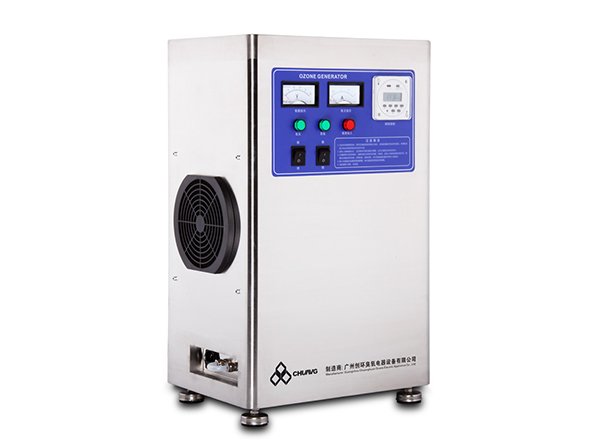
• The Ozone Generator: The heart of the system, using high-voltage corona discharge to convert O2 into O3.
• Mass Transfer System: This includes venturi injectors or fine bubble diffusers that dissolve the gas into the water stream. Efficiency here determines the ROI.
• Reaction Tank: Provides the necessary “contact time” for the ozone to react with contaminants.
• Monitoring and Control (ORP): Oxidation-Reduction Potential (ORP) sensors monitor the “strength” of the ozone in the water, providing real-time feedback to the generator to adjust output.
Case Study: Reducing OPEX in a 50 ㎥/h RO Facility
Consider a hypothetical industrial RO plant dealing with high surface water turbidity. The plant was experiencing membrane fouling every three months, requiring expensive Clean-In-Place (CIP) procedures and high doses of non-oxidizing biocides.
By installing a 200g/h ozone generator, the facility achieved the following:
• Membrane Life Extension: Flux rates remained stable, and membrane replacement was pushed from 12 months to 24 months.
• Chemical Savings: The need for proprietary biocides was reduced by 85%.
• Energy Efficiency: Because the membranes stayed cleaner, the high-pressure pumps operated at lower frequencies, saving roughly 12% in electricity costs annually.
This transition highlights that while the initial capital expenditure (CAPEX) for an ozone generator is higher than a chemical dosing pump, the operational savings provide a full payback within 18 to 24 months.
The Safety Protocol: Managing Ozone Residuaries
Safety is paramount when dealing with ozone. Since it is a toxic gas at high concentrations, industrial RO plants must implement:
• Ambient Ozone Leak Detectors: Mounted near the generator to trigger an automatic shutdown if gas escapes.
• Off-gas Destruct Units: Any ozone that doesn’t dissolve in the water is vented through a heater or catalyst to convert it back to oxygen before it enters the atmosphere.
• Interlocks: The ozone generator should be interlocked with the RO feed pump to ensure gas is never injected into a stagnant pipe.
Maintenance Requirements for Longevity
An ozone generator for RO plant use is not a “set it and forget it” device. To maintain peak performance, the following schedule is recommended:
• Monthly: Check the cooling water flow (if water-cooled) and inspect the oxygen concentrator filters.
• Quarterly: Calibrate the ORP and dissolved ozone sensors. Accurate readings are the only way to ensure the RO membranes are protected from oxidation.
• Annually: Inspect the corona discharge dielectric tubes and replace check valves in the injection manifold. Ozone is highly corrosive to non-compatible materials like natural rubber; ensure all seals are Viton or Teflon (PTFE).
Comparing Ozone to Conventional Disinfectants
Why choose ozone over chlorine or chlorine dioxide for an RO plant?
• Residual-Free: Ozone leaves no chloramines or trihalomethanes (THMs).
• Reaction Speed: Ozone reacts 3,000 times faster than chlorine with organic matter.
• Effectiveness: Ozone is effective against Cryptosporidium and Giardia, which are resistant to standard chlorination.
• On-site Generation: No need to store and handle hazardous bulk chemicals; you create the disinfectant from the air.
Integrating Ozone in Brackish vs. Seawater RO
The application differs based on the source water. In Brackish Water RO (BWRO), ozone is primarily used for organic reduction. In Seawater Reverse Osmosis (SWRO), ozone is a powerful tool to combat the high biological load of ocean water, though care must be taken regarding bromide. Ozone can react with bromide in seawater to form bromate—a regulated byproduct. Expert sizing is required to balance disinfection with byproduct control.
FAQ: Common Questions About Ozone Generators for RO Plants
Q: Can ozone damage my RO membranes?
A: Yes, ozone is a strong oxidant and will quickly degrade Polyamide membranes. A de-ozonation system (UV light or Activated Carbon) must be installed between the ozone injection point and the RO membrane housing to Ensure a zero-ozone residual reaches the membranes.
Q: How much ozone do I need for my RO plant?
A: Dosage typically ranges from 0.5 to 2.0 mg/L depending on the Total Organic Carbon (TOC) levels of the feed water. A pilot test is often recommended to determine the exact “ozone demand” of your specific water source.
Q: Is an ozone generator more expensive than chemical dosing?
A: The upfront cost of an ozone generator is significantly higher. However, the long-term savings in chemical purchases, membrane replacement, and reduced labor for cleaning usually make ozone the more cost-effective solution over a 5-year period.
Q: Can I use ozone for RO membrane cleaning (CIP)?
A: Standard Polyamide membranes cannot handle ozone during cleaning. However, specialized ozone-compatible membranes (often ceramic or modified polymeric) are entering the market that can be sanitized directly with ozonated water.
Conclusion: Elevating Your Water Treatment Strategy
Investing in an ozone generator for RO plant operations is a strategic move toward sustainability and process efficiency. By neutralizing biological threats in the pre-treatment stage and ensuring sterile conditions in the post-treatment phase, ozone technology maximizes the lifespan of expensive RO membranes and minimizes chemical overhead.
Whether you are managing a municipal drinking water facility or a high-purity industrial process, the integration of ozone provides a level of water quality and system reliability that traditional chemicals simply cannot match. To get started, conduct a thorough water analysis and consult with an ozone integration specialist to size your system for maximum ROI.
Ready to optimize your RO plant? Contact an ozone specialist today to conduct a site-specific feed water analysis.