An ozonator for STP plant operations is no longer a luxury; it is becoming a regulatory necessity. As discharge standards for sewage treatment plants become more stringent globally, traditional biological and chemical treatments often fall short. An industrial ozone generator serves as a powerful oxidizing agent that targets pathogens, color, and refractory organic compounds that other systems leave behind. By integrating ozone into your tertiary treatment stage, you ensure that the final effluent is not just compliant, but potentially reusable for landscaping, cooling towers, or industrial processes.
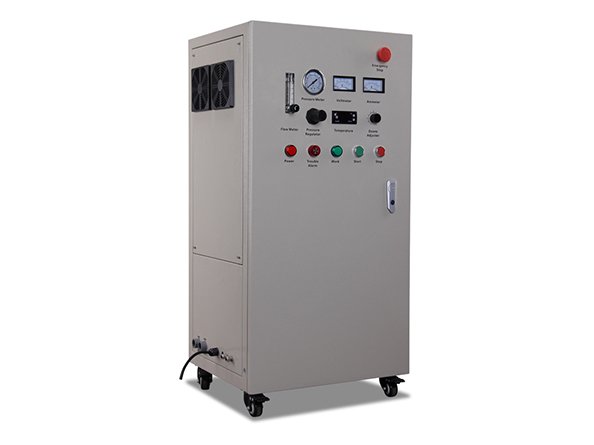
The primary reason engineers are switching to ozone is its superior redox potential. Ozone (O3) is one of the most powerful oxidants available, significantly more effective than chlorine at killing viruses and cysts like Cryptosporidium and Giardia. Unlike chlorine, ozone leaves no harmful residual chemicals or Trihalomethanes (THMs) in the water, making it the most environmentally responsible choice for high-volume sewage management.
Why Traditional Chlorination is Falling Short
For decades, chlorination was the “gold standard” for STP disinfection. However, modern environmental science has exposed significant flaws in this approach. Chlorine is a hazardous chemical to store, requiring strict safety protocols and specialized housing. Furthermore, when chlorine reacts with organic matter in sewage, it creates disinfection byproducts (DBPs) which are carcinogenic and harmful to aquatic life after discharge.
Conversely, an ozonator works on-site, generating ozone from the surrounding air or concentrated oxygen. There is no chemical storage required. Once the ozone has reacted with pollutants in the water, it naturally reverts back to pure oxygen. This process not only disinfects but also increases the Dissolved Oxygen (DO) levels of the effluent, which is a massive benefit for the ecological health of the receiving water body.
Critical Benefits of Installing an Ozonator for STP Plants
1. Rapid COD and BOD Reduction
Chemical Oxygen Demand (COD) and Biochemical Oxygen Demand (BOD) are the two most critical metrics for any STP. While biological stages (like ASP or MBBR) handle the bulk of BOD, they often struggle with complex organic molecules. Ozone breaks down these “refractory” organics into simpler biodegradable forms or mineralizes them completely into CO2 and water. This ensures that your facility consistently meets municipal discharge limits.
2. Complete Odor and Color Removal
Sewage effluent often carries a persistent yellowish tint and a characteristic “musty” odor, even after secondary treatment. These are caused by tannins, lignins, and sulfur compounds. Ozone is exceptionally effective at decolorization. It attacks the long-chain carbon molecules responsible for color, “unzipping” them and rendering the water crystal clear and odorless within minutes of contact.
3. Elimination of Micropollutants
Modern sewage contains an increasing amount of “emerging contaminants,” including pharmaceuticals, endocrine disruptors, and micro-plastics. Standard STPs are not designed to remove these. An industrial ozonator creates hydroxyl radicals—short-lived but incredibly aggressive oxidants—that can break down these complex chemical structures that would otherwise pass through into our groundwater.
4. Zero Chemical Residue
Because ozone is an unstable molecule, it has a very short half-life. After it performs its oxidative work, any remaining ozone dissipates. This means your STP produces high-purity effluent without the salinity increase associated with sodium hypochlorite or the safety risks of chlorine gas.
Technical Mechanics: How an Ozonator Works in an STP
To understand the value of an ozonator, one must understand the Corona Discharge method, which is the technology used in 95% of industrial STP applications.
• Feed Gas Preparation: Ambient air is dried to a very low dew point or passed through an oxygen concentrator. Dry, high-purity oxygen is essential to prevent the formation of nitric acid within the generator.
• The Ozone Cell: The oxygen passes through a high-voltage electrical field (the “Corona”). This energy splits the O2 molecules into single oxygen atoms, which then bind with other O2 molecules to form O3 (Ozone).
• Mass Transfer: This is the most crucial step. The ozone gas must be dissolved into the water. This is typically achieved using a Venturi injector or fine bubble diffusers at the bottom of a deep contact tank.
• Reaction & Destruction: The ozone reacts with the sewage effluent in a dedicated contact tank. Any “off-gas” (excess ozone that didn’t dissolve) is passed through an ozone destruct unit to ensure no ozone enters the atmosphere.
Strategic Placement: Where Does Ozone Fit?
In a standard STP flow, the ozonator is placed after the secondary clarifier and filtration. Positioning it here ensures that the ozone isn’t “wasted” on bulk organic solids that have already been settled out. By treating the “polished” water, the ozone can focus entirely on disinfection and the breakdown of remaining trace organics.
In advanced “Zero Liquid Discharge” (ZLD) plants, ozone is often used before Reverse Osmosis (RO) membranes. By oxidizing organic foulants, the ozone protects the expensive RO membranes from biofouling, significantly extending their lifespan and reducing the frequency of chemical cleanings (CIP).
Factors to Consider When Sizing an Ozonator
Choosing the right ozonator requires more than just looking at the flow rate (KLD or MGD). You must consider:
• Initial COD Levels: Higher organic loads require higher ozone dosages (grams per hour).
• Target Quality: Is the water being discharged into a river, or is it being reused for ultra-pure industrial processes?
• Contact Time: Ozone requires a specific “CT value” (Concentration x Time) to ensure 99.9% pathogen kill rates.
• Water Temperature: Ozone dissolves more efficiently in cooler water, so STP plants in tropical climates may require higher capacity units to compensate for lower solubility.
Maintenance and Operational Excellence
Modern ozonators are designed for 24/7 industrial use, but they are not “set and forget” systems. To maintain peak efficiency:
• Air Feed Maintenance: Ensure the air dryers are functioning. Moisture is the enemy of an ozone generator.
• Cooling Systems: Ozone generation produces heat. Most industrial units are water-cooled; ensure the cooling loop is clear of scale.
• Sensor Calibration: Ambient ozone monitors (for safety) and dissolved ozone sensors (for process control) should be calibrated every six months.
Case Study: Retrofitting a 500 KLD Residential STP
A residential complex in a metropolitan area was facing heavy penalties due to high fecal coliform counts and persistent odors in their recycled water used for gardening.
The Solution: They installed a 100 g/hr Corona Discharge Ozonator after their pressure sand filter.
The Results:
• Fecal Coliform: Reduced from 1500 MPN/100ml to “Not Detectable.”
• Clarity: Turbidity dropped by an additional 40% due to ozone’s micro-flocculation effect.
• User Satisfaction: Complaints regarding the “sewage smell” from the garden sprinklers stopped immediately.
• ROI: The plant saved on the cost of purchasing liquid chlorine and avoided regional environmental fines, reaching an ROI in just 14 months.
Cost Comparison: Ozone vs. UV vs. Chlorine
| Feature | Chlorine | UV Radiation | Ozonation |
|---|---|---|---|
| Disinfection Type | Chemical | Physical | Oxidative |
| Odor Removal | Low | None | Excellent |
| Residual Effect | Yes (Toxic) | None | None |
| COD Reduction | Minimal | None | High |
| Safety Risk | High (Leaks) | Low | Moderate |
| Operating Cost | High (Consumables) | Moderate (Bulbs) | Low (Electricity) |
FAQ Section
Is an ozonator expensive to run for an STP?
While the initial capital expenditure (CAPEX) for an ozonator is higher than a chlorine dosing system, the operational expenditure (OPEX) is often lower. You only pay for the electricity required to run the generator and the air compressor. There are no recurring costs for buying, transporting, or storing hazardous chemicals.
How much ozone is required for a 1 MLD STP plant?
Dosage typically ranges from 5 ppm to 15 ppm depending on the water quality. For a 1 MLD (Million Liters per Day) plant, at a 10 ppm dosage, you would require an ozone generator capable of producing roughly 400-500 grams of ozone per hour, accounting for transfer efficiency losses.
Can ozone replace the biological stage in an STP?
No. Ozone is a tertiary treatment. Using ozone to treat raw sewage is not cost-effective because the organic load is too high. The biological stage (MBR, SBR, or ASP) should do the heavy lifting of removing bulk BOD, while the ozonator performs the final “polishing” and disinfection.
Does ozone affect the pH of the water?
Ozone is pH-neutral. Unlike chlorine, which can fluctuate the pH and require additional buffering chemicals, ozone treatment does not significantly alter the acidity or alkalinity of the effluent.
Conclusion: Future-Proofing Your Wastewater Infrastructure
Implementing an ozonator for STP plant management is a strategic move toward sustainability and regulatory compliance. As global water scarcity increases, the ability to turn sewage into high-quality, reusable water becomes an asset rather than a liability. Ozone provides the most robust, chemical-free path to achieving “clear, clean, and safe” water.
If you are looking to upgrade your existing facility or are in the design phase of a new STP, prioritizing ozone technology will save on long-term chemical costs, protect the environment, and ensure your water quality meets the highest international standards. Start by conducting a water audit to determine the specific ozone dosage your facility requires for peak performance.