An ozone contact tank is a specialized vessel designed to provide the necessary retention time for ozone gas to dissolve into and react with water. By ensuring optimal mass transfer and contact time, these tanks allow ozone to effectively oxidize contaminants, neutralize pathogens, and disinfect water before it enters the distribution system or the next stage of treatment.
Introduction: Why Contact Time Matters in Water Treatment
Every effective water purification strategy relies on the relationship between concentration and time. If you are investing in an ozone generator for water treatment, the generator is only half of the equation. The other half is how that ozone interacts with your water.
Does your current system suffer from “short-circuiting,” where water bypasses treatment? Or perhaps you aren’t seeing the disinfection results you expected? These issues are almost always tied to the design of your contact vessel.
In this comprehensive guide, we will break down the engineering behind the ozone contact tank, why it is the “engine room” of any professional ozone water treatment system, and how to optimize yours for maximum safety and efficiency.
—
1. The Fundamental Role of an Ozone Contact Tank
Ozone (O3) is one of the most powerful oxidizers available for water treatment, significantly more potent than chlorine. However, ozone is a gas, and water is a liquid. To work, the gas must be “pushed” into the liquid.
The primary purpose of an ozone contact tank is to facilitate “Mass Transfer.” This is the process of dissolving ozone gas into the water column. Once dissolved, the ozone needs a specific amount of time—known as “contact time” or “CT value”—to chemically bridge with organic matter, bacteria, and viruses to neutralize them.
Key Functions Include:
• Disinfection: Killing bacteria (E. coli), viruses, and protozoa (Giardia/Cryptosporidium).
• Oxidation: Removing iron, manganese, and hydrogen sulfide (the “rotten egg” smell).
• Micro-flocculation: Helping small particles clump together for easier filtration.
• Degradation: Breaking down pesticides, pharmaceuticals, and synthetic organic chemicals.
—
2. How Does an Ozone Contact Tank Work?
The mechanics of a contact tank are centered around hydraulic efficiency. A well-designed tank prevents “dead zones” where water sits still and “short-circuiting” where water rushes through too quickly.
The Baffle System
Most professional tanks utilize a “serpentine” or baffled design. Internal walls (baffles) force the water to travel in a long, winding path—usually up and down or side to side. This ensures that every drop of water stays in contact with the ozone for the calculated duration.
Diffusion and Injection
Ozone is typically introduced at the beginning of the tank. This is done via:
• Fine Bubble Diffusers: Ceramic or stainless steel stones at the bottom of the tank that release tiny ozone bubbles.
• Venturi Injectors: A vacuum-based system that pulls ozone into the water stream before it even enters the tank.
—
3. Critical Design Components of an Ozone Water Treatment System
Building a high-performance ozone water treatment system requires more than just a tank; it requires a synchronized ecosystem of components.
The Ozone Generator
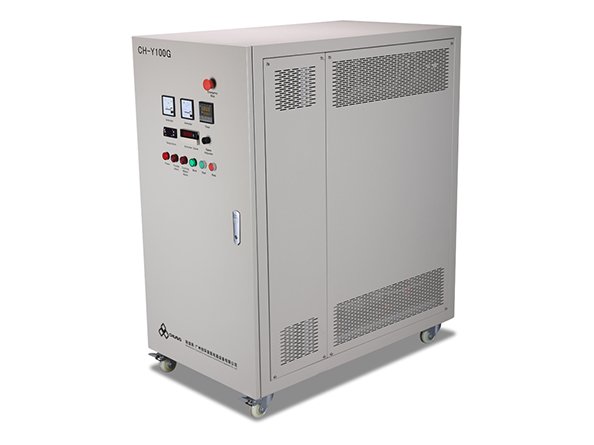
The ozone generator for water treatment creates the gas by passing oxygen or dry air through a high-voltage corona discharge. The output of this generator must be matched to the flow rate of the contact tank to ensure the “C” (Concentration) in the CT calculation is met.
Off-Gas Venting and Destructors
Because ozone is a respiratory irritant, any ozone that does not dissolve into the water must be safely managed. An ozone contact tank is equipped with an air release valve at the top, which leads to an ozone destruct unit. This unit uses heat or a catalyst (like manganese dioxide) to turn the excess O3 back into safe O2 (oxygen) before venting it into the atmosphere.
Monitoring Sensors
To ensure the system is working, “Dissolved Ozone” probes are often placed at the outlet of the tank. If the levels are too low, the system can automatically increase the output of the generator.
—
4. Engineering the Perfect Tank: Materials and Science
Not all materials can withstand the highly corrosive nature of ozone. If you use the wrong plastics or metals, the tank will degrade within months.
• Preferred Materials: 316L Stainless Steel is the gold standard for industrial applications. For smaller or residential systems, ozone-resistant HDPE (High-Density Polyethylene) or specialized fiberglass (FRP) with ozone-compatible resins are used.
• The CT Requirement: Regulators (like the EPA) require a specific “CT” for public safety.
• Formula: C (Concentration in mg/L) x T (Time in minutes) = CT.
• Example: If you need a CT of 1.6 and your ozone concentration is 0.4 mg/L, your water must stay in the tank for at least 4 minutes.
Pro-Tip: Always aim for a “Baffle Factor” of 0.6 or higher. This indicates that the tank’s internal geometry is efficient enough to prevent water from rushing through faster than intended.
—
5. Applications: Where Are Ozone Contact Tanks Used?
From municipal plants to high-end beverage production, these tanks are ubiquitous in advanced fluid handling.
• Municipal Drinking Water: Providing a barrier against chlorine-resistant pathogens.
• Bottled Water Plants: Ensuring the water is sterile and the bottle is sanitized during the filling process.
• Aquaculture: Maintaining high oxygen levels and low bacterial counts in fish farms.
• Wastewater Reuse: Treating effluent to a high enough standard for irrigation or industrial cooling.
—
6. Maintenance and Safety Best Practices
Owning an ozone contact tank requires diligent upkeep to maintain “Trustworthiness” in your water quality (a core pillar of EEAT).
• Check for Leaks: Use a handheld ozone leak detector around the tank seals and off-gas vent annually.
• Inspect Diffusers: Over time, mineral buildup can clog bubble diffusers, reducing the mass transfer efficiency. Clean them with a mild acid wash if bubble size increases.
• Monitor the Destruct Unit: Ensure the catalyst hasn’t become “poisoned” by moisture. If you smell ozone near the tank, the destruct unit likely needs a new catalyst or heating element.
—
7. Frequently Asked Questions (FAQ)
Q1: Is ozone better than chlorine for water treatment?
A: Ozone is a faster and more powerful disinfectant than chlorine. It is particularly effective against Cryptosporidium, which chlorine struggles to kill. Additionally, ozone leaves no chemical residue or taste, whereas chlorine creates disinfection by-products (DBPs) like trihalomethanes.
Q2: How big does my ozone contact tank need to be?
A: The size depends on your peak flow rate (GPM) and the required contact time. If your flow is 10 gallons per minute and you need 4 minutes of contact time, you need a minimum “working volume” of 40 gallons, though engineers usually add a safety margin.
Q3: Can I use a standard pressure tank as an ozone contact tank?
A: Generally, no. Standard pressure tanks lack the internal baffles necessary to prevent short-circuiting. Furthermore, the rubber bladders found in many pressure tanks will be rapidly destroyed by ozone’s oxidative power.
Q4: Does ozone change the pH of the water?
A: Ozone is pH-neutral. It does not significantly raise or lower the pH of the water, which is one of its major advantages over chemical additives like soda ash or certain acids.
Q5: Is the water safe to drink immediately after the tank?
A: Yes, but ideally, the ozone should have reverted back to oxygen or been removed via a carbon filter if a zero-residual is required. Most systems are designed so that by the time the water reaches the tap, the ozone has naturally decayed into pure oxygen.
—
Conclusion: Investing in Water Quality
The ozone contact tank is the silent workhorse of modern water purification. Without it, even the most expensive ozone generator for water treatment is simply blowing bubbles. By understanding the importance of retention time, baffle design, and material compatibility, you ensure a water treatment system that is not only efficient but also safe and long-lasting.
Ready to upgrade your water quality?
Whether you are designing a municipal plant or a specialized industrial process, choosing the right ozone water treatment system is critical. Consult with a certified water quality engineer today to calculate your specific CT requirements and select the perfect contact vessel for your needs.
***
Expert Insight: When evaluating a contact tank, always ask for the “Hydraulic Residence Time” (HRT) study. A reputable manufacturer will provide data showing exactly how water moves through their vessel to guarantee disinfection performance.