An ozone venturi injector is a high-precision, differential pressure device designed to efficiently mix ozone gas into a liquid stream. By creating a vacuum through the “Venturi effect,” it pulls ozone gas into the water flow, ensuring maximum mass transfer and rapid oxidation for superior water purification and disinfection results.
Introduction: Why Ozone Injection Efficiency Matters
Have you ever wondered why some water treatment systems produce crystal-clear results while others struggle with persistent odors or bacteria? The secret often lies not in how much ozone is produced, but in how effectively that ozone is dissolved into the water.
In this guide, we will break down the mechanics of the venturi injector, why it is the industry standard for high-performance systems, and how to select the right one for your needs. Whether you are managing a municipal plant or a small-scale industrial process, mastering ozone mass transfer is the key to success.
—
The Science Behind the Venturi Effect
To understand an ozone venturi injector, we must first look at the physics of fluid dynamics. Named after the Italian physicist Giovanni Battista Venturi, the principle states that when a pressurized fluid flows through a constricted section of pipe, its velocity increases while its static pressure decreases.
How the Vacuum is Created
Inside the injector, the water flow is squeezed through a tapered conical body. At the narrowest point (the throat), the water reaches its maximum velocity. This creates a powerful vacuum at the suction port.
When you connect an ozone generator for water treatment to this suction port, the ozone gas is literally “sucked” into the water stream. As the water exits the throat and enters the expansion zone, the velocity decreases, and the turbulence shears the ozone gas into millions of microscopic bubbles.
—
Why Use an Ozone Venturi Injector?
In the world of water treatment, there are several ways to get gas into liquid. However, the venturi method remains the preferred choice for professionals.
1. Superior Mass Transfer Efficiency
Ozone is only effective if it dissolves. Large bubbles rise to the surface and escape (off-gassing), wasting energy and money. An ozone venturi injector creates tiny micro-bubbles, increasing the surface area contact between the gas and the water, leading to a 90% or higher transfer rate.
2. No Moving Parts
Unlike mechanical mixers or pumps, a venturi injector is a static device. This means there are no bearings to wear out, no motors to burn out, and virtually zero maintenance requirements if the system is designed correctly.
3. Integrated Safety
Because the venturi works via vacuum, it creates a “fail-safe” environment. If the water flow stops, the vacuum disappears, and the ozone gas stops being drawn into the system. This prevents ozone leaks into the surrounding atmosphere.
—
Critical Components of an Ozone Injection System
A high-performance system requires more than just the injector itself. To achieve professional-grade results, you need a coordinated setup.
The Ozone Generator
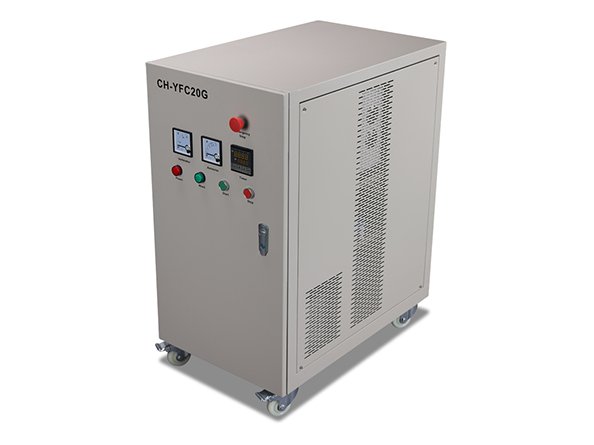
The ozone generator for water treatment is the heart of the operation, producing the O3 molecules. However, the generator’s output is only as good as the injector’s ability to dissolve it.
The Booster Pump
Since a venturi requires a pressure differential (the “pressure drop”) to function, a booster pump is often used to increase the inlet pressure, ensuring a strong enough vacuum is maintained at all times.
Check Valves and Flash Tanks
To protect your equipment, a high-quality check valve must be installed between the injector and the ozone generator. This prevents water from backing up into the electronics of the generator—a common cause of system failure.
—
Pro-Tip: Optimizing Your Injector Placement
Expert Insight: Always install your venturi injector on a “bypass manifold.” This allows you to regulate the flow through the injector independently of the main water line, giving you precise control over the ozone concentration without restricting your overall system flow rate.
—
Applications: Where is the Venturi Injector Used?
The versatility of the ozone venturi injector makes it a staple in numerous industries:
• Drinking Water Purification: Removing iron, manganese, and hydrogen sulfide (the “rotten egg” smell).
• Aquaculture and Zoos: Maintaining high oxygen levels and sterile environments for sensitive aquatic life.
• Wastewater Treatment: Breaking down complex organic compounds and Chemical Oxygen Demand (COD).
• Food & Beverage: Sanitizing bottles and rinsing produce without leaving chemical residues.
• Commercial Pools and Spas: Reducing chlorine reliance and eliminating “red eye” caused by chloramines.
—
Common Challenges and Solutions
Scaling and Mineral Buildup
In “hard water” environments, calcium and magnesium can scale up inside the narrow throat of the injector.
• Solution: Use a Kynar (PVDF) injector, which is resistant to scaling and highly compatible with ozone’s corrosive nature.
Backpressure Issues
If the downstream pressure is too high (e.g., pumping into a tall tank), the venturi may lose its vacuum.
• Solution: Ensure the pressure ratio between the inlet and outlet is at least 20-30%. If backpressure is unavoidable, use a larger booster pump.
—
Selecting the Right Size Injector
Choosing an injector isn’t a “one size fits all” process. You must match the injector to your specific flow rate (GPM or ㎥/h) and the amount of ozone gas (grams per hour) you need to inject.
| Flow Rate (GPM) | Recommended Injector Size | Typical Application |
|---|---|---|
| 1 – 5 | 1/2 inch | Residential Well Water |
| 5 – 20 | 1 inch | Small Commercial Pools |
| 20 – 100 | 2 inch + | Industrial Wastewater |
Note: Always consult the manufacturer’s performance chart to ensure the pressure drop matches your pump’s capabilities.
—
The Role of Material Compatibility
Ozone is a powerful oxidizer. Standard plastics like PVC or rubber seals will degrade rapidly when exposed to high concentrations of O3.
• PVDF (Kynar): The gold standard for venturi construction. It is nearly inert to ozone.
• Stainless Steel (316L): Excellent for high-pressure industrial applications.
• Teflon (PTFE): Used for gaskets and seals to ensure a leak-proof system.
—
Frequently Asked Questions (FAQ)
1. Does a venturi injector require electricity?
No, the injector itself is a passive device with no moving parts. However, the pump that moves the water through the injector does require electricity.
2. Can I use a venturi for gases other than ozone?
Yes. Venturi injectors are commonly used for air injection (aeration), chlorine gas, and even liquid chemicals like fertilizers in “fertigation” systems.
3. What is the difference between a venturi and a bubble stone?
A bubble stone (diffuser) relies on buoyancy to move gas through water, which is highly inefficient. A venturi uses pressure and turbulence to create a vacuum, resulting in much higher gas-to-liquid mass transfer.
4. Why is my venturi injector not sucking gas?
This usually happens because the pressure differential is too low. If the outlet pressure is too close to the inlet pressure, the vacuum will not form. Check for downstream obstructions or a weak pump.
5. How long do ozone venturi injectors last?
If made from PVDF (Kynar), an injector can last 10+ years. The only common maintenance involves cleaning out mineral deposits if the water is extremely hard.
—
Conclusion: Transform Your Water Quality
The ozone venturi injector is the most reliable, efficient, and cost-effective way to introduce ozone into a water system. By leveraging the laws of physics, it ensures that your ozone generator for water treatment performs at its peak potential, delivering clean, safe, and purified water for any application.
Ready to upgrade your water treatment system?
[Contact our Engineering Team Today] for a custom consultation on selecting the perfect venturi injector and ozone system for your specific needs. Don’t leave your water quality to chance—optimize with the power of the Venturi effect.