Yes, ozone is a faster, more powerful disinfectant than chlorine dioxide. It possesses a significantly higher oxidation potential, instantly destroying resilient pathogens like Cryptosporidium without leaving harmful chemical residues. However, chlorine dioxide remains highly valuable when a lasting residual is required to protect extensive piping networks.
Eliminating dangerous waterborne pathogens without creating toxic byproducts is a massive challenge for modern facilities. Plant managers and engineers constantly wrestle with increasingly strict environmental regulations and safety standards.
Relying on outdated or mismatched chemical treatments can lead to compliance failures, hazardous disinfection byproducts (DBPs), and costly system inefficiencies. If you choose the wrong sanitation method, public safety and your operational budget are severely at risk.
Fortunately, modern disinfection technology offers highly effective solutions. In this guide, we will break down the science to determine if ozone truly outperforms chlorine dioxide in industrial and municipal applications.
Understanding the Giants of Disinfection
To answer which chemical is superior, we must first understand how these two powerful oxidants operate. Both are highly effective at neutralizing biological threats, but their chemical behaviors differ vastly.
What is Ozone (O3)?
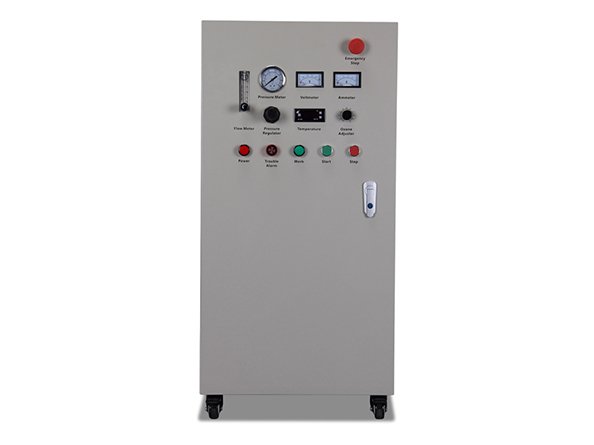
Ozone is a naturally occurring, highly reactive gas composed of three oxygen atoms. It is generated on-site by passing oxygen through a high-voltage electrical discharge using a commercial ozone generator.
Because ozone is highly unstable, it cannot be stored or transported in tanks. Once injected into water, it reacts immediately with contaminants, breaking down cellular walls and reverting safely back to pure oxygen.
What is Chlorine Dioxide (ClO2)?
Chlorine dioxide is a synthetic, yellowish-green gas that dissolves readily in water. Unlike traditional chlorine (sodium hypochlorite), it works through oxidation rather than chlorination.
This means it does not bind with organic compounds to create harmful trihalomethanes (THMs). However, chlorine dioxide must also be generated on-site using chemical precursors, as it becomes volatile when compressed.
Ozone vs. Chlorine Dioxide: The Head-to-Head Comparison
Choosing the right disinfectant requires looking at specific performance metrics. Let’s compare these two chemicals across four critical categories.
1. Oxidation Power and Speed
When it comes to raw strength, ozone is the undisputed champion. Ozone boasts an oxidation potential of 2.07 volts, making it one of the strongest commercially available oxidants.
In contrast, chlorine dioxide has an oxidation potential of 0.95 volts. Because of this massive difference in power, ozone reacts thousands of times faster than chlorine dioxide, requiring significantly less contact time to achieve the same kill rate.
2. Pathogen Inactivation
Both disinfectants are incredibly effective against common bacteria like E. coli and Legionella. However, their effectiveness diverges when facing hard-to-kill protozoa.
• Ozone: Instantly destroys the thick protective shells of Cryptosporidium and Giardia.
• Chlorine Dioxide: Can inactivate these protozoa, but requires significantly longer contact times and higher dosages.
Expert Insight: For facilities prioritizing the absolute highest level of microbial safety, ozone is the scientifically proven superior choice.
3. Byproducts and Environmental Impact
The environmental footprint of your disinfection process matters now more than ever. Ozone leaves zero chemical residues behind, converting entirely back into dissolved oxygen, which actually improves water quality.
Chlorine dioxide, while vastly superior to traditional chlorine, still produces chlorite and chlorate as breakdown byproducts. These inorganic byproducts are strictly regulated by the EPA and require careful monitoring to ensure they do not exceed safe drinking water limits.
4. Residual Effect and Pipe Networks
This is the one category where chlorine dioxide holds a distinct advantage. Because ozone is so highly reactive, it has a very short half-life (usually 10 to 30 minutes in water).
Ozone cannot maintain a “residual” in the water to protect against re-contamination as it travels through miles of municipal piping. Chlorine dioxide, however, provides a long-lasting, stable residual that aggressively breaks down protective biofilms inside pipes and cooling towers.
Why Many Facilities Prefer Ozone for Water Treatment
Given the regulatory push toward greener, safer technologies, the use of ozone for water treatment is skyrocketing globally. Municipalities, food processing plants, and bottled water companies favor it for its unmatched purity.
First, utilizing ozone completely eliminates the costs and liabilities associated with purchasing, shipping, and storing dangerous liquid chemicals. Second, ozone excels at color removal, taste improvement, and odor control, creating a vastly superior end product.
Pro-Tip: If your facility struggles with high iron, manganese, or hydrogen sulfide levels, ozone will oxidize these nuisance minerals instantly, allowing them to be easily filtered out.
When is Chlorine Dioxide the Better Choice?
Despite ozone’s superior raw power, chlorine dioxide is still the better tool for specific applications. It is exceptionally effective at penetrating and destroying established biofilms in industrial cooling towers.
Furthermore, secondary disinfection in sprawling municipal water grids relies heavily on chlorine dioxide. Engineers often use ozone as the primary disinfectant at the plant, followed by a small dose of chlorine dioxide to protect the water as it travels to consumers.
Conclusion: Making the Right Choice for Your Facility
So, is ozone a better disinfectant than chlorine dioxide? For raw oxidation power, speed, pathogen destruction, and environmental safety, ozone is the clear winner. However, if your primary goal is maintaining a long-lasting chemical residual in a vast pipe network, chlorine dioxide is essential.
Ultimately, the best choice depends on your facility’s unique water chemistry, infrastructure, and regulatory requirements. Stop leaving your water quality to chance.
Call to Action: Ready to upgrade your facility’s disinfection capabilities? Contact our water treatment specialists today for a free consultation to find out which system is right for you!
—
Frequently Asked Questions (FAQs)
1. Can ozone and chlorine dioxide be used together?
Yes, they are frequently used in tandem. Many modern municipal plants use ozone for primary disinfection to instantly kill pathogens and improve taste, and then add chlorine dioxide for secondary disinfection to maintain a protective residual in the pipes.
2. Does an ozone generator require a lot of maintenance?
Modern generators are highly reliable but do require routine preventative maintenance. You will need to periodically clean air filters, check compressor functions, and inspect the dielectric tubes to ensure optimal ozone production.
3. Is chlorine dioxide toxic to humans?
In its concentrated gas form, chlorine dioxide is highly toxic and dangerous to breathe. However, when properly dosed and dissolved in water at regulated limits (typically below 0.8 mg/L), it is entirely safe for human consumption.
4. Which is more cost-effective: ozone or chlorine dioxide?
Ozone systems require a higher initial capital investment for the equipment but have very low ongoing operational costs (only electricity and air/oxygen). Chlorine dioxide systems are cheaper to install but require the continuous, ongoing purchase of consumable chemical precursors.
5. Does ozone leave a chemical taste in water?
No. In fact, ozone is widely used by premium bottled water brands specifically because it improves taste. It rapidly oxidizes the organic compounds that cause swampy, earthy, or metallic flavors, leaving the water tasting fresh and clean.