Can ozone replace chlorine in water treatment? Yes, ozone is a highly effective, faster-acting disinfectant that eliminates viruses, bacteria, and bad odors without leaving harmful chemical byproducts. However, because ozone dissipates quickly, most water treatment facilities still use a small amount of chlorine to maintain long-lasting residual disinfection in pipelines.
The Problem: For decades, relying solely on chlorine for water purification has been the global standard. However, this outdated method is becoming a growing concern due to strong chemical odors, poor taste, and the formation of harmful disinfection byproducts (DBPs) like trihalomethanes.
The Agitation: As global water quality standards tighten and public health concerns rise, municipalities and industrial plants are desperately searching for safer alternatives. Sticking entirely to traditional chemical dosing can compromise both human health and environmental safety. If your local water smells like a swimming pool, you are already experiencing the downside of heavy chlorination.
The Solution: Enter the modern era of ozone for water treatment. In this comprehensive guide, we will explore whether this powerful, naturally occurring gas can completely replace chlorine. We will break down how it works, the costs involved, and what the future of safe water purification looks like.
Understanding the Disinfection Heavyweights: Ozone vs. Chlorine
To understand if a complete replacement is possible, we must look at how both purification methods operate on a microscopic level. Both are powerful oxidizers, but their application and chemical behaviors are vastly different.
The Traditional Workhorse: How Chlorine Works
Chlorine has been the backbone of municipal water treatment since the early 20th century. It is cheap, easily transported, and highly effective at neutralizing common waterborne pathogens.
When added to water, chlorine breaks down the chemical bonds in bacteria and viruses, effectively neutralizing them. The biggest advantage of chlorine is its “residual” capability. It stays in the water for days, protecting it from recontamination as it travels miles through city pipes.
However, chlorine has major drawbacks. It reacts with organic matter in water to create toxic DBPs, which are heavily regulated by the EPA. Furthermore, it struggles to kill resilient parasites like Cryptosporidium and Giardia.
The Modern Challenger: How Ozone Works
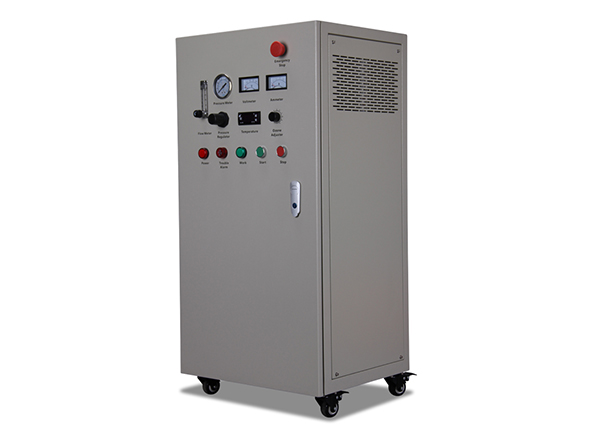
Ozone (O3) is a highly reactive gas composed of three oxygen atoms. Because it is so unstable, it cannot be stored or shipped in tanks like chlorine. Instead, it must be created directly on-site using an industrial ozone generator.
When introduced to water, ozone attacks the cell walls of microorganisms, causing them to instantly rupture and die. Once it has done its job, ozone simply reverts back into safe, breathable oxygen (O2).
This means ozone for water treatment leaves absolutely no chemical residue, no bad taste, and no lingering odors.
Expert Insight: According to water treatment engineers, ozone is incredibly powerful. In fact, it is roughly 3,000 times faster at destroying bacteria than chlorine, making it one of the most potent commercial disinfectants available today.
The Major Advantages of Using Ozone for Water Treatment
Why are municipalities and private industries rushing to adopt ozone technology? The benefits go far beyond just killing germs. Here are the primary advantages:
• Eradicates Stubborn Pathogens: Unlike chlorine, ozone easily destroys tough, shell-protected parasites like Cryptosporidium.
• Zero Harmful Byproducts: Ozone prevents the formation of dangerous trihalomethanes (THMs) and haloacetic acids (HAAs).
• Superior Taste and Odor Control: Ozone breaks down sulfur compounds, iron, and manganese, resulting in crystal-clear, fresh-tasting water.
• Micro-pollutant Destruction: Ozone is highly effective at breaking down pharmaceuticals, endocrine disruptors, and personal care products found in wastewater.
The Catch: Why Ozone Cannot Entirely Replace Chlorine Yet
If ozone is so superior, why haven’t we banned chlorine completely? The answer lies in a vital concept called “residual disinfection.”
When water leaves a treatment plant, it must travel through miles of underground pipelines before reaching your tap. These pipes are often old and can harbor microscopic biofilms or experience tiny leaks.
Because ozone is highly unstable, it dissipates out of the water within 20 to 30 minutes. Therefore, if ozone were the only disinfectant used, the water would be completely unprotected as it journeyed through the city’s pipe network.
The High Cost of Setup
Another barrier to completely replacing chlorine is the financial investment. Installing a commercial ozone generator requires a massive upfront capital expenditure.
Facilities must purchase oxygen concentrators, ozone destruct units, and specialized contact chambers. Furthermore, generating ozone requires significant electricity, which can increase operational overhead compared to simply buying liquid chlorine.
Pro-Tip: If you are running a commercial swimming pool or a private well, pairing an ozone system with a very low dose of chlorine will give you the safest, clearest water while slashing your chemical costs by up to 80%.
The Future: A Dual-Disinfection Hybrid Approach
Modern water treatment is no longer about choosing one method over the other. The industry standard has shifted toward a highly efficient hybrid model.
First, water treatment plants use ozone as the primary disinfectant. The gas violently sanitizes the water, kills the toughest parasites, removes heavy metals, and destroys foul odors.
Once the water is pristine, a micro-dose of chlorine or chloramine is added just before the water leaves the facility. Because the ozone has already removed the organic matter, this small amount of chlorine will not create toxic byproducts. It simply acts as a protective bodyguard, keeping the water safe inside the pipes until it reaches your glass.
Summary and Conclusion
So, can ozone replace chlorine in water treatment? While it cannot entirely replace chlorine due to the need for residual pipe protection, it absolutely replaces chlorine as the primary method of purification.
By utilizing a commercial ozone generator, modern facilities can ensure water is free of dangerous parasites, foul tastes, and toxic chemical byproducts. The future of clean drinking water relies on this powerful, dual-disinfection synergy.
Ready to upgrade your water system? Whether you are managing an industrial plant or looking for a whole-house purification system, consult a certified water treatment specialist today to see how ozone technology can revolutionize your water quality!
—
Frequently Asked Questions (FAQs)
1. Is ozone-treated water safe to drink?
Yes, it is incredibly safe. Ozone breaks down organic contaminants and instantly reverts into pure oxygen, leaving no toxic chemical residues in your drinking water.
2. Is an ozone generator expensive to run?
While the initial setup cost is higher than traditional chemical dosing systems, operational costs balance out over time. You will drastically reduce your reliance on purchasing, storing, and handling hazardous liquid chemicals.
3. Does ozone remove heavy metals from water?
Yes. Ozone is a powerful oxidizer that forces dissolved heavy metals—like iron and manganese—to clump together. These clumped particles can then be easily filtered out of the water supply.
4. Why does my tap water still smell like chlorine if my city uses ozone?
Because ozone dissipates quickly, your municipality must still add a small amount of chlorine or chloramine to protect the water as it travels through city pipes. The smell comes from this secondary residual disinfectant.
5. Can ozone kill Cryptosporidium?
Absolutely. While standard chlorine struggles to penetrate the hard outer shell of Cryptosporidium, ozone destroys it quickly and efficiently, preventing dangerous outbreaks of waterborne illness.