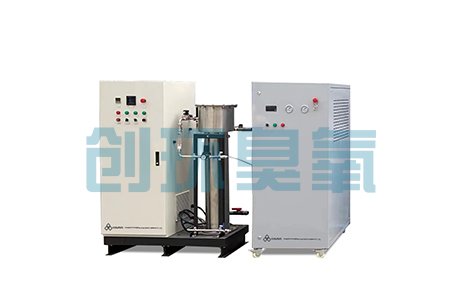
An ozone water treatment system typically consists of five primary components: an oxygen feed gas system, an ozone generator for water treatment, a mass transfer (injection) system, a reaction vessel (contact tank), and an ozone destruct unit. These elements work in a synchronized loop to generate ozone gas, dissolve it into water to eliminate contaminants, and safely neutralize any remaining gas before it reaches the atmosphere.
Introduction: The Power of Advanced Oxidation
Do you struggle with stubborn water contaminants that standard filtration simply cannot touch? You are not alone. Many industrial and residential water users find that traditional chlorine or UV systems fall short when dealing with complex organics, heavy metals, or resilient pathogens.
The good news is that ozone technology offers one of the most powerful oxidation potentials on the planet. In this guide, we will break down the sophisticated architecture of an ozone water treatment system. By the end of this article, you will understand exactly how each component functions to deliver crystal-clear, pathogen-free water.
We will explore the technical engineering behind ozone generation, the physics of mass transfer, and the safety protocols required to manage this potent molecule effectively.
—
1. The Feed Gas Preparation System
Before you can create ozone (O3), you need a high-quality source of oxygen (O2). The feed gas system is the “fuel intake” of the entire operation.
Air Dryers and Compressors
Ambient air contains moisture, which is the enemy of ozone production. If moisture enters the generator, it reacts with nitrogen to form nitric acid, which can corrode the equipment. High-performance systems use refrigerated or desiccant air dryers to achieve a “dew point” of -60°F or lower.
Oxygen Concentrators
While you can produce ozone from dry air (resulting in 1-3% ozone concentration), most high-efficiency systems use pure oxygen. Oxygen concentrators use Pressure Swing Adsorption (PSA) technology to strip nitrogen away, providing a feed gas of 90-95% pure oxygen. This significantly boosts the output of the ozone generator for water treatment.
—
2. The Ozone Generator: The Heart of the System
The ozone generator for water treatment is where the chemical transformation happens. Since ozone is an unstable gas with a short half-life, it cannot be bottled and shipped; it must be created on-site and on-demand.
Corona Discharge Technology
The most common method for industrial-scale treatment is Corona Discharge. Inside the generator, oxygen gas passes through an electrical field (a “corona”). This high-voltage discharge splits the O2 molecules into individual oxygen atoms, which then bind with remaining O2 molecules to create O3 (Ozone).
Power Supply Unit (PSU)
Modern generators use high-frequency inverters to control the electrical discharge. This allows for precise control over the ozone concentration levels, enabling the system to scale its output based on the water’s flow rate or chemical oxygen demand (COD).
Pro-Tip: Always check the cooling system of your generator. Ozone production generates significant heat. If the dielectric cells aren’t cooled via water or high-velocity air, the ozone will revert back to oxygen almost instantly.
—
3. The Mass Transfer (Injection) System
Creating ozone gas is only half the battle; the real challenge is dissolving that gas into the water. This is known as “mass transfer.”
Venturi Injectors
The most efficient ozone water treatment system setups use a Venturi injector. As water flows through a tapering throat, it creates a vacuum that sucks the ozone gas directly into the water stream. This creates micro-bubbles, maximizing the surface area for the gas to dissolve.
Static Mixers
To further enhance the dissolution, static mixers are often placed downstream of the injector. These internal baffles create turbulence, shearing the ozone bubbles into even smaller sizes to ensure a homogenous mix.
—
4. The Ozone Contact Tank (Reaction Vessel)
Once the ozone is in the water, it needs time to work. This is referred to as “CT Value” (Concentration x Time).
Baffled Tanks
A standard contact tank is not just a hollow vessel. It often contains a series of baffles (internal walls) that force the water into a “serpentine” path. This prevents “short-circuiting,” where water flows directly from the inlet to the outlet without being treated.
Oxidation of Contaminants
In this stage, the ozone attacks:
• Bacteria and Viruses: Breaking down lipid layers and protein shells.
• Iron and Manganese: Oxidizing dissolved metals into solid particulates that can be filtered out later.
• Tannins and Sulfur: Neutralizing odors and “swampy” colors.
—
5. The Ozone Destruct Unit
Ozone is a powerful oxidant, and any gas that doesn’t dissolve into the water (off-gas) must be handled safely. You cannot simply vent concentrated ozone into a room or the environment, as it is a respiratory irritant.
Thermal-Catalytic Destructors
The “off-gas” from the top of the contact tank is piped into an ozone destruct unit. This device uses a catalyst (like manganese dioxide) or intense heat to instantly break O3 back down into safe O2.
Degassing Valves
Automatic air vents or degassing valves sit atop the contact tank to release the “spent” gas while preventing water from escaping the system.
—
6. The Control and Monitoring System
A high-authority ozone water treatment system is only as good as its sensors. To ensure safety and efficacy, several monitoring tools are integrated:
• ORP Meters (Oxidation-Reduction Potential): Measures the “cleansing power” of the water in millivolts (mV).
• Dissolved Ozone Monitors: Provides a real-time PPM (parts per million) reading of the ozone concentration in the water.
• Ambient Ozone Sensors: Safety devices that shut down the ozone generator for water treatment if a gas leak is detected in the room.
—
Expert Insights: Why Configuration Matters
When designing a system, one size does not fit all. For example, a system designed for a commercial swimming pool focuses on “micro-flocculation” to keep water clear, whereas a system for a bottling plant focuses on “final disinfection” to ensure shelf stability.
Expert Insight: “The efficiency of your system is directly tied to your water temperature. Ozone dissolves much more readily in cold water than in warm water. If you are treating water above 30°C (86°F), you may need to upsize your generator by 20-30% to compensate for lower solubility.”
—
Summary of Components Table
| Component | Primary Function | Key Feature |
|---|---|---|
| Feed Gas Prep | Purifies and dries oxygen/air | Desiccant Dryers / PSA Concentrators |
| Ozone Generator | Converts O2 to O3 | Corona Discharge / High-Frequency Inverters |
| Injection System | Dissolves gas into liquid | Venturi Injectors / Static Mixers |
| Contact Vessel | Provides reaction time | Baffled Chambers |
| Destruct Unit | Neutralizes excess gas | Manganese Dioxide Catalyst |
—
Frequently Asked Questions (FAQ)
1. How long does ozone stay in the water?
Ozone has a very short half-life, typically 10 to 30 minutes depending on water temperature and pH. It leaves no chemical residue, reverting back to pure oxygen.
2. Is an ozone water treatment system better than chlorine?
Ozone is a much stronger oxidant than chlorine and works significantly faster. Unlike chlorine, it does not produce harmful disinfection by-products (DBPs) like trihalomethanes (THMs).
3. Does ozone remove heavy metals?
Yes. Ozone oxidizes dissolved metals like iron, manganese, and arsenic into solid particles. These particles can then be easily removed using a standard sediment filter.
4. What maintenance is required for an ozone generator?
Routine maintenance includes checking air filters, cleaning the corona discharge cells to remove mineral buildup, and replacing seals in the Venturi injector every 6–12 months.
5. Can I use ozone for well water at home?
Absolutely. Ozone is highly effective for well water, especially for removing the “rotten egg” smell caused by hydrogen sulfide and for killing bacteria like E. coli.
—
Conclusion: Investing in Water Purity
Understanding the components of an ozone water treatment system is the first step toward achieving superior water quality. From the initial preparation of oxygen to the final destruction of off-gasses, every stage plays a vital role in ensuring a safe, efficient, and powerful purification process.
Whether you are looking for an ozone generator for water treatment for an industrial facility or a high-end residential application, choosing high-quality components and ensuring professional integration is key to long-term success.
Ready to upgrade your water quality? Contact our technical specialists today for a custom system design tailored to your specific water profile!