When evaluating pool sanitation, owners and facility operators frequently ask: Is ozone better than chlorine? The industry is flooded with marketing materials claiming that ozone offers a “chemical-free” swimming experience, while traditionalists argue that chlorine is the only reliable way to keep a pool safe.
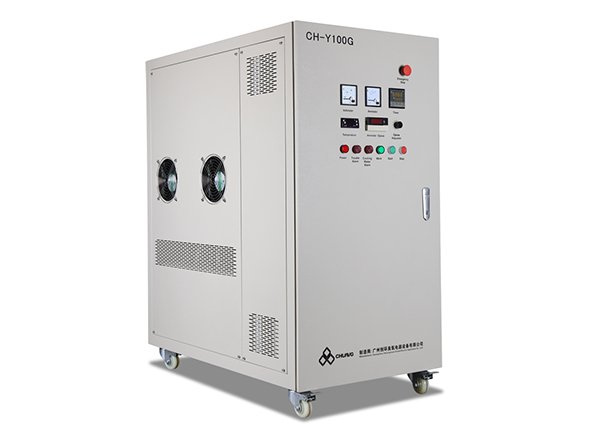
The truth requires looking past the marketing jargon and understanding the distinct chemical roles of each. In this comprehensive guide, we will break down the science, safety limits, 10-year costs, and real-world performance of both methods, ultimately showing you why the question isn’t about choosing one over the other—it’s about how they work together.
How Ozone and Chlorine Work: Oxidation, Disinfection, and Residuals
To determine which system is “better,” you must clearly distinguish between two distinct water treatment processes: oxidation (destroying organic contaminants) and residual disinfection (maintaining a protective chemical barrier in the bulk pool water).
Ozone (O3) is an unstable, highly reactive gas and one of the most powerful oxidizers commercially available. When injected into pool plumbing, it rapidly ruptures the cell walls of bacteria, viruses, and algae in a process called cell lysis.
Chlorine (hypochlorous acid), on the other hand, is a traditional halogen. While it also oxidizes, it acts significantly slower than ozone. The key metric here is the Contact Time (CT) value—the concentration of a chemical multiplied by the time required to achieve a 99.9% kill rate.
• Speed: Ozone reacts up to 3,000 times faster than chlorine.
• Efficacy: For highly chlorine-resistant pathogens like Cryptosporidium, the CT value for standard pool chlorine is around 15,300 (taking days to kill the parasite). For ozone, the CT value is a mere 1.0 to 2.5, neutralizing the threat in minutes.
However, chlorine has one massive advantage: it leaves a residual. Once ozone oxidizes contaminants in the system’s contact chamber, it quickly reverts to regular oxygen (O2). It leaves absolutely zero lingering protection in the main pool basin. Chlorine remains active in the bulk water, providing continuous “residual disinfection” to instantly attack new bacteria introduced by swimmers. Therefore, ozone is the superior oxidizer, but chlorine remains the essential residual disinfectant.
Health, Swimmer Safety, and Environmental Byproducts
Most operators consider ozone because of swimmer comfort. Traditional chlorine pools are notorious for red eyes, dry skin, asthma triggers, and a strong “pool smell.” These issues aren’t caused by free chlorine, but by chloramines (combined chlorine)—byproducts formed when chlorine binds to sweat, urine, and oils.
Ozone excels at breaking down these irritating chloramines, resulting in incredibly clear, soft, and odorless water. However, ozone introduces its own set of environmental and safety risks that competitors rarely quantify: off-gassing.
Because ozone is toxic to breathe, any undissolved ozone gas must not be allowed to escape into the ambient air, particularly in indoor pool facilities.
• Safety Limits: The OSHA and NIOSH Permissible Exposure Limit (PEL) for ozone gas is 0.1 ppm over an 8-hour workday. Exposure above this can cause severe respiratory irritation.
• Mitigation Protocols: To prevent off-gassing, modern ozone systems must utilize a proper contact tank and an off-gas destruct unit (thermal or catalytic) to safely convert excess ozone back to oxygen before the water returns to the pool.
• Monitoring: For indoor commercial facilities, it is highly recommended to install ambient air ozone monitors with automatic shut-off thresholds linked to the ozone generator. Standard ventilation (HVAC) should also be optimized to ensure heavy air is exhausted efficiently.
Installation, Costs, Maintenance, and Regulatory Compliance
When planning a system upgrade, looking at the upfront price tag is a mistake; you must analyze the 5-to-10-year lifecycle costs.
10-Year Cost Comparison (Standard 20,000-Gallon Residential Pool):
• Traditional Chlorine System:
• Upfront: $100–$300 (standard tablet feeder or liquid doser).
• Ongoing: $600–$1,000/year (chemicals, shock, pH adjusters).
• 10-Year Total: $6,100 to $10,300.
• Ozone Hybrid System:
• Upfront: $800–$2,000 (Ozone generator, venturi manifold, installation).
• Ongoing: $200–$300/year (reduced chlorine, minimal electricity, UV bulb/CD cell replacement every 18-24 months).
• 10-Year Total: $2,800 to $5,000.
While ozone requires a higher initial capital expenditure, it significantly lowers the “chlorine demand” of the pool by 50% to 70%, yielding a strong Return on Investment (ROI) typically within 3 to 4 years.
Regulatory Compliance:
If you operate a commercial or public facility in the US, health codes (such as the CDC’s Model Aquatic Health Code – MAHC) strictly dictate your sanitation methods. You cannot legally run a public pool on ozone alone. State and local codes universally mandate a halogen residual—usually a minimum of 1.0 ppm free chlorine for pools and 3.0 ppm for spas. Operating an ozone system does not exempt you from logging daily DPD chlorine tests or passing health department inspections.
Real-World Performance: Algae, Biofilm, Chloramines, and Practical Protocols
How does ozone actually perform in the trenches? Laboratory tests confirm its superiority against waterborne pathogens, but its practical impact on pool maintenance is equally impressive.
• Biofilm & Algae Penetration: Bacteria naturally protect themselves by secreting a slimy layer called biofilm on pool walls and inside plumbing. Chlorine struggles to penetrate this matrix. Ozone aggressively destroys the molecular bonds of biofilms, stripping away the protective layer and exposing the bacteria to your low-level chlorine residual.
• Chloramine Reduction: In a real-world scenario, a high bather load causes a spike in chloramines. Normally, this requires a massive “shock” dose of chlorine (breakpoint chlorination) to resolve. With an ozone generator running during the pump cycle, chloramines are continuously oxidized inline.
Practical Operating Protocol:
To harness these benefits, pool managers must adapt their routines.
• Testing: Rely on DPD chemical tests for your baseline free chlorine (aiming for 1.0–2.0 ppm). Use an ORP (Oxidation-Reduction Potential) meter to gauge water quality, targeting >650 mV.
• Turnover: Ozone only works when the pump is running. You must ensure your daily pump cycle allows the entire volume of the pool to pass through the ozone contact chamber at least once (preferably twice) a day.
• Supplemental Shocking: Even with ozone, perform a bi-weekly or monthly low-dose chlorine shock to burn off any microscopic debris that may have settled in dead circulation zones within the pool basin.
Hybrid Systems and Best Practices: Integrating Ozone with Low-Level Chlorine or Salt
The definitive answer to “Is ozone better than chlorine?” is that a hybrid system is better than either used independently. Integrating ozone with a low-level chlorine feed or a Salt Water Chlorine Generator (SWCG) represents the gold standard of modern pool care.
Synergy with Salt Systems:
Saltwater pools generate their own chlorine, but the salt cells have a limited lifespan based on how hard they work. By adding an ozone generator to handle 70% of the oxidation workload, you can turn your salt cell output down to its lowest setting. This drastically extends the life of the $500-$900 salt cell while giving you the luxurious feel of saltwater and the crystalline clarity of ozone.
Retrofitting Best Practices:
If you are upgrading an existing pool, do not just slap an ozone box on the wall. Follow these implementation steps:
• System Sizing: Size the unit based on gallons and flow rate. Residential pools typically need 0.5–3.0 g/hr of ozone production.
• Plumbing the Bypass: Install the venturi injector on a bypass manifold after the filter and heater.
• Material Compatibility: Ozone degrades standard rubber seals and certain plastics. Ensure all injection tubing and check valves are made of ozone-resistant materials like Kynar, Teflon, or Viton.
• Electrical Interlock: Wire the ozone generator to the pump timer or automation system so it never produces gas when water isn’t flowing.
By utilizing a hybrid approach, you achieve the massive oxidizing power of ozone, the legal safety net of chlorine, reduced chemical costs, and the elimination of pool odors.
—
Ready to Upgrade Your Pool’s Sanitation System?
Stop wasting money on excessive chemicals and start managing your pool water the smart way. Transitioning to an ozone-chlorine hybrid system requires proper sizing, compliant plumbing, and expert setup.
Take the guesswork out of your upgrade:
Get your customized quote today! Please fill out the form below with your pool size (gallons), environment (indoor/outdoor), current sanitation method, and budget range, and our local compliance experts will return a tailored, US health-code-compliant recommendation within 24 hours.
—
FAQ
Can ozone alone keep a residential pool safe, or is a residual sanitizer like chlorine still necessary?
Ozone alone cannot keep a pool safe because it does not leave a residual in the water. A secondary sanitizer like chlorine is required to maintain a continuous protective barrier against bacteria introduced by bathers after the water leaves the ozone chamber.
How long does ozone remain active in pool water compared with chlorine residuals?
Ozone has a very short half-life—typically dissolving and reverting to oxygen within minutes inside the contact tank. Chlorine, depending on cyanuric acid (stabilizer) levels and bather load, can remain active in the pool water for days.
What specific health risks or irritation concerns should swimmers know about when a pool uses ozone?
Unlike chlorine, ozone does not cause skin, eye, or lung irritation in the water. The main risk is the inhalation of ozone gas (off-gassing) in poorly ventilated indoor pools. Systems must be properly designed with destruct units to keep ambient ozone below the OSHA 0.1 ppm safety limit.
What are the upfront and ongoing costs of installing and running an ozone system versus traditional chlorine over 5–10 years?
While traditional chlorine has low upfront costs, chemical expenses push the 10-year cost to $6,000–$10,000+. Ozone requires a higher initial investment ($800–$2,000) but slashes chemical usage, bringing the 10-year total cost down to $2,800–$5,000, creating a fast ROI.
How should I monitor and test a pool that uses ozone—what parameters and how often?
You should test Free Chlorine and pH daily using a DPD reagent kit, aiming for a low chlorine residual of 1.0–2.0 ppm. Additionally, automated systems should monitor ORP (Oxidation-Reduction Potential), targeting around 650 mV to ensure the water is highly oxidative and sanitary.
How do hybrid ozone + chlorine (or saltwater) systems work, and what are the best practices for retrofitting an existing pool?
Hybrid systems use ozone to perform the heavy lifting of oxidizing organic waste, allowing the chlorine (or salt cell) to maintain a minimal residual. When retrofitting, ensure you install a proper venturi bypass manifold after the heater, use ozone-resistant (Teflon/Kynar) tubing, and electronically interlock the ozone generator with the circulation pump.