To improve ozone dissolving efficiency in water, you must minimize water temperature, maximize operating pressure, increase the ozone gas concentration, and utilize high-shear mixing technologies like Venturi injectors or nanobubble generators. Optimizing these variables increases the gas-to-liquid mass transfer rate, ensuring maximum ozone dissolution and minimal off-gassing.
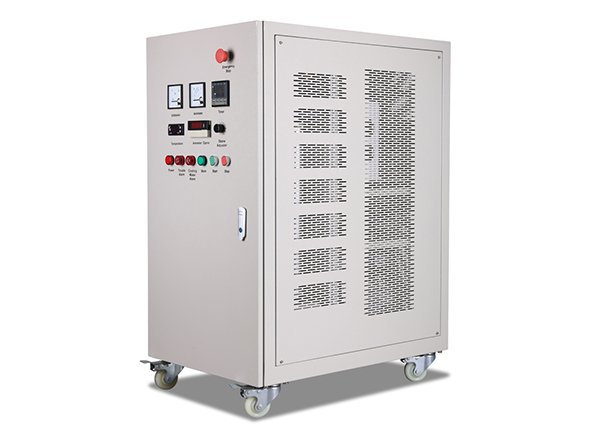
Introduction: The Ozone Dissolution Dilemma
Ozone ($O_3$) is one of the most powerful commercially available oxidizers and disinfectants on earth. It sanitizes water up to 3,000 times faster than chlorine without leaving harmful chemical residues. However, water treatment operators face a persistent, frustrating challenge: ozone is highly unstable and notoriously difficult to dissolve in water.
If your gas-to-liquid mass transfer system is inefficient, most of the ozone generated by your ozone generator for water treatment simply escapes into the atmosphere. This wasted gas represents lost energy, increased operating costs, and potential safety hazards.
Fortunately, by understanding the physical laws governing gas solubility and deploying the right engineering strategies, you can dramatically increase your system’s mass transfer efficiency. This comprehensive guide will show you exactly how to optimize your ozone water treatment system to achieve dissolution rates exceeding 90%.
—
The Science of Ozone Solubility: Henry’s Law Explained
Before modifying your hardware, you must understand the physics of gas dissolution. The behavior of ozone in water is governed primarily by Henry’s Law, which states that the amount of dissolved gas in a liquid is proportional to the partial pressure of that gas above the liquid.
Solubility=k*P gas
To manipulate this equation in your favor, you must control three critical variables:
1. Water Temperature
Gas solubility is inversely proportional to temperature. The colder the water, the more ozone it can hold. For example, ozone is roughly twice as soluble in water at 5°C (41°F) as it is at 25°C (77°F). Warm water molecules move faster, allowing dissolved gas molecules to escape the liquid matrix easily.
2. Operating Pressure
According to Henry’s Law, increasing the system pressure forces more gas molecules into the liquid phase. Doubling the pressure of your contact vessel effectively doubles the saturation limit of ozone in the water.
3. Ozone Gas Concentration
The purity and concentration of the ozone gas produced by your generator directly affect dissolution. A feed gas containing 10% ozone by weight will dissolve far more efficiently than a feed gas containing only 1% ozone.
—
Top 5 Methods to Increase Ozone Dissolution Efficiency
[Ozone Generator] ──> [Oxygen Feed] ──> [Venturi Injector] ──> [Static Mixer] ──> [Pressurized Contact Tank] ──> [Target Effluent]
                                                                                        │
                                                                                (Ozone Destruct)
1. Upgrade from Bubble Diffusers to Venturi Injectors
Traditional bubble diffusers rely on buoyancy to rise through a column of water, offering poor mass transfer rates (often only 10% to 15%).
Conversely, Venturi injectors use pressure differentials to create a vacuum that pulls ozone gas into the water stream at high velocity. This process shears the gas into microscopic bubbles, violently mixing the phases and boosting dissolution efficiency to 85%–90%.
2. Implement Microbubble and Nanobubble Technology
If you want to achieve dissolution efficiencies exceeding 95%, transition to nanobubble generators.
• Microbubbles (10 to 50 microns) rise slowly, allowing more contact time.
• Nanobubbles (less than 200 nanometers) do not rise; they remain suspended in water indefinitely due to Brownian motion. This virtually eliminates off-gassing and ensures total ozone utilization.
3. Install Inline Static Mixers
Placing an inline static mixer immediately downstream of your Venturi injector maximizes turbulence. Static mixers force the water-gas mixture through a series of fixed, helical elements. This continuous shearing action prevents microbubbles from coalescing into larger, less soluble bubbles.
4. Optimize the Gas-to-Liquid (G/L) Ratio
Introducing too much gas into a water stream leads to gas binding and immediate off-gassing. The optimal volumetric gas-to-liquid ratio for effective ozone dissolution is typically between 0.05 to 0.10 (5% to 10% gas volume to water volume). Exceeding this range creates oversized bubbles that reduce the overall surface-area-to-volume ratio.
5. Increase Contact Vessel Pressure
Design your ozone contact tank to operate under pressure (typically 15 to 25 PSI). By maintaining backpressure on the contact vessel, you prevent the dissolved ozone from flashing out of the solution, ensuring the gas remains dissolved long enough to complete its oxidation reactions.
—
System Design: Integrating the Perfect Ozone Loop
An efficient ozone water treatment system requires careful component integration. Below is a design optimization matrix highlighting key parameters:
| Parameter | Standard Setup | Optimized Setup | Impact on Efficiency |
|---|---|---|---|
| Gas Feed Source | Dry Air (1-2% $O_3$ wt) | Concentrated Oxygen (8-12% $O_3$ wt) | +400% Solubility Potential |
| Mixing Device | Fine Bubble Diffuser | Venturi + Static Mixer | +70% Dissolution Rate |
| Vessel Pressure | Atmospheric (0 PSI) | Pressurized (20 PSI) | +130% Saturation Limit |
| Water Velocity | Low / Laminar | High / Turbulent ($Re > 4000$) | Improved Mass Transfer |
Expert Insight: Always install a highly sensitive degassing valve at the top of your contact vessel. While your goal is 100% dissolution, any undissolved ozone must be safely vented to an ozone destruct unit to prevent ambient air contamination and equipment corrosion.
—
Selecting the Right Ozone Generator for Water Treatment
Your dissolution system is only as good as the gas feed quality. When choosing an ozone generator for water treatment, prioritize units fed by high-purity oxygen concentrators rather than ambient air compressors.
Ambient Air (21% O2) ──> Low Ozone Concentration (1-2%) ──> High Gas Volume Needed ──> Poor Dissolution
Pure Oxygen (93%+)  ──> High Ozone Concentration (10%+) ──> Low Gas Volume Needed  ──> High Dissolution
High concentration ozone means you introduce less total gas volume into the water to achieve the target ozone dose. Less gas volume means fewer bubbles, less coalescence, and dramatically higher mass transfer efficiency.
—
Troubleshooting Low Ozone Dissolution
If your dissolved ozone monitors are showing lower-than-expected parts per million (ppm), check for these three common system bottlenecks:
• High Water Temperature: If your source water rises above 25°C, consider using a water chiller prior to the ozone injection point.
• Organic Loading (TOC): High levels of Total Organic Carbon consume ozone instantly. If ozone reacts immediately with organic contaminants, it will not register as “dissolved ozone residual,” giving the illusion of poor dissolution.
• Scale Accumulation: Mineral scale inside Venturi injectors restricts water flow, lowering the pressure differential and halting the vacuum draw needed for gas suction.
—
FAQs: Optimizing Ozone Dissolution
1. What is the ideal water temperature for dissolving ozone?
The ideal water temperature is as close to freezing as possible, typically between 1°C and 10°C (34°F to 50°F). At these temperatures, ozone is highly stable and soluble.
2. Can I use a regular water pump with a Venturi injector?
No. Venturi injectors require a high pressure differential (typically a 30% to 50% pressure drop across the injector) to draw gas effectively. You need a dedicated booster pump capable of handling these pressure dynamics.
3. How does pH affect ozone dissolving efficiency?
While pH does not directly alter the physical solubility of ozone, high pH levels ($>8.0$) accelerate the decomposition of ozone into hydroxyl radicals. This makes it difficult to maintain a stable dissolved ozone residual.
4. What is the difference between dissolved ozone and ozone dose?
Ozone dose is the total amount of ozone gas injected into the water. Dissolved ozone is the actual concentration of ozone gas that successfully transfers into the liquid phase and remains active.
5. Why is off-gassing dangerous in ozone systems?
Ozone is a toxic gas that can cause respiratory irritation, headaches, and lung damage. Efficient dissolution minimizes off-gassing, keeping operators safe and protecting facility components from oxidation.
—
Conclusion: Take Control of Your Mass Transfer Efficiency
Improving ozone dissolving efficiency is a balancing act of physics and mechanical engineering. By shifting to oxygen-fed generators, utilizing Venturi injectors paired with static mixers, and maintaining backpressure, you can slash operating costs and boost your system’s disinfection power.
Ready to upgrade your water treatment capabilities? Contact our engineering team today to design a custom, high-efficiency ozone water treatment system tailored to your facility’s unique flow rate and water chemistry.