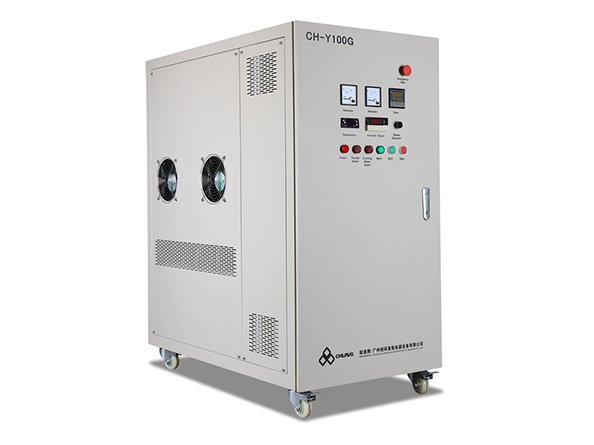
Ozone works in water treatment through a process called oxidation. When ozone gas is injected into water, it releases a third oxygen atom that instantly reacts with contaminants. This process destroys bacteria, viruses, and parasites while neutralizing chemicals and odors, making an ozone system one of the most effective methods for purifying water without leaving chemical residues.
Introduction: The Gold Standard of Water Purification
Do you ever wonder how large-scale bottling plants or municipal water facilities achieve such high levels of purity? Many people assume chlorine is the only way to disinfect water, but there is a far more powerful, natural alternative.
If you are looking for a way to eliminate stubborn pathogens and foul odors from your water supply, you’ve likely encountered the concept of ozonation. It can feel like complex chemistry, but the logic behind it is remarkably simple and incredibly efficient.
In this guide, we will break down exactly how an ozone generator functions, the science of the oxidation process, and why “ozone for water treatment” has become the preferred choice for eco-conscious homeowners and industrial giants alike.
—
What is Ozone? Understanding the “Active Oxygen”
Before diving into the mechanics, we must understand the molecule itself. Ozone ($O_3$) is a highly reactive gas composed of three oxygen atoms. Unlike the stable oxygen we breathe ($O_2$), ozone is unstable and seeks to return to its original state.
This instability is actually its greatest strength. Because the third oxygen atom is “loosely” attached, it is eager to break away and attach itself to other substances—such as bacteria, iron, or organic matter. This reaction is what we call oxidation.
The Natural Occurrence of Ozone
You’ve likely smelled ozone before without realizing it. That “fresh” scent in the air after a lightning storm is the result of nature’s own ozone generator. Lightning bolts tear through oxygen molecules in the atmosphere, reassembling them into ozone to scrub the air clean.
—
How Does an Ozone System Work? The Step-by-Step Process
A professional ozone system doesn’t just “dump” gas into a tank. It is a precision-engineered process designed to maximize contact time and safety. Here is the typical four-stage cycle:
1. Oxygen Preparation
Ozone is created from the oxygen in the ambient air. However, to be effective, the air must be dried and concentrated. High-quality systems use a desiccant dryer to remove moisture, as humidity can create nitric acid, which damages the equipment.
2. Ozone Generation
The concentrated oxygen enters the ozone generator. Most modern systems use Corona Discharge technology. This mimics lightning by passing oxygen through a high-voltage electrical field. The electrical energy breaks the $O_2$ bonds, allowing them to reform into $O_3$.
3. Mass Transfer (Injection)
Once the gas is created, it must be dissolved into the water. This is usually done via a Venturi Injector, which uses a vacuum to pull the ozone gas into the water stream, or through fine bubble diffusers. The goal is to create the smallest bubbles possible to increase the surface area for oxidation.
4. Contact and Destruction
The ozone-enriched water enters a contact tank. Here, the ozone “attacks” contaminants on a molecular level. After the reaction is complete, any remaining ozone reverts back into pure oxygen, leaving no chemical taste or “disinfection byproducts” (DBPs).
—
The Science of Oxidation: How Ozone Kills Pathogens
How exactly does a gas “kill” a virus? The answer lies in Cell Wall Oxidation.
When ozone comes into contact with a bacterium, it undergoes a “bursting” effect known as lysis. The ozone molecule penetrates the cell wall of the microorganism and disrupts its metabolic process. Within seconds, the cell’s structure collapses and dies.
Pro-Tip: Ozone is roughly 3,000 times faster at disinfecting water than chlorine. While chlorine requires minutes or hours of “contact time” to kill certain cysts like Cryptosporidium, ozone does the job in seconds.
—
Key Benefits of Ozone for Water Treatment
Why should you choose ozone for water treatment over traditional chemical methods? Here are the primary advantages:
• No Chemical Residue: Unlike chlorine, which leaves behind chloramines that can cause skin irritation and a foul taste, ozone leaves only pure oxygen.
• Removal of Heavy Metals: Ozone effectively oxidizes dissolved minerals like iron, manganese, and sulfur, turning them into solid particles that can be easily filtered out.
• Elimination of “The Rotten Egg Smell”: If your water smells like sulfur, ozone is the most effective way to neutralize the hydrogen sulfide gas responsible for the odor.
• Micro-Flocculation: Ozone helps “clump” together fine organic matter, making your mechanical sediment filters work much more efficiently.
—
Comparing Ozone vs. Chlorine
| Feature | Ozone System | Chlorine Treatment |
|---|---|---|
| Reaction Speed | Instantaneous | Slow (30+ minutes) |
| Effectiveness | Kills 99.9% of all pathogens | Struggles with Crypto and Giardia |
| Byproducts | Pure Oxygen | Trihalomethanes (Carcinogenic) |
| pH Impact | Neutral | Lowers/Changes pH |
| Taste/Odor | Improves clarity and taste | Leaves chemical “bleach” taste |
—
Applications of Ozonation
Because of its versatility, you will find an ozone generator at the heart of various industries:
1. Residential Well Water
Homeowners with well water often deal with high iron and “sulfur breath.” An ozone system acts as a powerful pre-treatment step, ensuring the water entering the home is clear and odorless.
2. Bottled Water Industry
Almost every bottle of water you buy has been treated with ozone. It provides a final “disinfection” before the bottle is capped, ensuring a long shelf life without affecting the flavor profile.
3. Aquaculture and Aquariums
In large-scale fish farming, water quality is a matter of life and death. Ozone controls the spread of disease and breaks down ammonia and nitrites, creating a healthier environment for aquatic life.
4. Pools and Spas
Ozone significantly reduces the amount of chlorine or bromine needed in a pool. It eliminates “red-eye” and skin irritation by destroying the organic waste that causes chlorine to become toxic.
—
Potential Drawbacks and Considerations
While ozone is powerful, it is not a “set it and forget it” solution.
• High Initial Cost: A high-quality ozone generator and the accompanying filtration system are generally more expensive than a simple chlorine dripper.
• No Residual Protection: Because ozone reverts to oxygen so quickly, it provides no lasting protection once the water enters the pipes. This is why many municipal systems use ozone for primary disinfection and a tiny amount of chlorine for “residual” protection in the city pipes.
• Power Requirements: Ozone systems require a consistent electricity source to run the corona discharge cell.
—
Expert Insights: Getting the Most from Your Ozone System
Expert Tip from the Field: “The secret to a successful ozone installation isn’t the generator—it’s the filtration that follows it. Since ozone turns dissolved minerals like iron into solids, you must have a high-quality backwashing filter to catch those particles. Without it, your water will look ‘rusty’ even though it’s disinfected.”
—
Frequently Asked Questions (FAQ)
1. Is ozone treated water safe to drink?
Yes, it is completely safe and often healthier than chlorine-treated water. Ozone leaves no chemical residues and reverts back to oxygen before it reaches your tap.
2. Does an ozone system remove fluoride or TDS?
No. Ozone is an oxidant and disinfectant, not a mechanical filter or membrane. To remove Total Dissolved Solids (TDS) or fluoride, you would need to pair your ozone system with a Reverse Osmosis (RO) system.
3. How long do ozone generators last?
A well-maintained ozone generator can last 5 to 10 years. The main maintenance involves cleaning the corona cell and replacing the air dryer desiccant.
4. Can I smell ozone in my water?
If the system is calibrated correctly, you should not smell ozone at the tap. However, you might notice a very clean, “crisp” smell near the treatment tank.
5. Does ozone change the pH of my water?
Unlike many chemicals, ozone is pH neutral. It will not make your water more acidic or alkaline, which helps prevent pipe corrosion.
—
Conclusion: Is Ozone Right for You?
Understanding how ozone works in water treatment reveals why it is considered the “heavy lifter” of the purification world. By leveraging the power of triple-oxygen molecules, an ozone system provides a level of disinfection and clarity that traditional chemicals simply cannot match.
Whether you are trying to fix a smelly well, run a commercial brewery, or simply provide the safest water for your family, investing in ozone for water treatment is a move toward a more sustainable and chemical-free future.
Ready to upgrade your water quality? Contact a water treatment specialist today to find the right ozone generator for your specific needs and experience the difference of truly pure water!