Ozone does not kill the beneficial bacteria (nitrifying bacteria) housed within your biological filter when used correctly. While ozone is a potent disinfectant that eliminates free-floating pathogens in the water column, it cannot penetrate the thick biofilm where nitrifying bacteria live. Properly managed ozone actually enhances nitrification by reducing the organic load on the biofilter.
Introduction: The Great Aquaculture Paradox
Maintaining a delicate balance between sterilization and biological life is the primary challenge for any high-intensity fish farming operation. If you are managing a Recirculating Aquaculture System (RAS), you’ve likely faced the dilemma: You need powerful disinfection to prevent disease, but you fear destroying the very bacteria that keep your ammonia levels in check.
The concern is logical. Ozone is one of the most powerful oxidizers available. If it kills viruses and “bad” bacteria, why wouldn’t it kill the “good” ones?
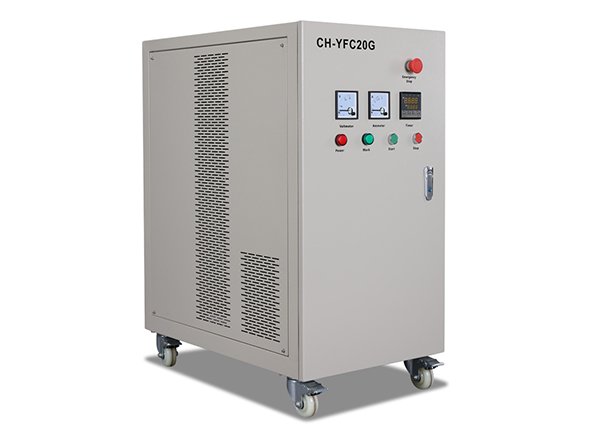
In this guide, we will dive deep into the science of ozone in aquaculture, debunk the myths surrounding biofilter crashes, and show you how an ozone generator for aquaculture can actually become your biofilter’s best friend rather than its enemy.
—
Understanding Ozone’s Role in the Water Column
Before addressing the bacteria, we must understand what ozone does when it enters the water. Ozone (O3) is an unstable molecule that seeks to revert to Oxygen (O2). During this process, it releases a free radical that oxidizes organic matter.
1. Disinfection vs. Sterilization
Ozone is used for disinfection, not total sterilization. In a typical RAS, ozone targets:
• Suspended solids (micro-flocculation).
• Dissolved Organic Compounds (DOCs) that cause yellow water.
• Pathogenic bacteria like Vibrio or Aeromonas.
2. The “Contact Time” Factor
Ozone has a very short half-life. By the time the water travels from the ozone contact chamber back to the biological filter, the residual ozone should be near zero. This is the first line of defense for your beneficial bacteria.
—
Why Ozone Doesn’t Kill Nitrifying Bacteria
The primary reason ozone in aquaculture doesn’t wipe out your nitrifying colonies (Nitrosomonas and Nitrobacter) boils down to two factors: Location and Biofilm Architecture.
The Biofilm Shield
Nitrifying bacteria are not “planktonic” (free-floating). They are “sessile,” meaning they attach themselves to surfaces—be it plastic beads, sand, or ceramic rings. Once attached, they secrete Extracellular Polymeric Substances (EPS), creating a rugged “slime layer” or biofilm.
Expert Insight: Ozone is highly reactive. When it encounters a biofilm, it reacts with the outer layer of the slime. While a few surface bacteria might be oxidized, the millions of cells underneath remain protected and continue to process ammonia and nitrite.
Residual Control
In a professionally designed system, ozone is injected into a dedicated contact vessel. Before the water reaches the biofilter, any remaining ozone is removed via:
• Degassing towers: Stripping the gas from the water.
• Activated carbon: Chemically neutralizing the ozone.
• Sufficient pipe runtime: Allowing the ozone to naturally decay.
—
The Hidden Benefit: How Ozone Helps Nitrification
Contrary to the fear that ozone hinders biological filtration, it often makes it significantly more efficient. Here is how:
1. Reducing the “Heterotrophic Competition”
There are two types of bacteria in your filter:
• Nitrifiers: Slow-growing, “good” bacteria that eat ammonia.
• Heterotrophs: Fast-growing bacteria that eat organic carbon (waste).
If your water is high in dissolved organics, heterotrophs grow incredibly fast and “smother” the nitrifiers, preventing them from getting oxygen. An ozone generator for aquaculture breaks down these organics, starving the heterotrophs and allowing the nitrifiers to thrive in a cleaner environment.
2. Increasing Dissolved Oxygen
As ozone decays, it reverts to pure oxygen. Higher dissolved oxygen (DO) levels are a catalyst for the nitrification process, as the conversion of ammonia to nitrate is an aerobic process that requires significant oxygen.
—
Pro-Tips for Safely Using an Ozone Generator for Aquaculture
To ensure your biofilter remains healthy while using ozone, follow these industry best practices:
• Monitor ORP (Oxidation-Reduction Potential): Use an ORP controller to manage your ozone output. For most aquaculture applications, an ORP level between 250mV and 350mV is the “sweet spot.” Anything over 400mV starts to become risky for fish gill tissues and potentially the biofilter.
• Install Post-Ozone Carbon: If you are running a high-dose system, passing water through an activated carbon filter before it hits the biofilter ensures 0.0mg/L of ozone residual.
• Visual Check: If your water is crystal clear but your nitrite levels are spiking, check your ORP probe calibration. You may be over-ozonating.
• Incremental Increases: When introducing ozone to a new system, start at 25% capacity and increase over two weeks to allow the microbial community to adapt.
—
Data Insights: Ozone’s Impact on Water Clarity
| Parameter | Without Ozone | With Managed Ozone |
|---|---|---|
| Water Color | Yellowish/Brown (High DOC) | Crystal Clear |
| Ammonia Conversion | Standard | Optimized (Lower Heterotrophic Load) |
| Pathogen Count | High | Reduced by 90-99% |
| Biofilter Health | Clogged with Sludge | Clean and Efficient |
Note: Data based on typical RAS performance metrics.
—
Common Mistakes That Can Hurt Your Bacteria
While ozone is generally safe, “operator error” can lead to issues. Avoid these pitfalls:
• Direct Injection into the Biofilter: Never inject ozone directly into the tank containing your bio-media. This bypasses the safety of the water column and can damage the biofilm.
• Ignoring the Air Prep: Ozone generators need dry air. If your air dryer fails, the generator produces nitric acid, which can drop your pH and kill your nitrifying bacteria.
• No Monitoring: Running an ozone generator for aquaculture without an ORP meter is like driving a car without a speedometer. You will eventually go too fast and cause damage.
—
The Synergy of Ozone and Biofiltration
In modern aquaculture, we no longer view ozone and biological filtration as enemies. Instead, they are seen as a “Multi-Stage Treatment” approach.
The ozone in aquaculture handles the “heavy lifting” of solids and organics, while the biofilter handles the chemical conversion of nitrogenous waste. Together, they create a stable, low-stress environment for aquatic species, leading to better growth rates and lower Feed Conversion Ratios (FCR).
—
Frequently Asked Questions (FAQ)
1. Does ozone remove ammonia directly?
No. Ozone is not effective at oxidizing ammonia at the pH levels typically found in aquaculture (pH 6.5–8.5). You still need a healthy biological filter to convert ammonia to nitrate.
2. Can I use ozone during the “cycling” phase of a new biofilter?
It is best to wait until your biofilter is fully established (ammonia and nitrite at zero) before starting your ozone generator. Let the bacteria build a thick biofilm first.
3. How do I know if ozone is leaking into my biofilter?
Check your ORP at the biofilter inlet. If it is consistently above 350mV, or if you smell a sharp, bleach-like odor near the filter, you may have ozone breakthrough.
4. Is ozone safe for all aquaculture species?
Most species thrive in ozonated water due to higher clarity and lower pathogen loads. However, larval stages and certain invertebrates are more sensitive to ozone by-products (like Bromate in saltwater).
5. Does ozone affect the pH of my water?
Pure ozone does not significantly change pH. However, if your ozone generator is not supplied with dry air, it can produce nitrogen oxides that form nitric acid, which will lower your pH and alkalinity.
—
Conclusion: Achieve the Ultimate Water Quality
The verdict is clear: Ozone does not kill beneficial bacteria when managed with the right equipment and monitoring. By integrating an ozone generator for aquaculture into your system, you provide a cleaner, oxygen-rich environment that allows your biological filter to work at peak efficiency.
Ready to level up your water quality?
Don’t leave your biofilter health to chance. Invest in high-quality ORP controllers and professional-grade ozone systems to ensure a thriving, disease-free aquatic environment.
[Contact our expert team today for a custom ozone integration plan!]