Ozone is generally better for large-scale, comprehensive water treatment because it destroys a wider range of contaminants and oxidizes heavy metals. However, UV disinfection is better for residential use as it is highly effective against bacteria and viruses, requires less maintenance, and costs significantly less to operate.
Contaminated water poses severe health and operational risks, whether it flows from a household sink or an industrial plant. Selecting the wrong purification system can leave dangerous pathogens intact, skyrocket your energy bills, or result in costly maintenance nightmares. You simply cannot afford to guess when it comes to protecting your water supply.
To guarantee pristine water, you must understand the critical differences between these two powerhouse technologies. Let’s dive deep into comparing ozone and ultraviolet (UV) light so you can make an informed, expert-backed decision.
Understanding the Basics of Water Disinfection
Before declaring a winner, it is crucial to understand how these competing technologies neutralize threats in your water supply. Both methods are incredibly potent, but they operate on fundamentally different scientific principles.
The Science Behind UV Water Disinfection
Ultraviolet light purifies water by emitting high-intensity UV-C rays that physically penetrate the cell walls of microorganisms. This radiation scrambles their cellular DNA, making it impossible for the pathogens to reproduce or cause infections.
Because dead pathogens cannot multiply, the water immediately becomes safe to consume. Furthermore, UV is an entirely physical process, meaning no foreign chemicals are ever added to the water.
The Mechanics of Ozone for Water Treatment
Ozone (O3) is a highly reactive, unstable gas that acts as a remarkably powerful oxidizing agent. When injected into a water supply, it rapidly destroys bacteria, viruses, and complex organic compounds on contact.
Using ozone for water treatment excels because it literally ruptures the cell walls of contaminants through a rapid process called cell lysis. Unlike UV light, ozone also actively breaks down bad tastes, foul odors, and dissolved metals like iron and manganese.
Ozone vs. UV: The Ultimate Head-to-Head Comparison
To determine which system reigns supreme, we must evaluate them across three critical performance metrics.
1. Disinfection Strength and Scope
Both methods are highly effective against biological pathogens, including stubborn, chlorine-resistant parasites like Cryptosporidium and Giardia. According to EPA guidelines, UV can reliably achieve a 99.99% reduction of viruses and bacteria. Ozone boasts similar biological efficacy but reacts up to 3,000 times faster than traditional chlorine.
However, ozone goes a critical step further by oxidizing organic and inorganic matter. UV light only neutralizes living microorganisms and will absolutely not remove heavy metals, foul tastes, or chemical pollutants.
Winner: Ozone, due to its broader, more aggressive spectrum of total water purification.
2. Residual Effects and Byproducts
UV light leaves absolutely zero residual chemicals or byproducts in your water. Once the water passes the UV lamp, the treatment is instantly and safely complete. This makes it an incredibly eco-friendly and health-conscious option.
Ozone also dissipates quickly back into breathable oxygen, generally leaving no permanent chemical trace. However, if the feed water contains high levels of naturally occurring bromide, ozone can react to form bromate. Bromate is a strictly regulated disinfection byproduct that requires careful monitoring.
Winner: UV, for its guaranteed zero-chemical footprint and lack of harmful byproducts.
3. Equipment, Maintenance, and Costs
Installing a UV system is relatively straightforward and highly cost-effective for both homes and businesses. Maintenance usually involves wiping the internal quartz sleeve and replacing the UV bulb just once a year. The electricity required to run a UV lamp is roughly equivalent to a standard 60-watt lightbulb.
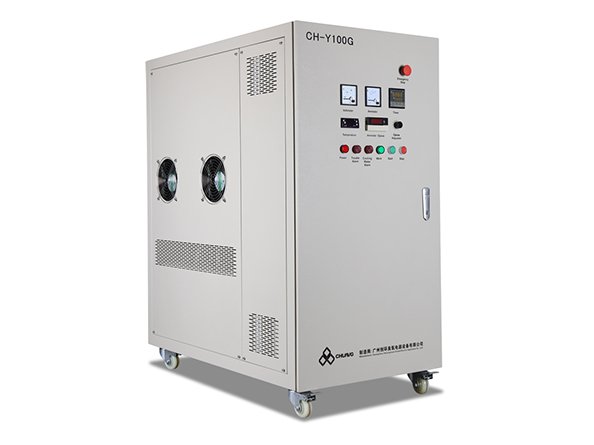
Conversely, an ozone generator is a highly complex piece of industrial machinery requiring a massive upfront investment. It demands precise calibration, specialized off-gas destructors, and regular professional maintenance to ensure safe, leak-free operation. The energy consumption to create ozone gas is also substantially higher.
Winner: UV, for its unbeatable affordability and user-friendly maintenance.
Expert Insights: When to Choose Which?
Pro-Tip: Do not treat these technologies as mutually exclusive rivals. Many top-tier industrial plants and municipal facilities use both systems in a multi-barrier approach to guarantee absolute safety.
Choose UV Disinfection if:
• You need a low-maintenance, set-and-forget residential whole-house system.
• Your primary concern is solely neutralizing living bacteria, cysts, and viruses.
• You are working with a tight installation budget.
• Your feed water is visually clear (UV light struggles to penetrate cloudy, turbid water).
Choose Ozone if:
• You are managing large-scale municipal, agricultural, or industrial water systems.
• You desperately need to eliminate hydrogen sulfide (rotten egg smell), iron, or manganese.
• You want to destroy pharmaceutical residues and complex organic chemicals.
• You are treating commercial swimming pools, cooling towers, or bottled water lines.
Conclusion & Final Verdict
There is no universal “one-size-fits-all” answer, as the better option depends entirely on your specific water quality challenges.
For everyday homeowners seeking reliable, chemical-free pathogen protection, UV disinfection is the undisputed champion. It is highly affordable, highly effective, and perfectly tailored for the demands of residential life.
However, for industrial, municipal, or highly problematic well-water sources requiring heavy-duty oxidation, an ozone system is the superior choice. Its unmatched ability to tackle taste, odor, metals, and pathogens simultaneously makes it the ultimate commercial purification tool.
Ready to upgrade your water quality? Don’t leave your family’s health or your business’s safety to chance. Contact our certified water specialists today to get a customized water analysis and find the perfect UV or ozone system for your exact needs!
—
Frequently Asked Questions (FAQs)
1. Does UV light remove heavy metals from water?
No, UV light does not remove heavy metals, dissolved minerals, or chemical pollutants. It only acts to neutralize living microorganisms like bacteria and viruses. You will need an additional filter, such as Reverse Osmosis or an ozone system, to remove heavy metals.
2. Is water treated with an ozone generator safe to drink?
Yes, it is completely safe and highly purified. The active ozone gas dissipates rapidly and converts back into harmless oxygen before the water reaches your tap. It leaves no harmful chemical residuals behind when properly calibrated.
3. Can I use both UV and ozone together?
Absolutely. Many advanced water treatment facilities utilize a synergistic combination of both technologies. Ozone acts as the primary heavy-duty oxidizer, while UV acts as a secondary, polishing step to ensure zero biological contamination remains.
4. Does ozone treat cloudy water better than UV?
Yes, ozone is far superior for turbid conditions. UV light requires clear water to be effective, as microscopic shadows from floating sediment can hide bacteria from the light rays. Ozone physically interacts with the water molecules, making it highly effective even in cloudy water.
5. Which system costs more to operate?
An ozone system is significantly more expensive to install, power, and operate. It requires substantially more electricity to generate the ozone gas from oxygen. It also demands much more frequent, highly specialized maintenance compared to the simple, annual bulb replacements of a standard UV system.