Ozone effectively removes turbidity from water by acting as a powerful oxidizing agent that micro-flocculates organic and inorganic particles. While ozone itself isn’t a filter, it breaks down complex molecules and alters particle charges, making it significantly easier for subsequent filtration systems to trap suspended solids, resulting in crystal-clear, high-purity water.
Introduction: The Quest for Crystal Clear Water
Do you struggle with cloudy, “milky,” or hazy water that refuses to clear up despite standard filtration? Turbidity isn’t just an aesthetic issue; it’s a sign of suspended particulates that can harbor bacteria and shield pathogens from disinfection.
If you’ve tried traditional alum or chlorine treatments with lackluster results, you’re likely looking for a more advanced solution. Ozonation has emerged as the premier technology for achieving ultra-low turbidity levels. In this guide, we will explore exactly how an ozone generator transforms water quality, the science of micro-flocculation, and why ozone for water treatment is the preferred choice for industrial and municipal standards.
—
What is Turbidity and Why Is It Hard to Remove?
Turbidity is the measure of relative clarity of a liquid. It is caused by suspended matter such as clay, silt, finely divided organic and inorganic matter, soluble colored organic compounds, and microscopic organisms.
The challenge lies in the size of these particles. Many are “colloidal,” meaning they are so small and negatively charged that they repel each other rather than clumping together to sink or be filtered. This is where standard mechanical filters often fail, as these microscopic particles simply pass through the media.
—
How Does Ozone Remove Turbidity? The Science of Micro-Flocculation
To understand how to ozone remove turbidity, we must look at a process called micro-flocculation. Unlike chemical coagulants that add bulk to the water, ozone works through electrochemical stabilization.
1. Charge Neutralization
Most suspended particles in water carry a negative electrical charge, which keeps them in suspension. Ozone neutralizes these surface charges. When the “repelling” force is removed, particles naturally begin to gravitate toward one another.
2. Oxidation of Dissolved Organics
Ozone is one of the most powerful oxidizers available. It attacks dissolved organic compounds (humic acids, fulvic acids) that often act as “stabilizers” for colloidal particles. By breaking these bonds, the particles are freed to clump together.
3. Polymerization
Ozone can cause smaller organic molecules to combine into larger, more complex chains (polymers). These larger chains are much easier for a sand filter or multi-media filter to catch.
Pro-Tip: Ozone is most effective at removing turbidity when followed by a high-quality glass or sand media filter. Think of ozone as the “preparer” that gathers the dust into clumps so the “broom” (the filter) can sweep them away.
—
The Role of an Ozone Generator in the Treatment Train
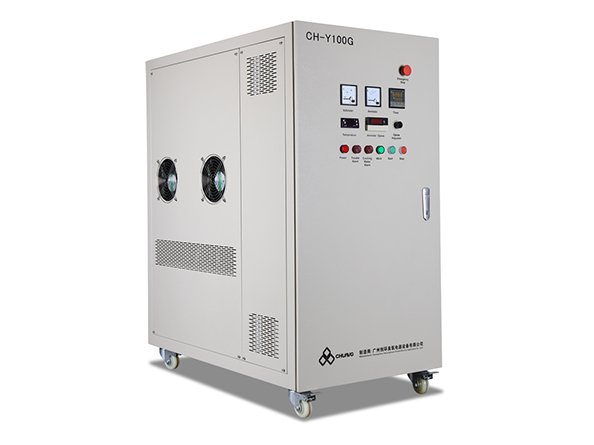
An ozone generator is the heart of a modern water purification system. It creates ozone (O3) by passing oxygen through a high-voltage corona discharge. This unstable gas is then injected into the water stream via a venturi injector or a fine bubble diffuser.
Because ozone has a very short half-life, it performs its work—oxidizing metals like iron and manganese and breaking down tannins—and then reverts back into pure oxygen. This leaves no chemical residue, unlike chlorine which can leave behind harmful disinfection byproducts (DBPs).
—
Key Benefits of Using Ozone for Water Treatment
Using ozone for water treatment offers several advantages over traditional chemical methods:
• Superior Clarity: Ozone can achieve NTU (Nephelometric Turbidity Units) levels that are virtually impossible with chlorine alone.
• Reduced Chemical Footprint: It eliminates the need for excessive polymers and coagulants, reducing the “sludge” volume in industrial applications.
• Pathogen Inactivation: While removing turbidity, ozone simultaneously destroys viruses, bacteria, and cysts like Cryptosporidium and Giardia.
• Color and Odor Removal: Ozone destroys the organic compounds responsible for “swampy” smells and yellow/brown tints in water.
—
Factors That Influence Ozonation Efficiency
While ozone is powerful, its ability to remove turbidity depends on several variables:
• pH Levels: Ozone works best within a specific pH range (typically 6.5 to 8.5). Extreme alkalinity can affect the rate of ozone decay.
• Contact Time: The water must be in contact with the ozone gas for a sufficient duration (CT value) to ensure complete oxidation of organic matter.
• Water Temperature: Cold water holds ozone gas better, though the chemical reaction rate might be slightly slower than in warm water.
• Pre-Filtration: Removing large debris before the ozone generator stage ensures the ozone can focus on the microscopic colloids rather than “wasting” its oxidative power on large chunks of organic matter.
—
Real-World Applications: From Bottled Water to Wastewater
High-clarity water isn’t just a luxury; in many industries, it is a requirement.
• Bottled Water Industry: Companies use ozone to ensure their product is “brilliant” and shelf-stable, removing any hint of turbidity or microbial life.
• Aquaculture: Fish farms use ozone to keep tanks clear, allowing for better oxygen transfer and healthier livestock.
• Municipal Plants: Large cities use ozone to pre-treat lake or river water, significantly reducing the load on their secondary filtration stages.
—
Expert Insight: Ozone vs. Iron and Manganese
Often, what looks like “turbidity” is actually oxidized iron or manganese. These metals can dissolve in water, appearing clear at the tap but turning cloudy or orange when exposed to air.
Ozone for water treatment is the most efficient way to handle this. It flashes these dissolved metals into solid particulates instantly. Once they are in solid form, they contribute to the “turbidity” which is then easily captured by a 5-micron sediment filter.
—
Frequently Asked Questions (FAQ)
1. Does ozone remove 100% of turbidity?
Ozone is a precursor to removal. It prepares the particles for removal through micro-flocculation, but you still need a physical filter (like sand or a cartridge filter) to remove the clumps ozone has created.
2. Can I use an ozone generator for my home well water?
Yes, residential-scale ozone systems are excellent for well water that suffers from “cloudiness,” sulfur smells (rotten egg), or iron staining.
3. Is ozone safe for drinking water?
Absolutely. Ozone is used by major municipal water plants worldwide. It leaves no taste or odor and reverts back to oxygen, making it safer than many chemical alternatives.
4. How long does it take for ozone to clear cloudy water?
The oxidation process is nearly instantaneous upon contact. However, the total time to “clear” a tank depends on the turnover rate of your pump and the efficiency of your post-filtration system.
5. Does ozone affect the pH of my water?
Generally, no. Ozone is pH neutral. However, by removing dissolved CO2 or organic acids, it may cause a very slight, negligible shift in pH, but nothing like the drastic changes seen with chlorine or acid injection.
—
Conclusion: Achieving Optical Purity
If you want to achieve the highest possible water clarity, the answer is clear: ozone remove turbidity by transforming invisible particles into filterable solids. By integrating an ozone generator into your treatment process, you aren’t just cleaning the water; you are fundamentally improving its chemistry.
Whether you are managing an industrial facility or simply want the best water for your home, ozone for water treatment provides a sustainable, powerful, and chemical-free path to purity.
Ready to upgrade your water quality? Contact a water treatment specialist today to find the right ozonation system for your specific flow rate and turbidity challenges. Don’t settle for “good enough” water—experience the brilliance of ozone-purified water.