Ozone in ornamental fish keeping and public aquariums provides the ultimate solution for achieving crystal-clear water by oxidizing organic waste, eliminating yellow tints (tannins), and reducing harmful pathogens. By using an ozone generator for aquaculture, hobbyists and curators can significantly improve dissolved oxygen levels and ensure a sterile, high-clarity environment for sensitive aquatic species and public displays.
Introduction: The Gold Standard for Aquatic Clarity
Maintaining the delicate balance of a closed aquatic ecosystem is a constant battle against biological load. Whether you are managing a 50-gallon reef tank at home or a 500,000-gallon shark exhibit in a public aquarium, the challenges remain the same: water clarity, pathogen control, and waste management.
You’ve likely invested thousands in high-end filtration, yet the water still retains a slight yellow hue, or your fish face recurring parasitic outbreaks. It’s frustrating when traditional mechanical and biological filtration reach their limits.
This guide will show you how ozone in aquaculture and ornamental settings serves as the “missing link” in your life support system. We will explore how ozone works, its safety protocols, and how to select the right equipment to transform your aquatic environment into a world-class display.
—
What is Ozone (O3) and How Does it Work?
Ozone is a highly reactive form of oxygen consisting of three oxygen atoms. Unlike the stable O2 we breathe, O3 is an “unstable” molecule that seeks to shed its third atom. When it encounters organic matter, bacteria, or viruses, that extra atom breaks off and oxidizes the target.
In the context of ozone in ornamental fish keeping, this process—known as oxidation—destroys the molecular bonds of organic pollutants. This effectively “bleaches” the water of yellowing pigments (gelvin) and breaks down complex proteins before they can turn into toxic ammonia or nitrite.
The Role of the Ozone Generator for Aquaculture
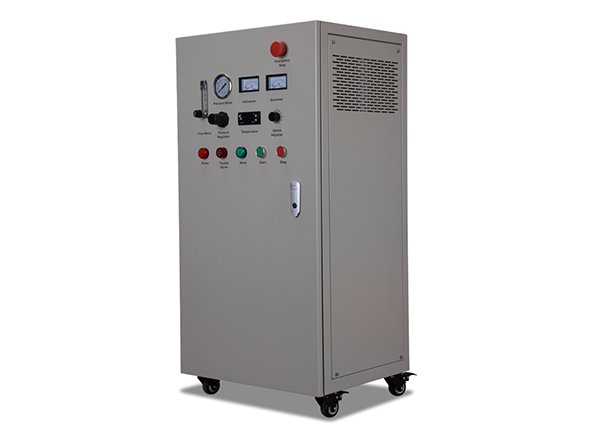
An ozone generator for aquaculture creates O3 by passing dry air or pure oxygen through a high-voltage corona discharge. This gas is then injected into a protein skimmer or a specialized reaction chamber where it mixes with aquarium water.
—
5 Key Benefits of Using Ozone in Public Aquariums and Home Tanks
1. Unmatched Water Clarity
The most immediate benefit of ozone is the removal of dissolved organic compounds (DOCs). These compounds cause the “yellowing” effect seen in older aquarium water. Ozone breaks these molecules down, resulting in water so clear that fish appear to be floating in thin air.
2. Pathogen and Parasite Reduction
At the right concentrations, ozone acts as a powerful disinfectant. It can neutralize bacteria, viruses, and free-swimming stages of parasites like Cryptocaryon irritans (Marine Ich). This is why ozone in aquaculture is a staple for biosecurity in large-scale breeding facilities.
3. Enhanced Protein Skimmer Efficiency
Ozone changes the polarity of organic molecules, making them more “polar.” This causes them to stick together (flocculation), allowing a protein skimmer to remove them more efficiently.
4. Increased Dissolved Oxygen (DO)
As ozone (O3) breaks down, it reverts back into pure oxygen (O2). This process naturally boosts the dissolved oxygen levels in the tank, which is critical for high-stocking densities and sensitive species like Discus or cold-water marine fish.
5. Neutralization of Odors
Aquariums can sometimes develop a “fishy” smell due to decaying organics. Ozone oxidizes these airborne and waterborne odors instantly, ensuring a pleasant environment for hobbyists and visitors in public spaces.
—
Implementing Ozone: Safety and Control
While ozone is a miracle worker, it is also a potent oxidant that must be managed carefully. Excessive ozone can damage the gill tissues of fish and irritate the lungs of humans.
The Importance of ORP Monitoring
ORP (Oxidation-Reduction Potential) measures the “cleansing power” of your water in millivolts (mV).
• Target Range: 350mV to 400mV.
• Danger Zone: Anything above 450mV can be lethal to livestock.
Pro-Tip: Never run an ozone generator for aquaculture without an ORP controller. The controller will automatically shut off the ozone production once your target mV level is reached, preventing accidental overdosing.
Carbon Filtration: The Final Step
Ozone must never enter the main display tank directly. Always pass the effluent (treated water) through high-quality activated carbon. This “quenches” any residual ozone and converts it back into oxygen before it reaches your fish.
—
Ozone in Public Aquariums: Scale and Complexity
Public aquariums face unique challenges. With thousands of gallons and high visitor expectations, water clarity is non-negotiable.
In these settings, ozone in aquaculture systems is integrated into massive Life Support Systems (LSS). These systems often use “Contact Towers”—large columns where ozone gas meets water under pressure—to maximize contact time and sterilization rates.
For public displays, ozone is the primary tool used to combat the “haze” caused by large animal waste, ensuring that guests can see every detail of a shark or ray from behind the acrylic.
—
Expert Insights: Choosing the Right Ozone Generator
When selecting an ozone generator for aquaculture or ornamental use, consider the following:
• Output (mg/hr): For home tanks, 50-100 mg/hr is usually sufficient. Public aquariums may require industrial units producing grams per hour.
• Air Preparation: Ozone generators perform 50-80% better when fed with dry air. Use a desiccant air dryer to remove moisture before the air enters the unit.
• Material Compatibility: Ensure your skimmer or reactor is “ozone-safe.” Ozone can degrade certain plastics over time; look for Kynar, Teflon, or high-quality acrylic components.
—
Maintaining Your Ozone System
To keep your system running at peak efficiency:
• Clean the Reactor: Monthly cleaning prevents salt creep and mineral buildup.
• Replace Desiccant: If your air dryer beads turn from blue to pink, it’s time to recharge or replace them.
• Calibrate ORP Probes: Clean and calibrate your ORP probe every 30 days to ensure accurate readings.
—
FAQs: Ozone in Ornamental Fish Keeping
1. Is ozone safe for reef aquariums with corals?
Yes, when controlled by an ORP monitor. In fact, many reefers find that their corals thrive because ozone increases light penetration by removing yellow tints from the water.
2. Does ozone kill beneficial nitrifying bacteria?
No. Beneficial bacteria primarily live on surfaces like rock, sand, and filter media. Since ozone is neutralized by carbon before it reaches the main tank, it does not harm the biological filter.
3. How do I know if I’m using too much ozone?
If you smell a pungent, “electric” odor near the aquarium, or if your fish appear lethargic and have gasping gills, you may have a leak or be overdosing. Check your ORP levels and ensure your carbon is fresh.
4. Can I use ozone in a freshwater aquarium?
Absolutely. Ozone in ornamental fish keeping is highly effective for large freshwater species like Stingrays and Arowanas, which produce significant waste.
5. Does ozone replace a protein skimmer?
No. Ozone works with a protein skimmer. The skimmer removes the physical waste, while the ozone breaks down the chemical compounds and sterilizes the water.
—
Conclusion: Transform Your Aquatic Environment
Integrating ozone in aquaculture practices into your ornamental fish keeping or public aquarium management is a game-changer. It offers a level of water purity and clarity that traditional filtration simply cannot match. By using a high-quality ozone generator for aquaculture coupled with a reliable ORP controller, you can create a safer, healthier, and more visually stunning environment for your aquatic life.
Ready to achieve crystal-clear water?
[Contact our experts today to find the perfect ozone solution for your aquarium or facility!]