Water treatment has one job. Make water safer, cleaner, and more useful.
That sounds simple. It is not.
In real systems, water can carry bacteria. It can carry viruses. It can carry odor, color, organic matter, iron, manganese, and taste problems. It can also carry industrial contaminants that are hard to remove with basic filtration alone.
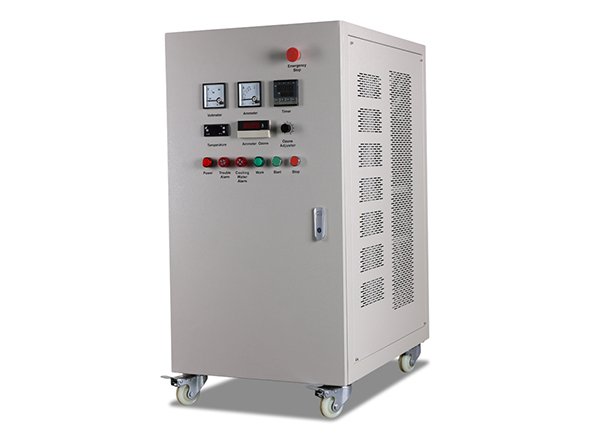
That is where an ozone generator for water treatment comes in.
An ozone system does not just filter water. It changes water quality at the chemical level. It disinfects. It oxidizes. It breaks down unwanted compounds. And it does it fast.
This article explains what an ozone generator is, how it works, where it is used, and how to choose the right system for your water treatment needs.
What Is an Ozone Generator for Water Treatment?
An ozone generator is a device that creates ozone gas, also known as O3.
Ozone is made from oxygen. The generator uses electrical energy or ultraviolet light to split oxygen molecules. The oxygen atoms then combine into ozone.
Once created, ozone is injected into water.
When ozone enters water, it reacts quickly. It attacks microorganisms. It oxidizes metals. It helps remove odor. It also breaks down many organic pollutants.
This is why ozone is widely used in water treatment.
It is strong. It is fast. And it leaves no long-lasting chemical residue.
Why Ozone Is Used in Water Treatment
Ozone is one of the most powerful oxidants used in water treatment.
That makes it useful for many problems.
It can kill bacteria and viruses. It can reduce iron and manganese. It can help with taste and smell. It can improve clarity. It can also support advanced treatment in industrial and municipal systems.
Compared with some chemical disinfectants, ozone has a major advantage. It breaks down into oxygen after treatment.
That means it does not stay in the water for long.
This makes ozone attractive for systems that want effective treatment without adding many chemical byproducts.
How an Ozone Generator Works
The process is straightforward.
First, the generator makes ozone gas from oxygen or air.
Then, the ozone gas is transferred into water.
Then, ozone begins reacting almost immediately.
The system usually includes several parts:
- An oxygen source or air source
- The ozone generator itself
- An injector or diffuser
- A contact tank
- A destruction unit for excess ozone
The contact tank is important. Ozone needs time to work. The tank gives it time to dissolve and react.
If ozone is not fully used in water, the extra gas must be destroyed. That is important for safety.
Main Methods Used to Produce Ozone
There are two common methods.
1. Corona discharge
This is the most common method.
A high-voltage electrical field passes through oxygen or dry air. This splits oxygen molecules and forms ozone.
Corona discharge systems are efficient. They produce higher ozone concentrations. They are widely used in municipal and industrial water treatment.
2. Ultraviolet generation
UV light can also create ozone.
This method is usually used for smaller systems.
It is simpler, but it produces lower ozone output than corona discharge. That makes it less suitable for large-scale treatment.
What Ozone Does in Water
Ozone is not just a disinfectant.
It does more than kill germs.
It oxidizes many substances in water.
That means it changes them chemically so they are easier to remove or no longer harmful.
Here are common effects:
- It kills bacteria, viruses, and some protozoa
- It breaks down odors
- It reduces color in water
- It oxidizes iron and manganese
- It helps remove some organic contaminants
- It improves water clarity
This is why ozone is often used before filtration, not only after it.
It can make downstream treatment easier.
Benefits of Ozone Water Treatment
Ozone offers several advantages.
Strong disinfection
Ozone is powerful against many microorganisms.
It works faster than some traditional disinfectants.
No lasting chemical taste
After treatment, ozone becomes oxygen.
That means there is no chlorine-like aftertaste.
Better oxidation performance
Ozone can handle oxidation tasks that are difficult for simpler chemical treatments.
It is useful for iron, manganese, and odor control.
Reduced chemical use
In some systems, ozone can reduce the need for other chemicals.
That can simplify treatment operations.
Better water quality
Ozone can improve appearance, smell, and taste.
That matters in drinking water, food processing, bottling, and hospitality systems.
Limits of Ozone Systems
Ozone is powerful. But it is not perfect.
You should know the limits.
It does not provide long-term residual protection
This is a big point.
Ozone disappears quickly.
That means it is excellent for treatment. But it may not protect water far downstream the way chlorine can.
It must be generated on-site
Ozone cannot be stored easily.
It must be made where it is used.
It needs proper system design
If the contact time is too short, ozone performance drops.
If gas transfer is poor, efficiency drops.
If safety controls are weak, the system becomes risky.
It can form byproducts in some conditions
Like any advanced treatment method, ozone must be used carefully.
Water chemistry matters.
Common Applications of Ozone in Water Treatment
Ozone is used in many places.
Municipal drinking water
Cities use ozone to disinfect and improve water quality.
It is especially helpful where taste, odor, and organic contamination are concerns.
Industrial water treatment
Factories use ozone for process water, cooling water, and reuse systems.
Wastewater treatment
Ozone can help with advanced oxidation and pollutant reduction.
Bottled water production
Many bottled water plants use ozone for disinfection.
Food and beverage processing
Ozone is used for sanitation and water treatment in production lines.
Swimming pools and spas
Ozone can reduce chlorine demand and improve water clarity.
Aquaculture
Fish farms use ozone to control pathogens and improve water conditions.
Ozone vs Chlorine in Water Treatment
People compare these two often.
That makes sense.
Both are used for disinfection.
But they work differently.
Ozone advantages
It is stronger as an oxidant. It works quickly. It does not leave a lasting taste. It can improve odor and color.
Chlorine advantages
It is cheaper. It is easier to store. It provides residual disinfection in distribution systems.
So which is better?
It depends on the application.
If you need strong treatment at the point of use, ozone is often attractive.
If you need residual protection across a distribution network, chlorine may still be necessary.
In many systems, both are used together.
How to Choose the Right Ozone Generator
Choosing an ozone generator for water treatment is not only about size.
You need to look at the whole system.
1. Water quality
What is in the water?
Iron? Manganese? Organic matter? Microorganisms? Odor?
The answer affects ozone demand.
2. Flow rate
How much water needs treatment per hour?
A small system and a municipal plant need very different outputs.
3. Ozone concentration
The generator must produce enough ozone for the application.
More is not always better. But too little will not work.
4. Contact time
Ozone needs time to react.
The contact tank must match the process.
5. Oxygen source
Some systems use air. Others use concentrated oxygen.
Oxygen-fed systems are often more efficient.
6. Safety controls
This is essential.
Ozone is useful, but high ozone levels in air are not safe.
The system should include proper ventilation, monitoring, and off-gas destruction.
7. Maintenance needs
Some generators require more upkeep than others.
Consider electrode life, drying systems, filters, and service intervals.
Key Design Factors in an Ozone Water Treatment System
A good ozone generator alone is not enough.
The system design matters just as much.
Gas transfer efficiency
How much ozone actually gets into the water?
Poor transfer wastes ozone.
Water temperature
Temperature affects ozone stability.
Warmer water reduces ozone persistence.
pH
Water chemistry influences reaction behavior.
Organic load
If the water has a high organic load, ozone demand increases.
Mixing
Good mixing improves performance.
Poor mixing lowers treatment efficiency.
Safety Considerations
Ozone is useful. But safety matters.
High ozone exposure can irritate the eyes, nose, and lungs.
So a good system should include:
- Leak detection
- Proper ventilation
- Off-gas destruction
- Monitoring controls
- Operator training
Do not treat ozone like a simple plug-and-play chemical.
It is a treatment gas. It must be handled correctly.
Maintenance Tips for Ozone Generators
Regular maintenance helps performance stay stable.
Check these items often:
- Air or oxygen quality
- Dryer performance
- Generator output
- Injector condition
- Contact tank efficiency
- Off-gas destruction unit
- Sensors and alarms
If the system uses compressed air, moisture control is critical.
Moisture reduces ozone generation efficiency.
Is Ozone Right for Your Water Treatment Project?
Ask these questions.
Do you need strong disinfection?
Do you want better taste, smell, or color?
Are you treating iron or manganese?
Do you need to reduce chemical use?
Can your system handle proper contact time and safety controls?
If the answer is yes to several of these, ozone may be a strong fit.
If you need long-lasting residual disinfection across a pipe network, ozone alone may not be enough.
Final Thoughts
An ozone generator for water treatment is a powerful tool.
It can disinfect. It can oxidize. It can improve clarity, odor, and taste. It can support many industries, from municipal plants to bottled water production.
But ozone works best when the full system is designed well.
That means the right generator, the right contact time, the right gas transfer, and the right safety controls.
Used correctly, ozone can improve water treatment performance in a serious way.
Used poorly, it becomes inefficient and risky.
So the goal is not just to add ozone.
The goal is to build a treatment system that uses ozone the right way.