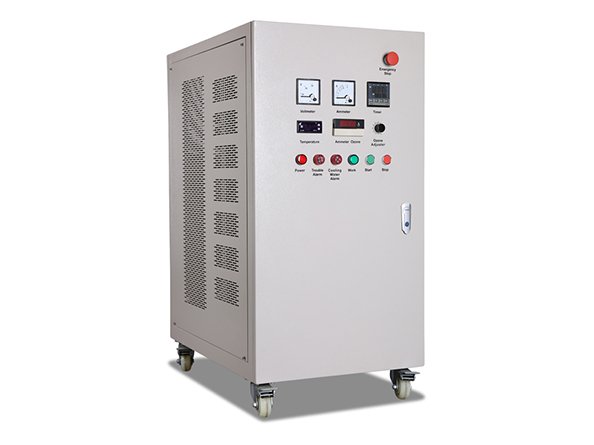
To choose the right ozone generator for your fish farm, you must calculate your system’s total water volume and organic load to determine the required ozone output (grams per hour). Prioritize high-quality corona discharge units with integrated ORP controllers and robust oxygen feed systems to ensure precise disinfection, improved water clarity, and optimal fish health.
Introduction: The High-Stakes World of Water Quality
It is a challenge every commercial fish farmer faces: maintaining pristine water quality while scaling production density. You know that as biomass increases, so does the risk of pathogen outbreaks and the accumulation of dissolved organic compounds (DOC). Traditional filtration often falls short of the “crystal clear” standard required for sensitive species.
If you are struggling with murky water, fluctuating bacterial loads, or suboptimal growth rates, you are not alone. However, there is a definitive solution used by elite Recirculating Aquaculture Systems (RAS) globally.
In this guide, we will break down exactly how to evaluate and integrate ozone in aquaculture. You will learn how to size your equipment, select the right technology, and implement safety protocols that protect both your livestock and your bottom line.
—
Why Use Ozone in Aquaculture?
Ozone (O3) is one of the most powerful oxidants available to fish farmers. Unlike chlorine, it leaves no harmful residues when managed correctly, as it rapidly reverts back to pure oxygen.
The Benefits of Oxidation
• Pathogen Reduction: Ozone effectively neutralizes bacteria, viruses, and fungi that cause diseases like Columnaris or Vibriosis.
• DOC Removal: It breaks down dissolved organic carbon that gives water a yellowish tint, significantly improving light penetration and aesthetics.
• Nitrite Conversion: Ozone accelerates the oxidation of toxic nitrite (NO2) into less harmful nitrate (NO3).
• Micro-flocculation: It helps fine solids clump together, making them easier for mechanical filters and protein skimmers to remove.
—
Step 1: Calculate Your Ozone Requirements
Sizing an ozone generator for aquaculture is not a “one size fits all” process. If the output is too low, you won’t see results; if it’s too high, you risk toxic “residual ozone” that can damage fish gills.
The Grams-per-Hour (g/hr) Formula
For most RAS setups, the standard dosing rate ranges from 10 to 25 grams of ozone per kilogram of feed added to the system.
• Low Intensity: 10g/kg of feed (mainly for water clarity).
• High Intensity: 20-25g/kg of feed (for aggressive disinfection and pathogen control).
Expert Insight: Always size your generator based on your maximum feeding rate, not the average. During peak growth cycles, the organic load spikes, and your ozone system must be able to keep up.
—
Step 2: Select the Right Ozone Generation Technology
There are two primary ways ozone is produced: UV light and Corona Discharge. For commercial fish farming, one is clearly superior.
Corona Discharge (CD)
CD generators work by passing dried air or pure oxygen through a high-voltage electrical field.
• Pros: High concentration output, scalable for large farms, and more energy-efficient for high-volume needs.
• Cons: Requires a dry air or oxygen feed to prevent the formation of nitric acid.
UV Ozone Generators
These use specific wavelengths of light to split oxygen molecules.
• Pros: Lower initial cost, simple mechanics.
• Cons: Very low output concentrations, making them unsuitable for large-scale commercial aquaculture.
The Verdict: For any professional operation, a corona discharge ozone generator for aquaculture is the industry standard due to its reliability and high oxidative potential.
—
Step 3: Feed Gas – Air vs. Oxygen
An ozone generator is only as good as the gas you feed into it. To maximize the efficiency of ozone in aquaculture, you must choose between dry air and concentrated oxygen.
• Dry Air: Requires heavy-duty desiccant dryers. The ozone concentration is usually 1-3%.
• Pure Oxygen: Using an oxygen concentrator allows the generator to produce ozone at concentrations of 6-12%.
Pro-Tip: Using pure oxygen feed gas not only doubles your ozone output but also increases the dissolved oxygen (DO) levels in your tanks, providing a secondary benefit to your fish.
—
Step 4: Integration and Contact Systems
Ozone cannot be bubbled directly into a fish tank. It must be dissolved into a side-stream of water using a contact vessel or a Venturi injector.
The Protein Skimmer (Fractionator)
In marine aquaculture, the protein skimmer is the ideal place to inject ozone. The ozone enhances the removal of proteins while the skimmer provides the necessary contact time for the gas to react.
Contact Columns
For freshwater systems, a dedicated contact column ensures that ozone gas has at least 2-5 minutes of “dwell time” to react with organics before the water returns to the main culture tanks.
—
Step 5: Monitoring and Safety (The ORP Factor)
You cannot manage what you do not measure. Oxidation-Reduction Potential (ORP) is the metric used to track ozone effectiveness.
• Target ORP Range: 250mV to 350mV is generally considered the “sweet spot” for fish health and disinfection.
• Danger Zone: ORP levels exceeding 400mV can be lethal to fish.
Safety Must-Have: Ensure your ozone generator for aquaculture is linked to an ORP controller with an “Auto-Shed” function. This automatically shuts down the generator if the ORP exceeds your pre-set limit.
—
Key Features to Look for When Buying
When comparing different models, look for these industrial-grade specifications:
• Variable Output Control: Ability to adjust ozone production from 0-100%.
• Water-Cooled Cells: High-output generators generate heat; water cooling extends the lifespan of the dielectric components.
• Teflon or Stainless Steel Construction: Ozone is highly corrosive. Internal components must be resistant to oxidation.
• Remote Monitoring: Modern units allow you to check performance via a smartphone or PLC system.
—
Common Mistakes to Avoid
• Ignoring Pre-Filtration: Ozone should be the “polishing” step. If your water is full of large suspended solids, you will waste ozone trying to burn through trash instead of killing bacteria.
• Poor De-gassing: Always use a de-gassing bucket or carbon filter after the ozone contact chamber to ensure no residual ozone gas enters the fish tanks.
• Skimping on Tubing: Use only Kynar (PVDF) or PTFE tubing. Standard vinyl or rubber tubing will crack and leak within weeks.
—
FAQ Section
1. Is ozone safe for all types of fish?
Yes, ozone is safe for both freshwater and saltwater species, provided the ORP levels are monitored. Sensitive species like trout or shrimp require more precise control than hardier species like tilapia.
2. Does ozone replace biofiltration?
No. Ozone complements biofiltration. While ozone handles solids and pathogens, your biological filter is still necessary to convert ammonia. In fact, ozone often makes biofilters work more efficiently by reducing the organic “slime” that clogs them.
3. How often do I need to maintain an ozone generator?
Typically, ozone cells should be inspected and cleaned every 6-12 months. Oxygen concentrator filters and air dryers should be checked monthly to ensure the feed gas remains pure and dry.
4. Can I smell ozone if there is a leak?
Yes, ozone has a very distinct, “sharp” smell (often compared to the air after a lightning storm). If you can smell it, levels are likely above the human safety threshold, and you should ventilate the area immediately.
5. Will ozone affect the pH of my water?
Ozone itself has a neutral effect on pH. However, by removing organic acids and improving overall water chemistry, it can help stabilize the system’s natural buffering capacity.
—
Conclusion
Selecting the right ozone generator for aquaculture is a transformative investment for any fish farm. By focusing on corona discharge technology, precise ORP monitoring, and proper integration into your filtration loop, you can achieve unparalleled water clarity and biosecurity.
Ready to level up your water quality?
Don’t leave your fish health to chance. Contact our technical team today for a custom system audit or a quote on a high-performance ozone generator for aquaculture tailored to your specific biomass needs.
[Get a Free Technical Consultation]