To implement ozone in an aquaculture farm successfully, operators must avoid over-ozonation, improper gas-liquid mixing, and neglecting residual monitoring. Proper ozone implementation involves precise dosing tailored to biomass, high-efficiency venturi injection, and secondary degassing units to prevent toxicity. Failure to manage these variables can lead to gill damage in fish and system-wide biological filter failure.
Introduction: The Double-Edged Sword of Ozone in Aquaculture
Are you struggling with water clarity issues or persistent pathogen outbreaks in your recirculating aquaculture system (RAS)? You aren’t alone. Many farm managers turn to ozone in an aquaculture farm to oxidize organic matter and disinfect water, only to find themselves facing unexpected fish mortality or equipment failure.
While ozone is one of the most powerful tools for maintaining a pristine aquatic environment, it is also highly reactive and unforgiving of technical errors. If you’ve invested in an ozone generator for aquaculture, you are halfway toward superior water quality—but the “set it and forget it” mentality is your biggest enemy.
In this guide, we will break down the critical mistakes made during ozone integration and provide a roadmap for high-performance, safe, and sustainable ozone management.
—
1. Incorrect Dosing and “The One-Size-Fits-All” Fallacy
The most frequent mistake is failing to calculate the specific ozone demand of your unique biomass and feed load. Ozone demand isn’t static; it fluctuates based on temperature, pH, and organic loading.
The Danger of Over-Ozonation
When you exceed the “Ozone Demand” of the water, you create residual ozone. Residual ozone is a powerful oxidant that does not distinguish between a pathogen and the delicate gill tissue of your livestock. Even low levels of residual ozone can cause chronic stress, reduced growth rates, and secondary infections.
The Pitfall of Under-Ozonation
Conversely, under-dosing is a waste of capital. If the dosage is too low, the ozone is entirely consumed by dissolved organic carbons (DOC), leaving no oxidative power to address fine solids or bacterial counts.
Pro-Tip: Always calculate your dosage based on the daily feed rate. A standard starting point is 10–15 grams of ozone per kilogram of feed, but this must be adjusted based on your specific water turnover rate.
—
2. Inefficient Gas-Liquid Mass Transfer
Simply bubbling ozone into a tank via an air stone is a recipe for failure. Ozone is only effective if it dissolves into the water column.
Why Venturi Injection is Non-Negotiable
The gold standard for ozone in an aquaculture farm is the venturi injector. This device creates a vacuum to pull ozone gas into the water stream, creating micro-bubbles that maximize surface area contact.
Ignoring Contact Time
Many farms fail to provide a dedicated “Contact Vessel.” Ozone needs time to react with organic pollutants. If the water moves too quickly from the injection point back to the fish tanks, the reaction is incomplete, and the risk of raw ozone gas reaching the livestock increases exponentially.
—
3. Neglecting the Degassing Phase
One of the most catastrophic mistakes in ozone implementation is the absence of a degassing unit. Even with perfect dosing, some residual ozone or “oxidized byproducts” (like bromates in saltwater) can remain.
The Role of Degassing Towers
A degassing tower or a trickling filter allows the water to break its surface tension, letting unreacted ozone gas escape safely into the atmosphere (where it should be neutralized by a destruct unit).
The Biofilter Risk
If you do not degas the water before it hits your biofilter, the residual ozone will kill your nitrifying bacteria. This leads to an ammonia spike that can wipe out an entire farm in hours.
Expert Insight: In marine systems, ozone reacts with bromide to form oxidants that are more persistent than ozone itself. In these cases, activated carbon filtration is often required alongside degassing to ensure water safety.
—
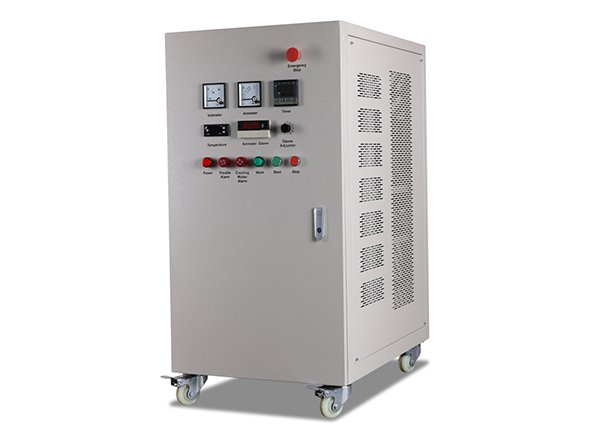
4. Poor Maintenance of the Ozone Generator for Aquaculture
An ozone generator for aquaculture is a sophisticated piece of electronics operating in a damp, harsh environment. Most failures stem from poor feed gas preparation.
The Importance of Dry Air
Ozone is created by an electrical discharge. If the air fed into the generator is humid, the machine will produce nitric acid instead of ozone. This acid corrodes the internal components of the generator, leading to a rapid decline in output and eventual hardware failure.
Common Maintenance Oversights:
• Failed Oxygen Concentrators: Most high-output generators require 90%+ pure oxygen. Using ambient air reduces efficiency by 80%.
• Clogged Injectors: Calcium buildup in venturi injectors can restrict flow, causing backpressure that damages the generator.
—
5. Lack of Real-Time Monitoring and Redundancy
You cannot manage what you do not measure. Relying on periodic manual testing for ozone levels is a high-risk strategy.
The Necessity of ORP Probes
Oxidation-Reduction Potential (ORP) meters are the “dashboard” of your ozone system. They measure the oxidative capacity of the water in millivolts (mV).
• Target Range: Generally 250mV to 350mV for aquaculture.
• The Mistake: Failing to clean and calibrate ORP probes weekly. A fouled probe might read 200mV when the actual level is 400mV, leading the system to pump more ozone into an already saturated environment.
Automated Shutdowns
Your ozone generator for aquaculture should be interlocked with your ORP controller. If the ORP exceeds a safety threshold (e.g., 400mV), the generator must automatically shut down to protect the stock.
—
6. Ignoring Human Safety Protocols
Ozone is a respiratory irritant and is toxic at high concentrations. Many farms implement ozone without installing ambient ozone leak detectors in the equipment room.
Safety Checklist:
• Ambient Monitors: Install sensors that trigger an alarm if ozone leaks into the workspace.
• Ozone Destruct Units: Ensure that any gas vented from degassing towers passes through a thermal or catalytic destruct unit.
• Ventilation: Ensure the generator room has high-volume air exchange.
—
Summary of Best Practices for Ozone in an Aquaculture Farm
| Feature | Improper Implementation | Best Practice |
|---|---|---|
| Injection | Bubbling with air stones | Venturi injection with high shear |
| Monitoring | Visual “clarity” check | Continuous ORP monitoring with logic control |
| Gas Prep | Ambient humid air | Dry, high-purity oxygen feed gas |
| Safety | Direct return to fish tanks | Post-injection degassing and/or Carbon filtration |
| Dosing | Fixed constant output | Flow-proportional or ORP-governed dosing |
—
Frequently Asked Questions (FAQ)
1. Can ozone kill the beneficial bacteria in my biofilter?
Yes. If residual ozone is not removed via a degassing tower or activated carbon before it reaches the biofilter, it will sterilize the nitrifying bacteria, causing a total system collapse (ammonia/nitrite spike).
2. Is ozone safe for saltwater (marine) aquaculture?
Ozone is highly effective in saltwater but requires more caution. It reacts with bromide in seawater to form long-lasting oxidants. Marine systems usually require activated carbon to neutralize these specific byproducts.
3. How do I know if my fish are suffering from ozone toxicity?
Common signs include “piping” (gasping at the surface), flared opercula (gill covers), erratic swimming, or excessive mucus production on the gills. If these occur, check your ORP levels immediately.
4. What is the ideal ORP level for a fish farm?
While it varies by species, a safe range is typically between 250mV and 350mV. Levels above 400mV are generally considered hazardous for most aquatic species over long periods.
5. Does ozone replace the need for UV sterilization?
Not necessarily. Ozone is better at removing color and breaking down organics (DOC), while UV is often more effective for “single-pass” disinfection of specific pathogens without leaving a residual. Many high-tech farms use both.
—
Conclusion: Maximizing the Potential of Your Farm
Implementing ozone in an aquaculture farm is a game-changer for water quality, but it requires precision and respect for the chemistry involved. By avoiding the common pitfalls of poor gas transfer, inadequate monitoring, and neglected safety protocols, you can create a crystal-clear environment where your fish thrive.
Don’t let technical errors undermine your investment. Focus on high-quality oxygen feed gas, precise ORP control, and robust degassing.
Ready to optimize your water quality? Contact an aquaculture engineer today to audit your ozone system and ensure your farm is operating at peak efficiency.