Ozone for salmon farming provides a powerful, chemical-free solution to water purification by rapidly neutralizing pathogens, oxidizing organic pollutants, and increasing dissolved oxygen levels. This advanced oxidation process ensures a sterile, high-clarity environment that accelerates growth rates, reduces mortality, and significantly enhances overall biosecurity in both RAS and flow-through aquaculture systems.
Introduction
Managing a large-scale salmon farm often feels like a constant battle against invisible threats. You likely agree that maintaining pristine water quality is the single greatest challenge in aquaculture, directly impacting your bottom line.
I promise that by implementing advanced oxidation strategies, specifically utilizing an ozone generator for aquaculture, you can achieve near-sterile conditions that were previously impossible with traditional filtration alone.
In this guide, we will preview the mechanical benefits of ozone, the biological advantages for Atlantic salmon, and the economic impact of switching to an ozone-integrated system.
—
Why Water Quality is the “Glass Ceiling” of Salmon Production
In intensive salmon farming, particularly in Recirculating Aquaculture Systems (RAS), fish waste and uneaten feed quickly accumulate. This leads to a buildup of dissolved organic compounds (DOC) and fine colloidal solids.
These microscopic particles do more than just make the water cloudy; they serve as a breeding ground for bacteria and parasites. Traditional mechanical filtration often fails to capture these fine particles. This is where ozone in aquaculture changes the game. Ozone acts as a micro-flocculant, clumping these tiny particles together so they can be easily removed by sand filters or protein skimmers.
—
1. Pathogen Control and Biosecurity
The primary threat to any salmonid operation is an outbreak of disease. Sea lice, Aeromonas, and various viral infections can decimate a population in days.
Rapid Disinfection
Ozone is one of the most powerful disinfectants available, significantly more effective than chlorine or UV light alone. It works by rupturing the cell walls of bacteria and viruses on contact. By integrating ozone for salmon farming, operators can ensure that the water entering and circulating through the tanks is free from pathogenic threats.
Reducing Antibiotic Dependency
As global markets shift toward “organic” and “antibiotic-free” certifications, ozone provides a path forward. Because ozone leaves no chemical residue—reverting back into pure oxygen—it allows farmers to maintain health without resorting to pharmaceuticals.
—
2. Eliminating Off-Flavor Compounds (GEOS & MIB)
One of the greatest commercial hurdles for land-based salmon farming is “off-flavor.” Compounds like Geosmin and 2-Methylisoborneol (MIB), produced by certain algae and bacteria, can give salmon a muddy taste.
Expert Insight: Conventional methods require “purging” fish in clean water for up to two weeks before harvest, during which the fish lose weight. High-dose ozone treatment effectively oxidizes these compounds, reducing or eliminating the need for lengthy purge cycles and preserving your yield weight.
—
3. Enhanced Growth Rates via Dissolved Oxygen
Salmon are highly sensitive to oxygen levels. While aeration provides basic survival needs, an ozone generator for aquaculture offers a secondary benefit.
As ozone (O3) breaks down, it enriches the water with dissolved oxygen (O2). This creates a high-energy environment where salmon exhibit:
• Improved Feed Conversion Ratios (FCR): Fish digest food more efficiently in oxygen-rich water.
• Faster Growth Cycles: Harvest size is reached weeks earlier than in standard systems.
• Reduced Stress: Lower cortisol levels in fish lead to better muscle quality and texture.
—
4. Understanding the Technology: The Ozone Generator for Aquaculture
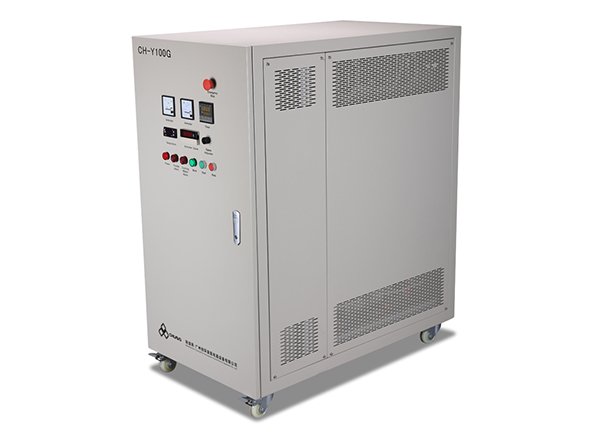
To implement ozone in aquaculture effectively, you must understand the delivery system. A modern setup typically involves an oxygen concentrator, an ozone generator, and an injection system (like a Venturi injector).
The Role of ORP Monitoring
Oxidation-Reduction Potential (ORP) is the “speedometer” of your ozone system. It measures the cleanliness of the water and the activity of the ozone. For salmon, maintaining an ORP level between 250mV and 300mV is usually the “sweet spot” for disinfection without harming the fish.
Pro-Tip: Never inject ozone directly into the fish tank. Always use a contact chamber followed by a degassing tower to ensure no residual ozone reaches the salmon, as it can damage their sensitive gill tissue.
—
5. Environmental and Economic ROI
Investing in ozone for salmon farming is not just a biological decision; it is a financial one.
| Feature | Traditional System | Ozone-Integrated System |
|---|---|---|
| Water Clarity | Moderate/Turbid | Crystal Clear |
| Mortality Rate | 10-15% (average) | < 5% |
| Growth Speed | Standard | 10-20% Faster |
| Chemical Use | High (Disinfectants) | Minimal to None |
Sustainability
Ozone is the ultimate “green” technology for the blue economy. It reduces the volume of water exchange needed in RAS, meaning less energy is spent heating or cooling “new” water. Furthermore, the effluent water discharged from an ozone-treated farm is cleaner, reducing the environmental footprint on local ecosystems.
—
6. Challenges and Best Practices
While the benefits are clear, ozone must be managed with precision.
• Material Compatibility: Ozone is highly corrosive. Ensure all piping and seals are made of ozone-resistant materials like 316L Stainless Steel, PTFE (Teflon), or Kynar.
• Dosage Control: Over-ozonation can lead to the formation of bromate in saltwater environments. Precise monitoring and automated shut-off valves are essential.
• Training: Staff must be trained in the safety protocols of handling ozone gas, including the use of ambient air monitors to detect leaks.
—
FAQ: Frequently Asked Questions
1. Is ozone safe for salmon?
Yes, when used correctly. Ozone should be applied in a separate contact chamber. By the time the water returns to the fish, the ozone should be fully dissipated or “quenched” using UV light or aeration, leaving only oxygen behind.
2. How does ozone improve water clarity?
Ozone acts as a micro-flocculant. It breaks down the long-chain organic molecules that cause yellowing in water and causes fine solids to clump together, making them large enough to be caught by mechanical filters.
3. Can I use an ozone generator in a saltwater salmon farm?
Absolutely. However, in saltwater, ozone reacts with bromide to create oxidants. While this provides disinfection, it requires tighter control and often the use of an activated carbon filter or UV system to neutralize residual oxidants before the water hits the fish.
4. What size ozone generator do I need for my aquaculture site?
Sizing depends on the biomass load, water flow rate, and existing water quality. Generally, a system is sized based on grams of ozone per hour (g/h) required to maintain a specific ORP target.
5. Does ozone replace UV sterilization?
Ozone and UV are often used together. Ozone is better at removing organics and improving clarity, while UV is excellent at “polishing” the water and ensuring no residual ozone reaches the fish. Together, they provide the “Gold Standard” of biosecurity.
—
Conclusion: The Future of Salmon Farming
The transition to ozone in aquaculture represents a shift from reactive farming to proactive management. By utilizing a high-quality ozone generator for aquaculture, you are not just cleaning water; you are creating a biological fortress that protects your investment and ensures the highest quality product for the consumer.
The result is a more resilient operation, healthier Atlantic salmon, and a significantly higher yield.
Ready to upgrade your water quality?
[Contact our engineering team today for a custom ozone integration plan and take the first step toward a more profitable, sustainable salmon farm.]