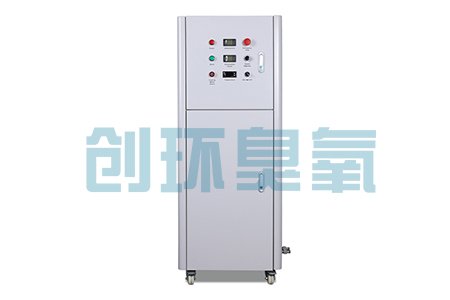
Ozone generators are the most powerful commercially available tools for water purification, offering an oxidation potential 50% stronger than chlorine. An ozone generator for water purification works by synthesizing trioxygen (O3), which aggressively attacks and neutralizes bacteria, viruses, and dissolved minerals like iron and manganese. Unlike traditional chemical treatments, ozone leaves zero toxic byproducts, as it naturally reverts to pure oxygen (O2) shortly after the reaction.
By reading this guide, you will gain a professional-level understanding of how ozone systems integrate into residential and industrial water chains, how to size your equipment, and why this technology has become the gold standard for high-purity water applications globally.
The Science of Oxidation: How Ozone Purifies Water
To understand why ozone is superior, you must understand the Advanced Oxidation Process (AOP). Ozone is an unstable gas. When it is injected into a water stream, the third oxygen atom in the O3 molecule detaches and binds to organic and inorganic contaminants. This process, known as oxidation, literally “combusts” the cell walls of pathogens and precipitates dissolved minerals into solid particles that can be easily filtered out.
Corona Discharge vs. UV Ozone Generation
Not all ozone generators are created equal. In the professional water treatment industry, there are two primary methods of generation:
• Corona Discharge (CD): This is the industry standard for high-output applications. It works by passing dry air or concentrated oxygen through a high-voltage electrical field. CD systems are preferred because they produce higher concentrations of ozone, making them far more efficient for large-scale water purification.
• Ultraviolet (UV) Light: These systems use 185nm UV lamps to create ozone. While simpler, they produce very low concentrations and are generally only suitable for small residential air applications or very low-flow water systems.
For any serious water purification project, Corona Discharge technology is the only viable choice for maintaining consistent disinfection standards.
Major Benefits of Using Ozone Over Chlorine
For decades, chlorine was the default choice for water disinfection. However, modern environmental and health standards have shifted the preference toward ozone.
1. Elimination of Disinfection Byproducts (DBPs)
When chlorine reacts with organic matter in water, it creates Trihalomethanes (THMs) and Haloacetic Acids—known carcinogens that remain in the water. An ozone generator eliminates this risk entirely. Ozone leaves no chemical residue, significantly improving the safety profile of the treated water.
2. Speed and Potency
Ozone is a faster-acting disinfectant than chlorine. It is effective against Cryptosporidium and Giardia, two parasites that are notoriously resistant to chlorine. In many cases, ozone provides a 99.9% kill rate of viruses and bacteria with a contact time measured in seconds rather than the 20-30 minutes required by chemical dosing.
3. Removal of “Rotten Egg” Odors and Metallic Taste
If you are dealing with well water, you are likely familiar with the smell of hydrogen sulfide (H2S). Ozone oxidizes H2S instantly, removing the odor. It also converts dissolved iron and manganese—which cause orange and black staining—into solid oxides that are trapped by a simple sediment filter.
Key Applications: From Residential Wells to Industrial Plants
Ozone’s versatility makes it applicable across various sectors, each requiring specific configurations for maximum efficiency.
Industrial Wastewater and Cooling Towers
In industrial settings, ozone is used to lower Chemical Oxygen Demand (COD) and Biological Oxygen Demand (BOD). In cooling towers, it acts as a high-efficiency biocide that prevents scale buildup and Legionella growth, often allowing facilities to reduce their water blowdown and save thousands in utility costs.
Bottled Water and Beverage Production
The beverage industry relies on a “controlled residual.” Ozone is injected into the water just before bottling; it disinfects the water, the bottle, and the cap. Within minutes, the ozone reverts to oxygen, leaving the product tasteless, odorless, and sterile.
Residential Well Water Treatment
For homeowners, an ozone generator acts as a comprehensive “Whole House” solution. It is typically installed at the point of entry (POE), working in tandem with a contact tank and a catalytic carbon filter. This setup ensures that every tap in the home provides water that is free of pathogens and minerals.
How to Size an Ozone System: The Calculations
One of the most common mistakes is under-sizing the generator. To determine the correct “Grams per Hour” (g/h) requirement, you must apply the following logic:
• Flow Rate: Determine your peak gallons per minute (GPM) or cubic meters per hour (m3/h).
• Ozone Demand: This is the “load” in your water. Iron, sulfur, and bacteria all “consume” ozone. For example, it takes approximately 0.44 mg of ozone to oxidize 1 mg of iron.
• Target Dosage: For standard disinfection, a dosage of 1.0 to 2.0 mg/L is often sufficient. If you are treating heavy minerals or wastewater, you may need 5.0 mg/L or higher.
Example Case Study: A food processing plant needing to treat 10 GPM with a required dosage of 2 mg/L would need a generator capable of producing at least 4.5 grams of ozone per hour, assuming 100% mass transfer efficiency. To account for efficiency losses, a 10 g/h unit would be recommended.
Master the Installation: The Injection Manifold
A generator alone is useless without an efficient way to get the gas into the water. This is called Mass Transfer.
The most effective method is the Venturi Injector. The injector creates a vacuum that pulls the ozone gas into the water stream, creating millions of micro-bubbles. This maximizes the surface area for the reaction.
The Necessity of a Contact Tank
Ozone requires “dwell time” to finish the oxidation process. A Contact Tank (often a tall, pressurized vessel) ensures the ozone remains in contact with the water for 2 to 4 minutes before reaching the tap or the next stage of filtration. Without this, the oxidation process may be incomplete, leading to “ozone breakthrough” or residual mineral staining.
Crucial Maintenance and Safety Standards
While ozone is a miracle for water, it is a lung irritant in gas form. Safety must be your primary concern.
• Ambient Sensors: Any room housing an industrial ozone generator should be equipped with an ambient ozone monitor. This sensor will trigger an emergency shutdown if gas concentrations exceed OSHA limits (typically 0.1 ppm).
• Material Compatibility: Ozone is highly corrosive to certain materials. You must use 316L Stainless Steel, Teflon (PTFE), or Kynar (PVDF) for all piping and seals that come into contact with concentrated ozone. Standard rubber and PVC will degrade rapidly.
• Air Preparation: Ozone generators are sensitive to moisture. A high-quality Desiccant Air Dryer or Oxygen Concentrator must be used as the feed gas source. “Wet” air leads to the formation of nitric acid, which will destroy the corona discharge cell within months.
Determining Your ROI: Is Ozone Worth the Investment?
The initial cost of an ozone generator for water purification is higher than a chemical pump. However, the Total Cost of Ownership (TCO) is significantly lower over a 5-year period.
• Zero Chemical Costs: Your only “raw materials” are air and electricity.
• Reduced Handling Risks: No more storing 55-gallon drums of hazardous chlorine.
• Extended Equipment Life: By removing minerals and biofilm, ozone protects downstream equipment like RO membranes and expensive plumbing fixtures from fouling.
FAQ: Common Questions About Ozone Water Purification
Is ozonated water safe to drink immediately?
While the water is technically sterile immediately, you should allow a few minutes for the ozone to revert back to oxygen. Most professional systems include an off-gas destroyer or a charcoal filter to ensure no residual ozone reaches the consumer’s glass.
Does ozone change the pH of my water?
No. Unlike chlorine or certain acid washes, ozone is pH neutral. It will not make your water more acidic or alkaline, which is a major benefit for sensitive industrial processes and agricultural irrigation.
Can ozone remove lead and arsenic?
Ozone is excellent at oxidizing lead and arsenic into a solid state. However, it does not remove them on its own. You must follow the ozone system with a high-quality sub-micron filter to physically remove the oxidized metal particles from the water stream.
How long do ozone generators last?
A well-maintained Corona Discharge ozone generator can last 10 to 15 years. The primary maintenance tasks include replacing air dryer desiccant and cleaning the corona cell every 12-24 months to ensure peak concentration.
Conclusion: Take Control of Your Water Quality
Switching to an ozone generator for water purification is the most effective way to achieve pharmaceutical-grade water quality without the logistical and health burdens of chemicals. Whether you are solving a complex industrial wastewater challenge or simply ensuring your family’s well water is pure, ozone provides a scalable, eco-friendly solution that pays for itself through performance.
Are you ready to design your system? Contact a certified water treatment specialist today to perform a water analysis and determine the precise ozone dosage required for your specific needs.