An ozone generator is a key tool in modern water treatment plants.
It helps clean water fast. It helps disinfect water. It also helps remove odor, color, iron, manganese, and some organic contaminants.
For plants that need strong treatment, ozone is often a smart choice.
This article explains what an ozone generator does, how it works in a water treatment plant, and why it is used in large-scale systems.
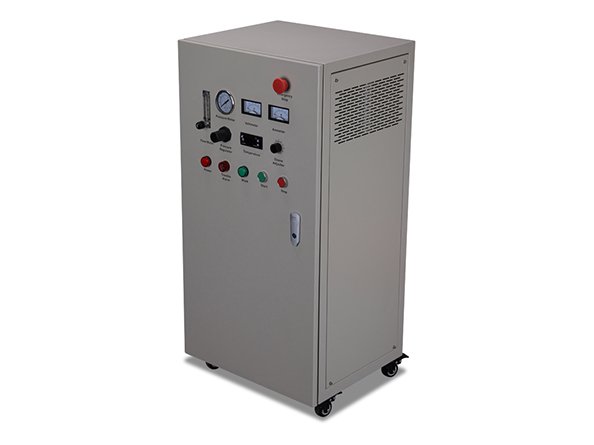
What Is an Ozone Generator?
An ozone generator makes ozone gas.
Ozone is made from oxygen. The generator uses electricity or UV light to split oxygen molecules. Then the oxygen atoms combine to form ozone, or O3.
This ozone gas is then added to water.
Once ozone enters the water, it reacts quickly. It attacks microorganisms. It oxidizes unwanted compounds. It improves water quality.
That is why ozone is widely used in water treatment plants.
Why Water Treatment Plants Use Ozone
Water treatment plants face many problems.
The raw water may contain bacteria. It may contain viruses. It may contain iron, manganese, algae, odor, color, and organic matter.
Basic filtration is not always enough.
That is where ozone helps.
Ozone is strong. It works fast. It can disinfect water and improve clarity at the same time.
It also breaks down into oxygen after use. That means it does not stay in the water for long.
This makes it attractive for plants that want high-quality water with less chemical residue.
How Ozone Works in a Treatment Plant
The process is simple in concept.
First, the plant produces ozone in the generator.
Then, the ozone gas is injected into the water stream.
Next, the water and ozone mix in a contact tank.
During this time, the ozone reacts with contaminants.
It kills microorganisms. It oxidizes metals. It reduces odor and color.
After the reaction, any unused ozone must be removed or destroyed.
This is important for safety.
Main Parts of an Ozone System
A water treatment plant ozone system usually includes several parts.
- Oxygen source or dry air source
- Ozone generator
- Injection system
- Contact tank
- Off-gas destruction unit
- Monitoring and safety controls
Each part matters.
If one part fails, the whole system becomes less effective.
Corona Discharge vs UV Ozone Generation
There are two common ways to make ozone.
Corona discharge
This is the most common method in large water treatment plants.
It uses a high-voltage electrical field to convert oxygen into ozone.
It is efficient. It produces higher ozone output. It is suitable for large systems.
UV generation
This method uses ultraviolet light to create ozone.
It is simpler, but it usually produces less ozone.
It is better for small systems or special uses.
For a water treatment plant, corona discharge is usually the better choice.
Benefits of Ozone in Water Treatment Plants
Ozone gives plants several clear advantages.
Strong disinfection
Ozone kills many bacteria, viruses, and other microorganisms.
It works quickly.
Better oxidation
Ozone can oxidize iron and manganese.
This helps improve water clarity and reduce staining problems.
Odor and taste control
Ozone helps remove bad smells and unpleasant taste.
This matters in drinking water treatment.
Lower chemical use
Ozone can reduce the need for some chemicals.
That can simplify plant operations.
Improved water quality
Ozone can help produce cleaner, clearer, better-looking water.
That is important for public trust and compliance.
Where Ozone Is Used in a Water Treatment Plant
Ozone can be used in different parts of a plant.
It may be used before filtration.
It may be used after pre-treatment.
It may be used in advanced treatment steps.
It can support municipal drinking water systems.
It can also support industrial water treatment plants.
Some plants use ozone for:
- Disinfection
- Iron removal
- Manganese removal
- Color reduction
- Odor control
- Organic contaminant reduction
Ozone vs Chlorine in Water Treatment Plants
Many plants compare ozone and chlorine.
Both are used for disinfection.
But they are not the same.
Ozone
It works faster. It is stronger as an oxidant. It improves water quality in multiple ways.
But it does not last long in water.
Chlorine
It is cheaper and easier to store. It also gives residual protection in the distribution system.
But it may create taste and odor issues.
Many plants use both.
Ozone handles the main treatment work.
Chlorine may be used later for residual protection.
Design Factors That Matter
A good ozone generator is not enough.
The whole system must be designed well.
Here are the main factors.
Water flow rate
The system must match plant capacity.
Too small, and it will not handle the flow.
Too large, and it wastes energy and money.
Water chemistry
The amount of ozone needed depends on what is in the water.
High organic load means higher ozone demand.
Contact time
Ozone needs time to react.
The contact tank must be sized correctly.
Transfer efficiency
The system must get ozone into the water efficiently.
If too much ozone escapes, performance drops.
Temperature and pH
These can affect ozone stability and reaction speed.
Safety controls
Ozone is useful, but it must be handled carefully.
Proper ventilation and gas destruction are essential.
Safety in Water Treatment Plants
Ozone must be managed with care.
High ozone exposure is not safe for workers.
Plants should use:
- Leak detection
- Ventilation
- Off-gas destruction
- Monitoring alarms
- Operator training
Safety should never be an afterthought.
A well-run ozone system is effective and controlled.
Maintenance Needs
Ozone systems need regular maintenance.
Operators should check:
- Oxygen quality
- Generator performance
- Dryer condition
- Injector condition
- Contact tank operation
- Off-gas destruction unit
- Sensors and alarms
Moisture control is especially important.
If the gas is too wet, ozone production drops.
Regular maintenance keeps the system stable.
Is an Ozone Generator Right for Your Plant?
An ozone generator is a strong option when a plant needs:
- Fast disinfection
- Better odor control
- Iron and manganese oxidation
- Reduced chemical use
- Higher water quality
It may not be the best single solution if the plant needs long-lasting residual protection over a large distribution system.
In that case, ozone may need to work with another disinfectant.
Final Thoughts
An ozone generator for a water treatment plant is a powerful piece of equipment.
It makes ozone from oxygen. It injects that ozone into water. Then it helps disinfect and oxidize contaminants.
The result is cleaner, safer, better-quality water.
But the system must be designed well.
It needs the right generator. The right contact time. The right safety controls. And the right maintenance.
When used correctly, ozone is one of the most effective tools in modern water treatment.