If you are looking to crystalize your pool water, reduce chlorine usage, and eliminate that harsh chemical smell, adding an ozone generator is a fantastic upgrade. But one of the most common stumbling blocks pool owners face is sizing. Buy a unit that is too small, and you won’t see any benefits; buy one too large, and you risk wasting money and complicating your system.
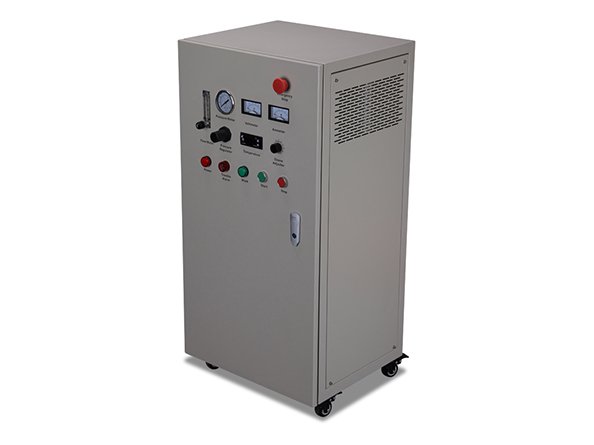
This comprehensive guide will walk you through exactly how to determine the right size ozone generator for your pool, from calculating your pool’s volume to understanding output measurements like grams per hour (g/hr).
Calculate Pool Volume, Turnover Rate, and Bather Load
The foundational step in sizing an ozone generator is knowing exactly how much water you are treating, how fast that water cycles through your system, and how heavily the pool is used.
Step 1: Calculate Your Pool Volume (Gallons)
To find your pool’s volume in US gallons, use the following formulas based on your pool’s shape (measurements in feet):
• Rectangular Pools: Length × Width × Average Depth × 7.5 = Total Gallons
• Oval/Round Pools: Length × Width × Average Depth × 5.9 = Total Gallons
• Freeform Pools: Maximum Length × Maximum Width × Average Depth × 0.45 × 7.5 = Total Gallons
Example: A 16 ft x 32 ft rectangular pool with an average depth of 5 ft:
16 × 32 × 5 × 7.5 = 19,200 gallons.
Step 2: Determine Your Turnover Rate
Turnover rate is the time it takes for your pump to cycle the entire pool volume through the filtration system.
• Residential Backyard Pools: Typically aim for a 6 to 8-hour turnover.
• Community/Commercial Pools: Require faster turnover, usually 4 to 6 hours (or even 2 hours for wading pools).
To find the required Flow Rate (Gallons Per Minute or GPM):
GPM = Pool Volume ÷ (Turnover Time in Hours × 60)
For our 19,200-gallon pool on an 8-hour turnover: 19,200 ÷ 480 = 40 GPM.
Step 3: Adjust for Bather Load
Bather load refers to the number of people using the pool. A standard backyard pool used by a family of four on weekends has a “low” bather load. A community pool hosting summer swim teams has a “high” bather load. As a general rule, if your pool sees high daily bather peaks, you should increase your calculated ozone need by 20% to 30% to handle the extra organic contaminants (sweat, sunscreen, oils).
Determine Required Ozone Output (g/hr) and Unit Conversions
Ozone generator output is typically measured in grams per hour (g/hr). Unlike chlorine, which leaves a lingering residual, ozone is a transient gas, meaning its sizing is based on continuous dosing during the pump’s run time.
Sizing Guidelines by Pool Type
Here is a straightforward baseline mapping to determine your g/hr requirement:
• Residential Outdoor (Low Load): 0.1 to 0.15 g/hr per 1,000 gallons. (e.g., A 20,000-gallon pool needs 2 to 3 g/hr).
• Residential Indoor / Warm Climate: 0.15 to 0.2 g/hr per 1,000 gallons.
• Commercial/High Bather Load: 0.25 to 0.4 g/hr per 1,000 gallons.
Understanding the Math: ppm, mg/L, and the 0.228 Multiplier
Ozone dosage is often discussed in parts per million (ppm), which is equivalent to milligrams per liter (mg/L). To convert your desired ppm dose into a g/hr requirement based on your pool’s flow rate, engineers use specific conversion multipliers.
A common formula involves the multiplier 0.228:
Ozone required (g/hr) = Flow Rate (GPM) × Desired Dose (ppm) × 0.228
Example Calculation:
Let’s say you want a standard residential dose of 0.5 ppm for a flow rate of 40 GPM.
40 GPM × 0.5 ppm × 0.228 = 4.56 g/hr.
In this scenario, a 5 g/hr ozone generator would be the perfect fit.
Contact Time, Ozone Contact Chamber Sizing, and Integration with Chlorine/Monitoring
Generating ozone is only half the battle; the gas must dissolve into the water to oxidize contaminants. This requires adequate “Contact Time” (CT).
Sizing the Contact Chamber
For ozone to effectively destroy bacteria and viruses, it needs a contact time of 2 to 4 minutes before returning to the pool. Because plumbing a massive tank for the entire pool flow is impractical, most systems use a bypass loop where 20% to 50% of the main pump’s flow is diverted into an ozone contact tank.
Contact Tank Volume Formula:
Tank Size (Gallons) = Bypass Flow Rate (GPM) × Desired Contact Time (Minutes)
If you divert 15 GPM into your ozone loop and want a 3-minute contact time:
15 GPM × 3 minutes = 45-gallon contact tank.
Integration and Monitoring
Ozone is a secondary sanitizer. In the US, regulations and practical safety require a primary residual sanitizer—usually chlorine. However, a properly sized ozone system will destroy combined chlorines (chloramines) and allow you to maintain a free chlorine level as low as 0.5 to 1.0 ppm, saving you up to 80% on chemical costs.
To monitor this effectively, use an ORP (Oxidation-Reduction Potential) controller. A healthy pool with ozone and low chlorine will consistently read between 650mV and 750mV.
Installation, Placement (Indoor vs Outdoor), Safety, and Maintenance
Proper installation ensures your system runs safely and efficiently.
Indoor vs. Outdoor Placement
• Outdoor: Installation is relatively simple. The equipment pad is naturally ventilated, allowing any off-gassed ozone to dissipate safely into the atmosphere.
• Indoor: Indoor pools require strict safety measures. OSHA mandates that ambient ozone exposure must not exceed 0.1 ppm over an 8-hour shift. Indoor installations must include an ozone destruct unit (a carbon or thermal filter that destroys unreacted ozone gas before it vents) and proper mechanical room ventilation.
Installation Basics
Ozone is introduced via a venturi injector placed after the heater and filter, making it the last piece of equipment before water returns to the pool. Ensure you use ozone-resistant tubing (like Teflon/PTFE) and install a one-way check valve to prevent water from backing up into the generator.
Maintenance and Power
• Energy Use: Ozone generators are highly energy-efficient, often drawing less power than a 100-watt lightbulb.
• Maintenance Schedule: Corona Discharge (CD) cells need cleaning every 6 to 12 months, depending on humidity and air prep quality. The CD chip or tube typically requires replacement every 2 to 3 years. Check valves and injector tubing should be inspected annually.
Special Cases: Spas, Generator Types (Corona vs UV), Real-World Output and Cost/ROI Examples
Not all water bodies and ozone generators are created equal.
Spas and Hot Tubs
Hot tubs operate at high temperatures (100°F-104°F) with incredibly high bather loads per gallon. A 500-gallon spa might require as much ozone (e.g., 0.5 to 1 g/hr) as a small swimming pool.
Corona Discharge (CD) vs. UV Ozone Generators
• UV Ozone: Uses ultraviolet light to create ozone. Pros: Cheap, virtually unaffected by humidity. Cons: Very low output (usually under 0.5 g/hr), making them suitable only for small spas, not pools.
• Corona Discharge (CD): Uses a high-voltage electrical spark. Pros: High output, capable of treating massive commercial pools. Cons: Requires dry air.
Real-World Output Reductions
A CD ozone generator rated for 5 g/hr assumes dry, prepared air. If you feed it humid, ambient summer air without an air dryer, the output can drop by 50% or more, and nitric acid will form, destroying the unit. Always ensure your CD generator includes an air dryer (desiccant or oxygen concentrator).
Cost & ROI Example
A quality residential ozone system may cost between $800 and $1,500. If you typically spend $600 a season on chlorine, shock, and algaecides, an ozone system can reduce that cost to $150. You will likely see a full return on investment (ROI) within 2 to 3 years, alongside the immediate benefit of superior water quality.
Get Your Custom Ozone Sizing Today
Stop guessing and start optimizing your pool’s sanitation. Getting the exact g/hr requirement, contact tank size, and bypass flow rate right the first time will save you time and money.
Download our Free Ozone Sizing Spreadsheet to input your pool’s dimensions and get an instant recommendation. Prefer to speak with an expert? Contact our certified installation team today for a free phone consultation and a customized quote tailored specifically to your residential or commercial pool setup.
—
FAQ
How many grams per hour (g/hr) of ozone does my backyard pool typically need?
For a standard residential backyard pool, you generally need 0.1 to 0.15 g/hr per 1,000 gallons. A 20,000-gallon pool usually requires a 2 to 3 g/hr ozone generator.
How do I calculate my pool’s gallons and proper turnover rate for ozone sizing?
Multiply Length × Width × Average Depth × 7.5 (for rectangular pools) to get gallons. Divide your total gallons by your desired turnover rate in hours (usually 6-8 for residential) and then by 60 to find your required Gallons Per Minute (GPM).
How should bather load change the ozone generator size for residential and commercial pools?
High bather loads introduce more organics (sweat, oils). You should increase the ozone output by 20-30% for heavily used residential pools, and use a higher baseline (0.25 – 0.4 g/hr per 1,000 gallons) for commercial pools.
Do indoor pools require a larger ozone system or different placement compared with outdoor pools?
They require a slightly larger system due to a lack of UV sunlight (which naturally burns off some chloramines), but more importantly, indoor pools strictly require ozone destruct units and proper room ventilation to meet OSHA safety standards for off-gassed ozone.
What is the recommended ozone contact time and how do I size a contact chamber for my loop flow?
The target contact time is 2 to 4 minutes. Size the chamber by multiplying your bypass loop flow rate (GPM) by the desired contact minutes. (e.g., 10 GPM × 3 minutes = 30-gallon tank).
What are the pros and cons of corona discharge versus UV ozone generators for pools?
UV generators are cheaper and handle humidity well but produce very low ozone, making them viable only for small spas. Corona Discharge (CD) systems produce high volumes of ozone ideal for pools but require air dryers to prevent output drop and internal damage from humidity.
How can I tell if my ozone generator is undersized and what steps should I take to upgrade?
If you are still experiencing strong chlorine smells (chloramines), cloudy water, or you cannot maintain a residual chlorine level without adding massive amounts of liquid/tablet chlorine, your ozone system is likely undersized. You should recalculate your pool’s volume and flow rate, and upgrade to a higher g/hr unit with an appropriate contact tank.