If you are looking to drastically reduce your pool’s chlorine demand, eliminate chloramine odors, and achieve crystal-clear water, an ozone generator is one of the best upgrades you can make. But before you commit, you need to know exactly what it will cost.
Many resources give a vague answer like “a few hundred to a few thousand dollars.” They rarely break down the hidden costs of manifolds, installation labor, or the long-term ROI from chemical savings. In this guide, we provide a transparent, step-by-step breakdown of how much a swimming pool ozone generator actually costs, from upfront hardware to 10-year maintenance expenses.
—
Typical Purchase Price Ranges and What Affects Cost
The price of a pool ozone generator varies wildly based on the technology used, the output capacity, and the included hardware. In the US market, residential systems generally fall into three distinct pricing tiers:
• Low-End / Entry-Level ($200 – $500): These are typically UV (Ultraviolet) ozone generators. They produce a very small amount of ozone (usually under 0.5 grams/hour) and are only suitable for small above-ground pools or spas. They often do not include the necessary plumbing manifolds.
• Mid-Range ($500 – $1,500): This is the sweet spot for most residential inground pools (10,000 to 40,000 gallons). These units use Corona Discharge (CD) technology, which produces a much higher concentration of ozone (1.0 to 5.0 grams/hour). Models at the higher end of this tier usually come packaged with a Venturi injector manifold.
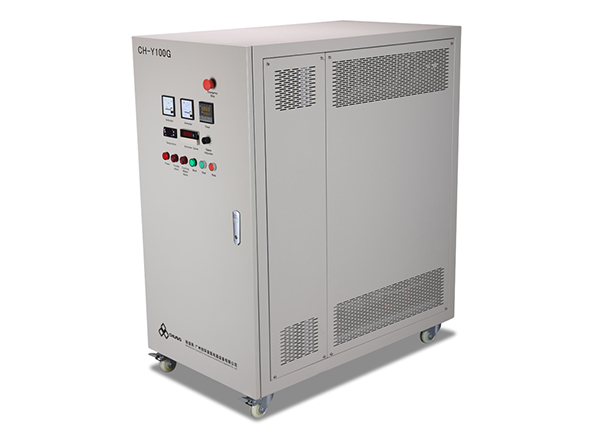
• High-End / Commercial-Grade ($2,000 – $5,000+): These systems are built for high-bather-load residential pools or small commercial facilities. They feature high-output CD cells, digital diagnostics, built-in air dryers (to increase ozone efficiency), and large contact chambers with off-gas destruct units to ensure no undissolved gas escapes.
What Drives the Price Up?
The biggest cost multipliers are the generation method (CD is more expensive but far superior to UV), the grams per hour (g/hr) output, and brand reputation. Additionally, many buyers don’t realize that new vs. used is a factor. You can often find refurbished high-end units on eBay for 40-50% off MSRP. However, buying used is risky; if the internal CD cell is degraded, a replacement cell will wipe out any savings you made on the initial purchase.
Detailed Cost Breakdown: Unit Price, Installation, and Sizing
To accurately budget for this project, you cannot just look at the generator’s sticker price. You must account for the complete plumbing ecosystem and installation labor.
Example Cost Breakdown (20,000-Gallon Pool)
Here is a realistic breakdown for outfitting a standard 20k-gallon residential pool with a quality CD ozone system:
• Ozone Generator Unit (e.g., 1.0 – 2.0 g/hr): $600 – $900
• Venturi Injector Manifold: $150 – $250 (Do not skip this; it is required to suck the ozone gas into the water line).
• Miscellaneous Plumbing/Electrical (PVC, conduit, check valves): $50 – $100
• Professional Labor (Plumber/Electrician): $300 – $600
• Total Estimated Installed Cost: $1,100 – $1,850
How to Size Your Generator:
A common industry rule of thumb is that you need 0.25 to 0.5 grams of ozone per hour for every 10,000 gallons of pool water, depending on bather load and climate. For a 40,000-gallon pool, you should look for a unit producing roughly 2.0 g/hr.
DIY vs. Professional Installation:
Can you install it yourself? If you are comfortable cutting PVC, gluing pipe, and wiring a 120V/240V device into your pool pump timer, DIY installation can save you $300 to $600 in labor. However, if your pump pad requires adding a new 240V breaker, you must hire a licensed electrician. Furthermore, some premium brands explicitly void the warranty if the unit is not installed by a certified pool professional.
Ongoing Operational and Maintenance Costs
One area where competitor guides fall short is failing to calculate the long-term ROI of an ozone system. Let’s look at what it costs to run and maintain the unit, offset by chemical savings.
Energy Costs:
Ozone generators are extremely energy-efficient. A typical residential CD unit draws between 40 and 100 watts—about the same as a traditional lightbulb. Running it 8 to 12 hours a day will only add $20 to $40 per year to your electric bill, depending on your local utility rates.
Maintenance Costs:
Ozone systems are not “set it and forget it.”
• Check Valves & Tubing ($20/year): The highly corrosive nature of ozone degrades the Teflon tubing and one-way check valves. These must be replaced annually to prevent pool water from backing up into the electronics.
• Ozone Cell Replacement ($150 – $300): Corona discharge cells and UV-ozone lamps lose their efficiency over time. Expect to replace the core generation component every 18 to 24 months.
The ROI (Return on Investment):
Ozone does most of the heavy lifting for oxidation. Because it destroys organics and chloramines so effectively, you can reduce your chlorine usage by 50% to 70%. If you normally spend $600 a year on liquid chlorine and shock, ozone could save you $350+ annually. Factoring in the $150/year average maintenance cost, you still net a $200/year savings, meaning the system often pays for its initial installation in about 4 to 6 years.
Residential vs Commercial Pricing, Codes, and Permitting
If you are outfitting a commercial pool (gym, hotel, or HOA community), throw residential pricing out the window.
Commercial systems require much higher ozone output (often 10 to 50+ g/hr) and mandate redundant safety features. A commercial setup will include large contact tanks, ambient air ozone monitors, and thermal destruct valves. Total costs for commercial systems easily range from $5,000 to $15,000+.
Codes and Permitting:
In the United States, retrofitting a residential pool with an ozone system may require a permit, depending on your local jurisdiction.
• Electrical Codes: Under the National Electrical Code (NEC) Article 680, all new pool equipment must be properly bonded and grounded. Upgrading your electrical subpanel for the ozone unit often triggers a municipal inspection (permit fees usually range from $50 to $150).
• Local Health Codes: For public or semi-public pools, the local Department of Health must approve the plans. Some counties in states like California or Florida require stamped engineering drawings for ozone contact tanks, adding hundreds to the project cost.
Pro Tip: Pool equipment prices fluctuate seasonally. Buying hardware and booking an installer during the off-season (November through February) can often yield a 10-15% discount on labor.
How and Where to Buy: Brands, Dealer vs Online, and Negotiation Tips
Not all ozone generators are created equal. When shopping, you will encounter a few dominant brands in the US market:
• CMP (DEL Ozone): The industry standard for residential CD ozone. Models like the AOP 25 or Ozone 25/50 range from $500 to $1,200. Excellent reliability and parts availability.
• Prozone: Known for hybrid UV-Ozone technology. Generally more affordable ($300 – $600) but requires slightly more frequent bulb changes.
• Clearwater Tech: Leans toward high-end residential and commercial CD systems ($1,500+).
Dealer vs. Online Direct:
Buying online from retailers like InTheSwim or specialized pool supply sites will almost always get you the cheapest hardware price. However, local pool dealers offer something the internet cannot: bundled installation and labor warranties.
If you buy a unit online and pay a local plumber to install it, the plumber will not guarantee the hardware if it fails. If you buy directly from a dealer, they warranty the entire system.
Negotiation Tip:
Get three quotes from local pool companies. Ask them to break out the cost of the hardware and the labor. If their hardware markup is egregiously high compared to online prices, ask if they will “price match” the unit while keeping their standard labor rate. Many dealers will agree to this rather than lose the installation job.
—
Ready to Upgrade? Get the Real Numbers for Your Pool
An ozone generator is a fantastic investment in your pool’s water quality and your family’s health, but buying the wrong size or botching the installation can waste thousands of dollars.
Take action today:
• Download our Free Cost & Sizing Template: Use our printable checklist to calculate your exact required grams/hour based on your pool volume.
• Get 3 Local Quotes: Never settle for the first estimate.
• Book a Free Assessment: If you aren’t sure if your current pump pad has room for a venturi manifold, contact us. Upload a photo of your equipment pad and your pool volume, and our certified technicians will provide a custom, no-obligation cost estimate.
Don’t guess with your budget—click below to start your pool upgrade journey!
—
FAQ
What is the typical upfront cost range for a residential pool ozone generator in the United States?
Hardware alone typically ranges from $300 for basic UV-ozone units to $1,500 for high-quality Corona Discharge (CD) systems. Total installed costs usually fall between $1,000 and $1,800.
How much does professional installation usually add to the total price, and when is DIY installation appropriate?
Professional plumbing and electrical labor adds $300 to $600 to the total cost. DIY is appropriate if you are experienced with PVC plumbing and have an available 120V/240V timer relay, but any new breaker installations require a licensed electrician.
What are the expected annual operating and maintenance costs, including electricity and ozone cell replacement?
Electricity adds about $20-$40 annually. Routine maintenance (replacing the check valve and tubing) costs $20/year. The ozone CD cell or UV lamp must be replaced every 1.5 to 2 years, costing $150-$300. Overall, expect about $100-$150 in annualized maintenance costs.
How do I size an ozone generator for my pool based on volume or flow rate?
A general rule is to aim for 0.25 to 0.5 grams per hour (g/hr) of ozone output per 10,000 gallons of pool water. A 20,000-gallon pool should ideally utilize a 1.0 g/hr unit.
Are there state or local permits, codes, or rebates in the U.S. that affect the total installation cost?
Yes. Any electrical work (like adding a dedicated circuit) requires a municipal permit ($50-$150) and adherence to NEC bonding/grounding codes. Commercial pools face strict health department regulations that require expensive off-gas destruct systems.
Which brands or models give the best value, and how do dealer prices compare with online retailers?
CMP (DEL Ozone) and Prozone are widely considered the best value for residential pools. Buying hardware online is cheaper, but purchasing through a local dealer often provides better labor warranties and ongoing service support.