Ozone removes color from water by acting as a powerful oxidizing agent that breaks down the organic and inorganic molecules responsible for discoloration. By disrupting the double bonds in “chromophores”—the parts of molecules that reflect light—an ozone generator can effectively neutralize stains from tannins, dyes, and organic decay, leaving water crystal clear.
Introduction: Why Color in Water is More Than a Cosmetic Issue
Do you have water that looks like weak tea or has a persistent yellowish tint? Whether you are managing an industrial wastewater facility, a commercial laundry, or a private well, “colored” water is a sign of underlying contaminants. While sometimes harmless, color usually indicates the presence of complex organic matter or metallic compounds that can interfere with downstream processes.
In this guide, we will explore the science of how ozone remove color from various water sources. We will look at why traditional filtration often fails and how an ozone generator provides a high-efficiency, chemical-free solution for achieving high-clarity water. By the end of this article, you’ll understand the mechanics, benefits, and practical applications of ozone for water treatment.
—
What Causes Color in Water?
Before we look at the solution, we must understand the “enemy.” Color in water is generally categorized into two types:
• Apparent Color: Caused by suspended solids (silt, clay, or algae). This can usually be removed by simple mechanical filtration.
• True Color: Caused by dissolved compounds that cannot be filtered out. These include:
• Tannins and Humic Acids: Decaying vegetation that leaches into groundwater.
• Metals: Oxidized iron (red/orange) or manganese (black/purple).
• Industrial Dyes: Synthetic chemicals used in textile and paper manufacturing.
Standard carbon filters can struggle with high concentrations of true color. This is where oxidation becomes the gold standard.
—
How Ozone Removes Color: The Science of Molecular Destruction
Ozone (O3) is one of the most powerful oxidants available to engineers today. Unlike chlorine, which adds chemicals to the water, ozone is an unstable gas that reacts and then reverts back to pure oxygen.
Breaking the Chromophore Chain
Most “color” in water is held within long-chain organic molecules. Within these molecules are “chromophores”—groups of atoms that absorb certain wavelengths of light and reflect others.
When you use ozone for water treatment, the ozone molecules aggressively attack the carbon-double bonds within these chromophores. By breaking these bonds, the ozone effectively “un-links” the chain. Once the molecular structure is shattered, the color literally disappears because the molecule can no longer reflect light in the visible spectrum.
Direct vs. Indirect Oxidation
Ozone works through two distinct pathways:
• Direct Reaction: The ozone molecule reacts directly with specific functional groups in the contaminants.
• Hydroxyl Radical Reaction: In certain conditions, ozone breaks down to form hydroxyl radicals (.OH). These are even more reactive than ozone itself and can neutralize almost any organic pollutant.
—
Why Use an Ozone Generator for Color Removal?
Using an ozone generator offers several distinct advantages over traditional chemical treatments like chlorine or potassium permanganate.
1. Speed and Efficiency
Ozone reacts thousands of times faster than chlorine. For industrial applications where flow rates are high, the rapid reaction time of ozone allows for smaller contact tanks and faster processing.
2. No Harmful Byproducts
Chlorine often reacts with organic matter to create Trihalomethanes (THMs), which are regulated carcinogens. Ozone, conversely, breaks down into oxygen (O2), making it the most environmentally friendly method to ozone remove color from sensitive ecosystems.
3. Micro-Flocculation Benefits
Pro-Tip: Ozone has a secondary benefit known as micro-flocculation. It “clumps” smaller particles together, making it easier for secondary sand or multi-media filters to trap the remaining debris, resulting in unparalleled water clarity.
—
Key Applications of Ozone for Water Treatment
Industrial Textile and Dye Wastewater
The textile industry is one of the largest contributors to water coloration. Synthetic dyes are designed to be resistant to light and heat, making them incredibly difficult to break down biologically. An industrial-grade ozone generator is often the only way to meet strict environmental discharge permits by decolorizing effluent before it reaches local waterways.
Drinking Water and Well Water (Tannins)
If you live in a wooded or swampy area, your well water may contain tannins. While not dangerous, tannins make water look unappetizing and can stain laundry and fixtures. Ozone is the premier choice for high-end residential and municipal systems to ensure “spring-water” clarity.
Bottled Water Production
The “brilliant” look of bottled water is rarely accidental. Most major bottling plants use ozone for water treatment as the final step. It provides disinfection and ensures the water is visually perfect for the consumer.
—
Technical Considerations: Achieving 100% Decolorization
To effectively ozone remove color, several factors must be optimized within your system:
| Factor | Impact on Decolorization |
|---|---|
| Contact Time | Most color removal occurs within 5 to 15 minutes of contact. |
| Ozone Dosage | Typically 1–3 mg/L of ozone is required per 10 units of color (Pt-Co scale). |
| pH Levels | Ozone is highly effective at a wide range of pH levels, though alkaline environments favor hydroxyl radical formation. |
| Water Temperature | Ozone dissolves better in cooler water, but reacts faster in warmer water. |
Expert Insight: Always perform a “pilot test” or a bench-top ozone demand test. Different organic loads require different dosages. Over-engineering a system is expensive, while under-engineering will leave the water slightly tinted.
—
Comparing Ozone to Other Methods
| Method | Color Removal Efficiency | Chemical Residue | Maintenance |
|---|---|---|---|
| Ozone | Very High | None (Oxygen) | Moderate (Electrical) |
| Activated Carbon | High (initially) | None | High (Filter changes) |
| Chlorine | Moderate | High (THMs) | Low |
| Coagulation | Moderate | High (Sludge) | High |
—
Step-by-Step: Implementing an Ozone Decolorization System
• Pre-Filtration: Use a sediment filter to remove “apparent color” and suspended solids. This prevents the ozone from being “wasted” on large particles.
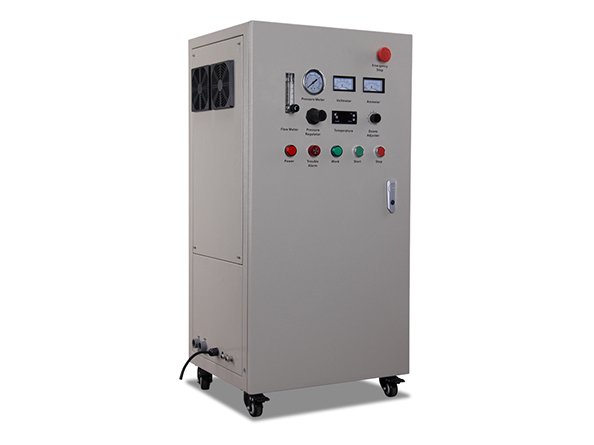
• Ozone Generation: Oxygen is fed into an ozone generator, where a corona discharge creates O3 gas.
• Mass Transfer: The ozone gas is injected into the water via a venturi injector or a fine-bubble diffuser.
• Reaction (Contact) Tank: The water dwells in a tank to allow the ozone remove color reaction to complete.
• Off-Gas Venting: Any undissolved ozone is safely vented through an ozone destruct unit.
• Post-Filtration: A final carbon block or sand filter removes the oxidized “fragments” of the color molecules.
—
Frequently Asked Questions (FAQ)
1. Does ozone remove iron and manganese stains?
Yes. Ozone rapidly oxidizes dissolved iron and manganese into solid particles. These particles can then be easily filtered out, preventing the red or black staining typical of these metals.
2. Is ozone-treated water safe to drink?
Absolutely. Ozone is used by thousands of municipalities worldwide. Because it reverts to oxygen, it leaves no chemical taste or odor. In fact, it often improves the taste of the water.
3. How much ozone is needed to remove color?
The dosage varies. For light organic tea-staining (tannins), 2–5 ppm is usually sufficient. For dark industrial dyes, dosages may exceed 10–20 ppm depending on the flow rate.
4. Can an ozone generator be used with a septic system?
Yes. Unlike chlorine, which can kill the beneficial bacteria in a septic tank, ozone has a very short half-life. By the time the water reaches the septic tank, the ozone has reverted to oxygen, which can actually help aerobic bacteria.
5. What is the lifespan of an ozone generator?
A high-quality ozone generator can last 10–15 years with proper maintenance, which includes cleaning the corona cell and ensuring the air feed is dry and clean.
—
Conclusion: Achieving Crystal Clear Results
When it comes to the question of whether ozone remove color, the answer is a resounding yes. It is the most effective, environmentally sustainable, and chemically clean method for transforming discolored, stained water into a crystal-clear resource.
Whether you are looking to improve the aesthetics of your home’s well water or need to meet stringent industrial discharge standards, ozone for water treatment is the professional choice. By investing in a high-quality ozone generator, you are choosing a long-term solution that prioritizes water quality without the need for harsh chemicals.
Ready to clear the air—and the water?
If you’re struggling with persistent water discoloration, it’s time to consult with an expert. Contact a water treatment specialist today to discuss a pilot test for your facility or home. Experience the power of oxidation and see the difference clarity makes!