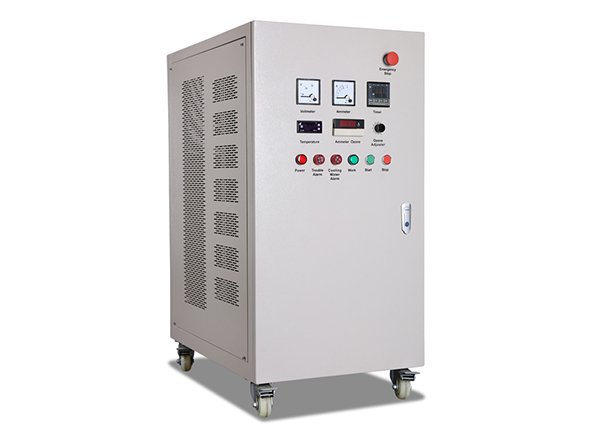
To design an ozone water treatment system, you must integrate four critical components: an oxygen source, a high-frequency ozone generator for water treatment, a mass transfer mechanism (like a Venturi injector), and a contact tank. Success depends on calculating the required ozone dosage based on water flow rate and contaminant levels to ensure maximum oxidation and disinfection efficiency.
Introduction: Why Ozone is the Gold Standard for Water Purity
Are you struggling with persistent contaminants that traditional chlorine simply can’t touch? You aren’t alone; many industrial and municipal operators face the challenge of removing complex organics, odors, and pathogens.
The good news is that an ozone water treatment system offers one of the most powerful oxidation potentials available today. In this guide, we will preview the exact engineering steps required to build a robust system from the ground up. You will learn how to size your equipment, ensure safety, and optimize mass transfer for crystal-clear results.
—
1. Understanding the Fundamentals of Ozone Oxidation
Before laying the first pipe, you must understand the science. Ozone ($O_3$) is an unstable gas composed of three oxygen atoms. Because it wants to revert to $O_2$, it releases a single oxygen atom that aggressively oxidizes organic matter and destroys cellular walls of bacteria.
The Benefits of Ozone over Chlorine
• Faster Disinfection: Ozone works up to 3,000 times faster than chlorine.
• No Chemical Residue: It breaks down into pure oxygen, leaving no harmful trihalomethanes (THMs).
• Superior Micro-Flocculation: It aids in the removal of iron, manganese, and turbidity.
—
2. Step-by-Step Design Framework
Designing an ozone water treatment system requires a “systems thinking” approach. If one component is undersized, the entire process fails.
Phase 1: Feed Gas Preparation
You cannot produce high-quality ozone with “dirty” air. Most professional systems use either a Desiccant Air Dryer or a Pressure Swing Adsorption (PSA) Oxygen Generator.
• Pro-Tip: Using pure oxygen instead of ambient air can increase ozone concentration by 200-300%, significantly shrinking the footprint of your ozone generator for water treatment.
Phase 2: Selecting the Ozone Generator
The heart of the system is the generator. Modern systems utilize Corona Discharge technology. When selecting a unit, look for:
• Output Rating: Measured in grams per hour (g/h).
• Cooling Mechanism: Ozone production generates heat; water-cooled units are more stable for 24/7 operations than air-cooled ones.
• Adjustable Power: Ensure the inverter allows for 10%–100% output control to handle varying water flow rates.
Phase 3: Mass Transfer (Injecting the Gas)
Ozone is a gas; your water is a liquid. The goal is to “dissolve” the gas into the water.
• Venturi Injection: This is the most efficient method. It uses a pressure differential to pull ozone into the water stream, creating micro-bubbles.
• Fine Pore Diffusers: These are placed at the bottom of large tanks. While simpler, they are often less efficient than Venturi systems for high-flow industrial applications.
—
3. Calculating Ozone Dosage and Demand
Precision is the difference between a successful install and a wasted investment. Use the following formula as your baseline:
Dosage = Ozone Demand + Desired Residual
• Ozone Demand: The amount of ozone consumed by “killing” bacteria and oxidizing minerals.
• Residual: The leftover ozone (usually 0.2 to 0.4 mg/L) that ensures the water remains disinfected during storage.
Expert Insight: Always perform a “Total Organic Carbon” (TOC) test on your source water. High TOC levels will “eat” your ozone, requiring a much larger generator than you might initially estimate.
—
4. Contact Time and Off-Gas Management
Once the ozone is in the water, it needs time to work. This is known as the CT Value (Concentration × Time).
• The Contact Tank: Design a baffled tank to prevent “short-circuiting,” where water flows straight through without being treated.
• Off-Gas Destructors: Since ozone is toxic to breathe, any undissolved gas escaping the top of the tank must be passed through a thermal or catalytic carbon “destructor” to convert it back to oxygen.
—
5. Safety Protocols and Monitoring
An ozone water treatment system is incredibly safe when designed correctly, but it involves high voltage and oxidizing gases.
Essential Safety Features:
• Ambient Ozone Sensors: Mount these near the generator. If a leak is detected, the system should automatically shut down.
• ORP (Oxidation-Reduction Potential) Monitors: These provide real-time feedback on how “oxidizing” your water is, allowing the generator to scale its output automatically.
• Backflow Prevention: Ensure water cannot back up into the ozone generator for water treatment via a series of check valves and a “loop” in the piping.
—
6. Maintenance Checklist for Longevity
To keep your system running in the top 3% of efficiency, follow this schedule:
• Monthly: Check the air prep filters and clean the cooling fins.
• Quarterly: Inspect check valves for signs of oxidation or wear.
• Annually: Service the Corona Discharge cell. These cells can accumulate nitric acid if the feed gas isn’t dry enough.
—
7. Advanced Applications of Ozone Systems
Beyond simple disinfection, custom-designed systems are used for:
• Cooling Tower Treatment: Preventing Legionella and reducing scaling.
• Bottling Plants: Ensuring containers are sterile without using heat.
• Wastewater Reclamation: Breaking down pharmaceutical residues in greywater.
—
FAQ: Frequently Asked Questions
1. How much ozone do I need for well water?
Generally, you need about 1.5 to 2.0 ppm (parts per million) of ozone for every 1.0 ppm of iron or manganese present. For basic disinfection, a dosage of 0.5 to 1.0 mg/L is usually sufficient.
2. Is ozone better than UV for water treatment?
Ozone provides oxidation (removing minerals and smells) and leaves a measurable residual, whereas UV only provides disinfection and does not improve the taste or clarity of the water.
3. How long does ozone last in water?
Ozone has a short half-life, typically 20 to 30 minutes in clean water at room temperature. After this, it reverts to oxygen, leaving the water “ozone-free.”
4. Can I use PVC pipe with ozone?
No. High concentrations of ozone will degrade standard PVC. You must use ozone-compatible materials like 316L Stainless Steel, Teflon (PTFE), or Kynar (PVDF).
5. What is the biggest mistake in ozone system design?
The most common mistake is poor mass transfer. If you don’t use a high-quality Venturi injector and a proper contact tank, the ozone will simply bubble out of the water and be wasted.
—
Conclusion: Take Action on Your Water Quality
Designing an ozone water treatment system is a sophisticated engineering task that yields immense rewards in water purity and safety. By focusing on high-quality feed gas, a reliable ozone generator for water treatment, and efficient mass transfer, you can eliminate the need for harsh chemicals and enjoy superior results.
Ready to upgrade your water infrastructure?
Consult with a certified environmental engineer today to perform a water assay and begin your system sizing. Don’t settle for “clean enough”—achieve total purity with the power of ozone.